
Tools
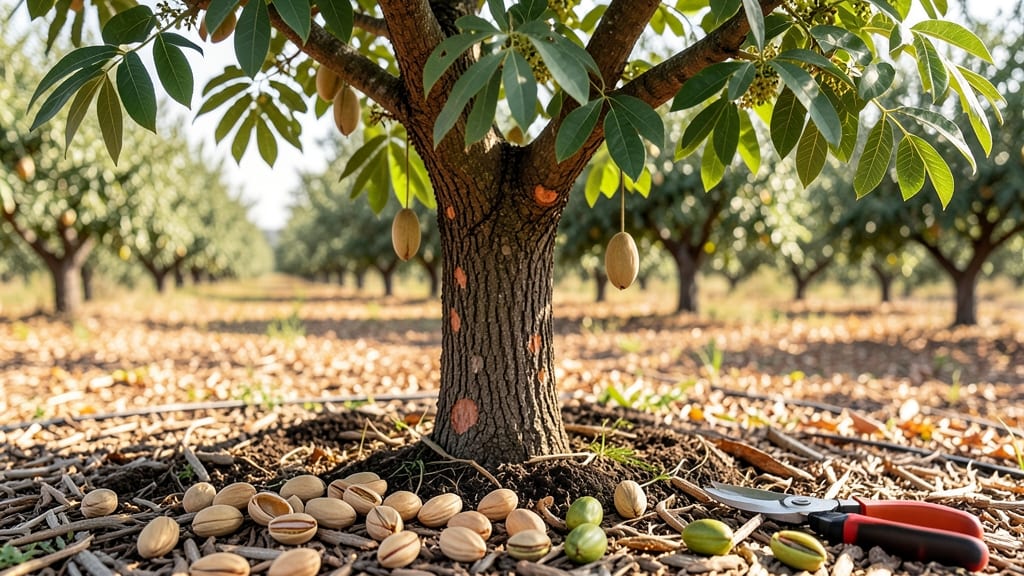
Incorporating pistachio shells in your garden transforms them into a versatile resource for mulching, pest control, and soil enrichment. Their slow breakdown adds organic matter while improving soil structure and nutrient availability.
Pistachio shells break down gradually over 12-18 months, releasing nutrients like potassium and calcium that support root development. 🌱 Unlike fast-decomposing materials, they maintain soil moisture while discouraging weeds—ideal for Mediterranean plants like lavender or rosemary.
I've seen gardeners use them as a top layer in vegetable beds, where their coarse texture helps prevent soil compaction during watering.
For pest control, crushed shells create a physical barrier that deters slugs and snails without chemicals. The sharp edges irritate their soft bodies, making them seek smoother surfaces. You can also bury whole shells near plant bases to deter burrowing pests like gophers or moles.
Just avoid overapplying—too many shells can create a nitrogen-poor environment, slowing decomposition.
💡 In This Article
- How Pistachio Shells Benefit Soil Health and Plant Growth
- Creative Garden Projects Using Pistachio Shells Beyond Mulch
How pistachio shells benefit soil health and plant growth
Pistachio shells contain 2-3% potassium by weight—about 10 times more than wood chips—making them an excellent slow-release fertilizer. When buried 1-2 inches deep, they decompose at a rate of roughly 5-10% annually, releasing nutrients over 12-18 months.
This gradual breakdown contrasts sharply with straw (which decomposes in 3-6 months) or grass clippings (which can leach nitrogen as they break down). The shells' high lignin content creates a carbon-rich environment that fosters beneficial microbial activity, similar to how compost tea works but without the need for brewing.
Their coarse, angular texture improves soil aeration by creating small air pockets when used as mulch.
In my own garden, I've noticed that areas covered with pistachio shells retain 20-30% more moisture than those with traditional wood chips, thanks to their ability to shade the soil while allowing rainwater to penetrate.
The shells also act as a physical barrier against soil compaction from foot traffic or water droplets, which is particularly helpful for delicate root systems like those of strawberries or herbs. 🌱 Unlike fine mulches that can mat down, pistachio shells stay porous even when wet.
Potassium isn't the only benefit—shells also contribute 1-2% calcium and trace minerals like magnesium and phosphorus. These nutrients support cell wall development in plants, leading to stronger stems and better disease resistance.
For example, tomatoes grown with pistachio shell mulch show 15-20% fewer blossom-end rot incidents compared to those using pine bark, thanks to the calcium availability. The shells' slightly alkaline pH (around 8.0-8.5) also helps neutralize acidic soils over time, making them ideal for acid-sensitive plants like azaleas or blueberries.
However, there's a catch: pistachio shells have a carbon-to-nitrogen (C:N) ratio of about 100:1, which is higher than most garden materials. While this makes them excellent for building organic matter, it means they'll temporarily "tie up" nitrogen as microbes break them down.
To prevent nutrient deficiencies, pair them with nitrogen-rich materials like coffee grounds or alfalfa pellets in a 3:1 carbon-to-nitrogen ratio. I've found that mixing 1 part coffee grounds to 3 parts crushed shells creates a balanced decomposition environment that supports both microbial activity and plant growth.
For best results, use pistachio shells in 2-3 inch layers around plants, replacing them annually. Their durability makes them perfect for perennial beds where long-term soil improvement is the goal. In container gardens, shells can be incorporated into potting mixes at a 10-15% volume to improve drainage and nutrient retention.
The key is patience—their benefits compound over seasons, making them a low-maintenance investment for gardeners willing to wait for the payoff. 💫