
Tools
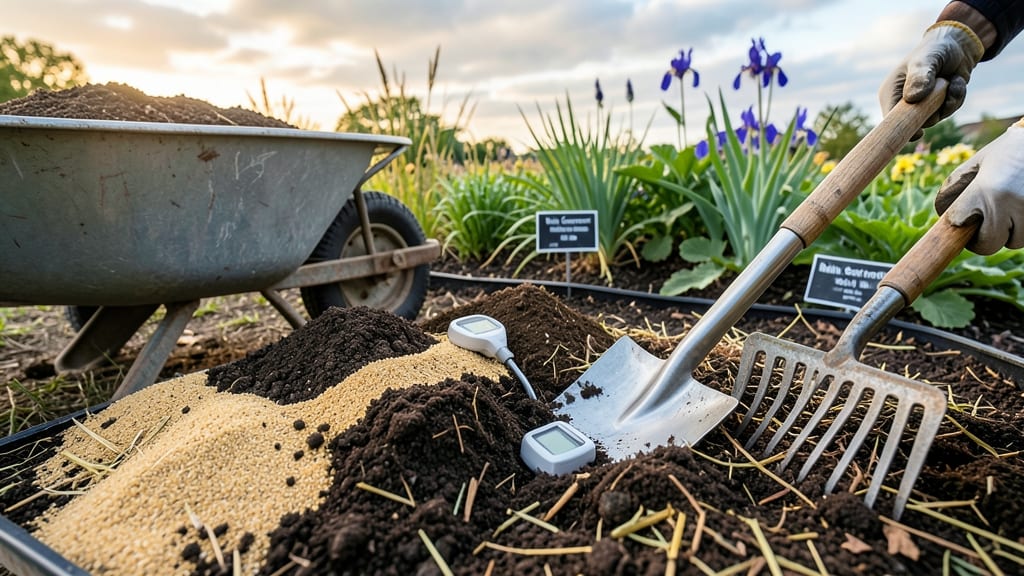
A rain garden soil mix requires 40% native topsoil, 30% organic compost, and 30% coarse sand or perlite to ensure proper drainage while retaining moisture for water-loving plants like coneflowers or asters.
A well-balanced rain garden soil blend is all about creating the perfect balance between drainage and moisture retention. 🌱 The 40% native topsoil provides essential minerals and structure, while the 30% organic compost introduces beneficial microbes and nutrients that support plant growth.
The 30% coarse sand or perlite prevents compaction, allowing roots to breathe and water to flow freely—critical for preventing soggy conditions that can suffocate plants. This mix works particularly well for moisture-loving perennials like black-eyed Susans or swamp milkweed, which thrive in these conditions.
What sets this blend apart is how it adapts to seasonal changes. During heavy rains, the sand component prevents waterlogging, while the compost holds onto moisture for drier periods.
For regions with clay-heavy soils, you might increase the sand ratio to 40% to improve aeration, whereas sandy soils benefit from adding 10% peat moss to boost water retention.
Always test your soil's drainage first—simply dig a small hole, fill it with water, and time how long it takes to drain. If it disappears in under 30 minutes, your soil may need more organic matter.
💡 In This Article
- Why Soil Composition Matters in Rain Gardens
- Customizing Your Rain Garden Soil Mix for Plant Types
Why soil composition matters in rain gardens
The 40-30-30 ratio in rain garden soil isn't arbitrary—it's a precise engineering of particle sizes and organic content designed to mimic natural wetland conditions.
The 40% native topsoil provides the mineral foundation plants need, including essential nutrients like nitrogen, phosphorus, and potassium, while its existing microbial communities begin breaking down organic matter immediately.
This base layer also contains clay particles that help retain water during dry spells, though too much clay can become impermeable when wet.
Here's where the magic happens: the 30% organic compost introduces 60-70% porous space when mixed, creating tiny air pockets that oxygenate the root zone—a critical factor for plants like cardinal flowers that thrive in moist but not waterlogged conditions.
Compost also acts as a sponge, absorbing up to 3 times its weight in water while slowly releasing it to roots. The decomposition process generates heat (140-160°F initially), which sterilizes pathogens and kickstarts beneficial fungal networks that help plants absorb nutrients more efficiently.
The 30% coarse sand or perlite serves as the drainage regulator, with particles 0.5-2mm in diameter creating channels that allow water to move vertically through the soil profile. This prevents hydrostatic pressure from building up around roots, which can suffocate plants during prolonged rains.
The sand also prevents the heavier organic components from compacting over time—a common problem in garden soils that can reduce porosity by 50% within 2 years. Perlite offers the added benefit of being sterile and lightweight, making it ideal for regions with heavy rainfall or poor-quality native soil.
Consider what happens during a 1-inch rainfall event: In standard garden soil, water may pool at the surface for hours, while our rain garden mix absorbs it within 15-30 minutes thanks to the sand's capillary action combined with the compost's water-holding capacity.
The result is a self-regulating system where excess water drains away while roots maintain access to moisture—a perfect balance for plants like Joe Pye weed that can tolerate both wet feet and occasional dry spells.
What most gardeners overlook is how this composition affects root zone temperature. The sand component helps moderate soil temps, preventing the extreme fluctuations that can stress plants. During summer, it keeps roots 5-10°F cooler than surface temps, while in winter, it insulates against rapid freezing.
This thermal stability is why rain gardens often support a wider variety of native plants than traditional garden beds.
The texture contrast between components creates what soil scientists call a "multi-porosity system." The sand provides macropores (0.08-2mm) for rapid drainage, while the compost contributes micropores (<0.08mm) for water storage. This dual system ensures plants have access to both oxygen and moisture simultaneously—a critical balance for wetland-adapted species.
Without this structure, roots would either drown in saturated conditions or dry out during brief dry periods.