
Tools
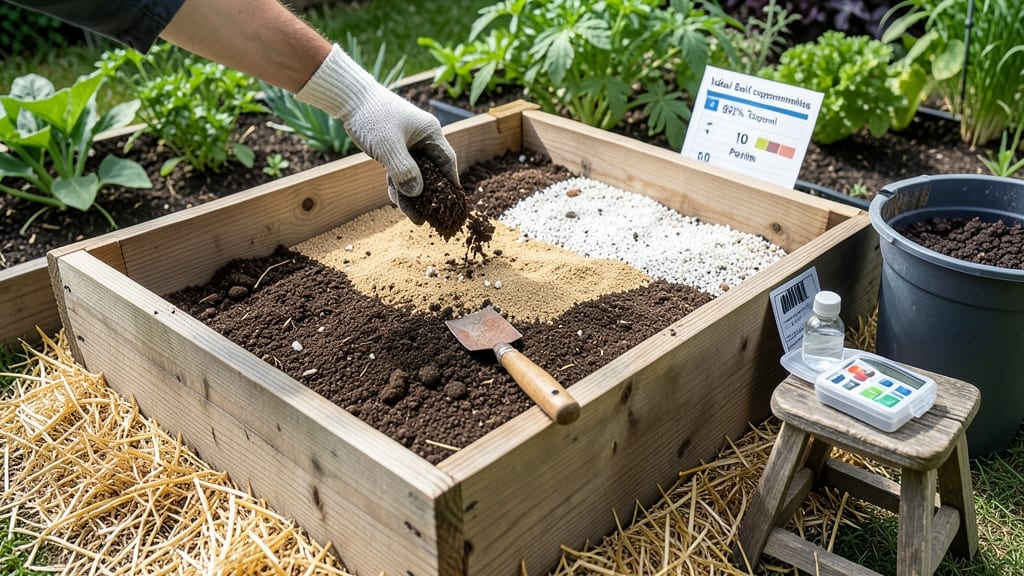
The ideal soil composition for a raised vegetable garden blends 60% topsoil, 30% compost, and 10% perlite or coarse sand to ensure drainage, nutrient retention, and aeration for root growth. Adjust ratios for heavy clay or sandy native soil by adding more organic matter or sand respectively.
Creating the right soil mix for your raised beds is like building a foundation—get it right, and your vegetables will thrive. 🌱 The 60-30-10 ratio balances nutrients, moisture, and airflow, but the magic happens when you tweak it for specific plants.
For example, leafy greens like spinach need extra compost (up to 40%) for nitrogen, while root crops such as carrots benefit from more sand (15%) to prevent forking. Heavy clay soil?
Mix in 20% coconut coir to break up compaction, while sandy soil calls for 15% peat moss to hold moisture longer.
Pro tip: Test your soil's pH before planting—most vegetables prefer a range of 6.0-7.0. If your mix is too acidic, add crushed limestone, and if it's alkaline, work in sulfur or pine needles.
The goal is to mimic nature's balance, where roots can stretch freely without drowning in water or gasping for air. 💫
💡 In This Article
- How Soil Composition Affects Plant Growth in Raised Beds
- Customizing Soil Mixes for Different Vegetable Types
How soil composition affects plant growth in raised beds
The science behind soil composition reveals why that 60-30-10 ratio works so well. Organic matter like compost creates tiny pores between soil particles, which act like tiny water reservoirs.
These pores hold moisture near plant roots while still allowing excess water to drain away—critical for preventing root rot in vegetables like tomatoes.
The compost's sponge-like structure can hold up to 20% more water than regular topsoil, yet it releases nutrients slowly as microbes break it down, feeding plants over weeks rather than all at once.
Perlite or coarse sand plays a different but equally vital role by preventing compaction. When you walk on garden soil, particles get pressed together, reducing air pockets. In raised beds, sand or perlite creates 30-40% more air space around roots, which is essential for oxygen delivery.
Without this aeration, roots suffocate—especially for heavy feeders like corn that need constant nutrient uptake. The texture difference is dramatic: a well-amended raised bed feels light and crumbly, almost like damp potting soil, while compacted native soil feels dense and clumpy.
pH levels in this mix typically fall between 6.0-7.0, which is perfect for most vegetables. At this range, essential nutrients like nitrogen, phosphorus, and potassium become soluble and available for uptake. For example, tomatoes thrive at pH 6.2-6.8, while carrots prefer slightly more acidic soil around 5.8-6.5.
The compost in your mix naturally buffers pH swings, preventing sudden shifts that could lock out nutrients. Think of it like a soil thermostat—keeping conditions stable so plants can focus on growing rather than struggling to adapt.
Root crops like carrots and potatoes benefit most from this structure because their taproots need loose, friable soil to grow straight and avoid forking. The sand in the mix prevents soil from sticking to roots during harvest, making cleanup easier.
Meanwhile, leafy greens like spinach appreciate the compost's nitrogen boost, which fuels rapid leaf production. The key is this balance: enough organic matter to feed microbes (which in turn feed plants), but enough mineral content to prevent the mix from becoming too fluffy and nutrient-poor.
One often-overlooked factor is microbial activity. Healthy soil teems with billions of bacteria and fungi per teaspoon, breaking down organic matter into plant-available nutrients. The compost in your mix provides food for these microbes, while the sand/perlite creates the right environment for them to thrive.
Without this microbial network, plants would starve even in nutrient-rich soil because they couldn't access the locked-up minerals. It's like having a living digestive system for your garden—one that constantly recycles nutrients back into the ecosystem.
For visual learners, imagine soil structure as a three-layer cake: the bottom layer is your topsoil (the foundation), the middle layer is compost (the nutrient-rich filling), and the top layer is perlite/sand (the airy topping).
Each layer plays a distinct role that, when combined, creates the perfect growing medium. Without any one component, the whole system falls apart—just like a cake without proper layers. 🌱