
Tools
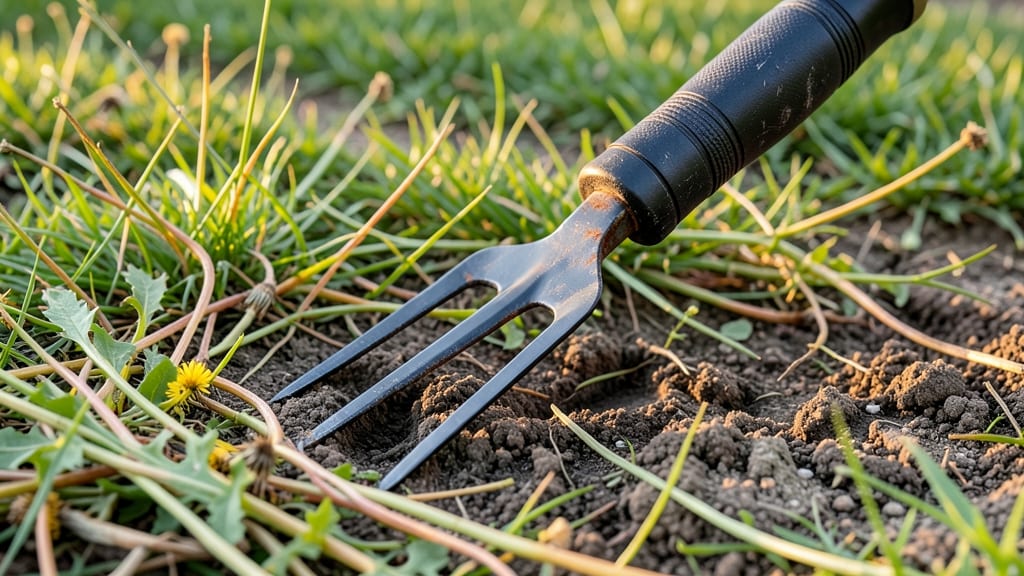
A three-pronged gardening tool is perfect for aerating soil, loosening roots, and breaking up compacted earth without full-scale digging. This versatile tool excels in lawn care, seed planting, and transplanting delicate plants while preserving soil structure and promoting healthier root systems.
This multi-functional tool works by creating small channels in the soil, allowing air, water, and nutrients to reach plant roots more efficiently. 🌱 Unlike traditional digging tools, the three-prong design disturbs the soil minimally, making it ideal for delicate plants or newly seeded areas.
I've found it particularly useful for preparing flower beds or renovating lawns where compaction is an issue—it saves time while delivering professional results without the effort of a full aeration machine.
For best results, look for tools with sturdy handles and sharp, durable prongs. The handle material matters too—ergonomic grips reduce hand fatigue during extended use, while heavier-duty handles handle tougher soil conditions.
Whether you're dealing with a small garden or a larger lawn, choosing the right prong length and angle can make all the difference in effectiveness.
💡 In This Article
- How Three-Pronged Tools Improve Soil Health
- Choosing the Right Three-Pronged Tool for Your Garden
How three-pronged tools improve soil health
When you use a three-pronged tool, you're essentially creating tiny, strategic channels in the soil—about 1/4 to 1/2 inch wide—that serve as highways for essential elements.
These micro-channels allow oxygen to penetrate 2-3 times deeper than undisturbed soil, which is crucial because compacted earth can suffocate roots by reducing oxygen levels to as low as 5-10% of what healthy soil provides. 🌱 This oxygen boost is particularly vital for lawn grasses, whose roots need constant airflow to prevent thatch buildup and fungal growth.
The prongs also disrupt the soil's natural compaction layers, which often form from foot traffic or heavy equipment. Studies show that compacted soil can reduce water infiltration by up to 50%, forcing moisture to pool on the surface instead of nourishing roots.
By breaking these layers, the tool creates pathways for water to seep down 6-8 inches deeper, where most plant roots thrive. This is why gardeners see dramatic improvements in drought-prone areas after just one aeration session.
What's often overlooked is how these tools stimulate microbial activity. The disturbance from the prongs mixes soil layers, bringing nutrient-rich topsoil into contact with deeper, mineral-laden layers.
This process, called "soil inversion," can increase microbial populations by 30-40% within weeks, as beneficial bacteria and fungi thrive in the newly aerated environment. 🔬 The result? Healthier soil that naturally resists compaction and supports stronger root systems.
Manual three-pronged tools give you precise control over depth and placement, which is ideal for delicate tasks like transplanting seedlings or preparing seedbeds. However, for larger lawns, powered versions with 12-18 inch prongs can cover 100-200 square feet per minute, making them far more efficient for renovating compacted turf.
The trade-off? Manual tools allow you to target specific problem areas without over-aerating, while powered tools deliver consistent results across expansive spaces.
Consider this real-world example: A 1,000-square-foot lawn with moderate compaction might require 50-60 manual insertions to achieve proper aeration, while a powered tool could complete the job in under 10 minutes.
The choice depends on your garden's scale and your tolerance for physical effort. For most home gardeners, a mid-sized manual tool with 6-inch prongs strikes the perfect balance between control and efficiency.
The key takeaway is that these tools don't just "poke holes"—they actively restore soil function by improving three critical factors: oxygen flow, water penetration, and microbial diversity. This trifecta of benefits explains why they're a staple in both professional landscaping and home gardening. 💫