
Tools
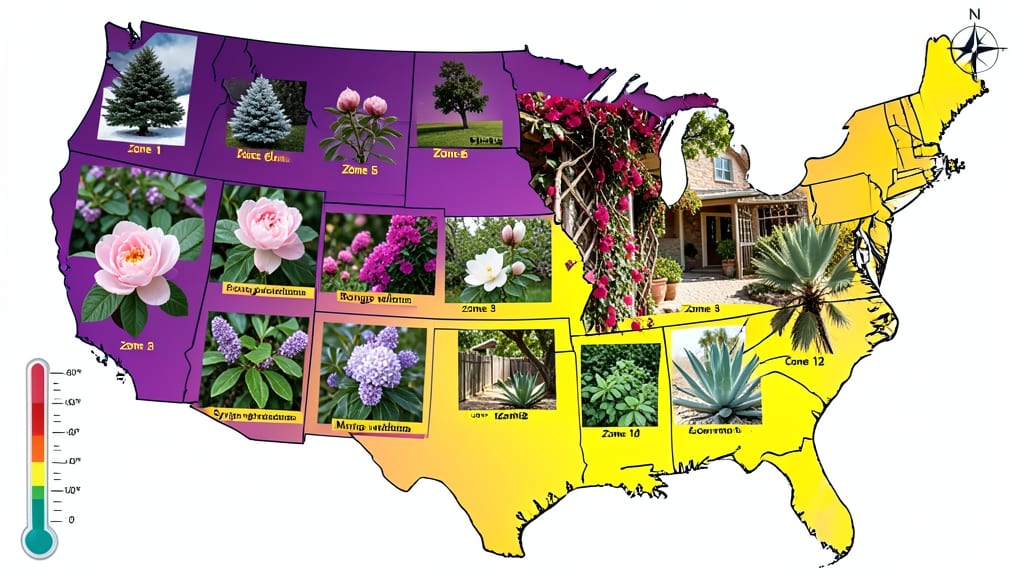
US gardening zones categorize regions by average last frost dates, ranging from Zone 1 (coldest) to Zone 13 (warmest), helping gardeners select plants suited to their climate for successful growth and seasonal timing.
These climate-based designations help gardeners match plants to their local growing conditions, ensuring healthier yields and fewer failures. 🌱 The system, maintained by the USDA, divides the country into 13 main zones based on average minimum winter temperatures, with each zone further split into "a" and "b" sub-zones to reflect finer temperature variations.
For example, Zone 7a experiences average minimum temperatures of 0°F to 5°F, while Zone 7b ranges from 5°F to 10°F—just a small shift that can make a big difference in what plants thrive.
Understanding your zone isn't just about winter hardiness; it also affects growing seasons. Warmer zones like 10-13 can support tropical plants year-round, while colder zones (1-4) require careful selection of cold-resistant varieties.
Many gardeners also factor in microclimates—small areas with unique conditions like urban heat islands or sheltered spots—that can push a plant into a slightly higher zone than the official designation.
💡 In This Article
- How US Gardening Zones Determine Plant Hardiness
- Finding Your US Gardening Zone and Microclimate Adjustments
How US gardening zones determine plant hardiness
The USDA gardening zone system relies on average annual minimum temperatures to define where plants can survive outdoors. Each zone represents a 10°F temperature range, with Zone 1 experiencing the coldest winters (-60°F to -50°F) and Zone 13 the warmest (60°F to 70°F).
These boundaries are drawn based on 30-year climate averages, which means zone maps get updated roughly every decade to reflect gradual warming trends. For instance, Alaska's Zone 1 has seen its boundaries shrink slightly as winter temperatures rise by about 1-2°F per decade in some areas.
What makes this system so precise is how it accounts for plant hardiness—the ability to withstand cold without damage. The USDA uses frost-free days as a secondary indicator, but the real magic happens in the temperature thresholds.
A 5°F difference between Zone 7a (0°F to 5°F) and 7b (5°F to 10°F) might seem small, but it determines whether a plant like hydrangea (hardy to Zone 4) thrives or struggles.
The science behind this involves plant cells' ability to supercool—lowering internal water freezing points through natural antifreeze compounds—though most garden plants lack this adaptation beyond their hardiness limits.
Zone boundaries aren't rigid lines but gradual transitions that reflect real-world temperature gradients. You'll often see zones like 6b blending into 7a across a state, with the shift occurring over 50-100 miles depending on elevation and geography.
For example, Denver's Zone 5b (-15°F to -10°F) gives way to Zone 6a (-10°F to -5°F) just 30 miles east toward the Front Range foothills. This gradual change mirrors how plants naturally adapt to temperature shifts across landscapes.
Understanding these temperature ranges helps explain why some plants flourish in one zone but fail in another. Take roses as an example: Hybrid teas (Zone 4) handle -30°F winters, while tropical varieties like Knock Out® roses (Zone 5) struggle below 15°F.
The difference comes down to cellular damage thresholds—when temperatures drop below a plant's hardiness zone, ice crystals form in cell walls, rupturing membranes and killing tissue.
This is why gardeners in Zone 6 must choose plants rated for at least Zone 5, even if their winter lows rarely dip below 0°F.
The zone system also accounts for heat zones during growing seasons, though these are less standardized. Warmer zones like 9-13 face challenges like heat stress in plants not adapted to high summer temperatures (above 90°F), which can cause wilting or fruit drop.
Meanwhile, cooler zones must contend with short growing seasons—sometimes just 90-120 days between last frost and first frost—demanding fast-maturing varieties. This dual consideration of cold hardiness and heat tolerance is why some plants, like okra, thrive in Zone 10 but bolt in Zone 5.
For gardeners, this means selecting plants that match not just their zone's winter lows but also their summer heat patterns. A Zone 7 garden might grow tomatoes successfully in summer but struggle with peppers if nighttime temperatures stay above 85°F for extended periods.
The zone system's precision helps avoid costly mistakes, like planting a Zone 5 perennial in a Zone 3 garden where it'll likely die back to the ground each winter. 🌡️