
Tools
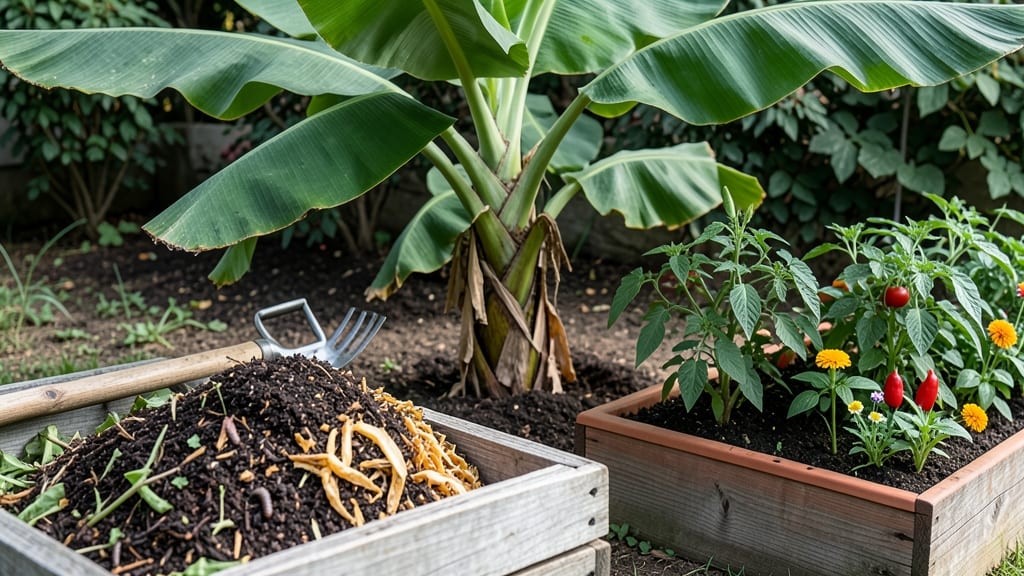
What happens if you put bananas in your garden? They boost soil fertility by releasing potassium and phosphorus as they decompose, while their natural sugars attract beneficial microbes and earthworms. The peels act as a slow-release nutrient source, improving plant growth and helping repel pests like aphids.
Banana peels contain potassium, which helps plants develop strong roots and vibrant blooms, while the phosphorus supports flowering and fruiting. 🌱 When buried or composted, they break down gradually, creating a nutrient-rich environment that encourages microbial diversity.
I’ve seen firsthand how this simple practice transforms soil structure—especially for heavy feeders like tomatoes and peppers—while keeping pests at bay.
For best results, chop peels into smaller pieces before burying them near plant roots or add them to compost piles. Avoid using them in large quantities for acid-loving plants, as the potassium can raise soil pH over time.
The sugars in the peel also make it an excellent food source for earthworms, which further aerate the soil.
💡 In This Article
- How Banana Peels Improve Soil Health and Plant Nutrition
- Best Ways to Use Bananas in Your Garden for Maximum Benefits
How banana peels improve soil health and plant nutrition
Banana peels are a powerhouse of nutrients, particularly potassium (around 422 mg per 100g of peel) and phosphorus (about 37 mg per 100g), which are essential for plant growth. When buried in the soil, these nutrients are released gradually as the peel decomposes, creating a slow-release fertilizer.
The potassium helps regulate water uptake in plants, reducing stress during drought, while phosphorus promotes strong root systems and vibrant flowering—ideal for tomatoes, roses, and citrus trees.
The decomposition process also stimulates microbial activity. As the peel breaks down, it releases natural sugars that feed beneficial bacteria and fungi, which in turn help break down organic matter further. This creates a thriving ecosystem in the soil, where earthworms and other organisms contribute to aeration and nutrient cycling.
The texture of the peel—soft yet fibrous—ensures it doesn’t decompose too quickly, providing a steady nutrient supply over weeks rather than days.
One of the most noticeable effects is on plant health. For example, tomatoes grown in soil enriched with banana peels often develop deeper root systems and produce more fruit with improved flavor. Roses benefit from the phosphorus, which enhances their blooming capacity, while citrus trees show increased resilience to pests.
The peel’s natural compounds also act as a mild deterrent to aphids and other soft-bodied insects, thanks to the presence of tannins that disrupt their feeding patterns.
However, the benefits aren’t just about the nutrients. The peel’s structure improves soil texture by adding organic matter, which helps retain moisture and prevents compaction. This is especially useful in sandy soils, where nutrients can leach away quickly.
Over time, the gradual breakdown of the peel also enhances soil structure, making it easier for roots to penetrate deeper and access water and nutrients more efficiently.
To maximize these benefits, it’s best to chop the peels into smaller pieces before burying them near plant roots. This increases the surface area for microbial action, speeding up decomposition while still providing a controlled release of nutrients.
For example, burying a chopped peel near a tomato plant can lead to visibly healthier foliage within just a few weeks, as the potassium and phosphorus become available to the plant’s root zone.
What’s fascinating is how the peel’s composition changes as it decomposes. Initially, the outer layer may take longer to break down due to its thicker texture, but once it starts, the inner layers—richer in nutrients—release their contents more quickly.
This layered decomposition ensures a balanced nutrient flow, supporting both immediate and long-term plant growth.