
Tools
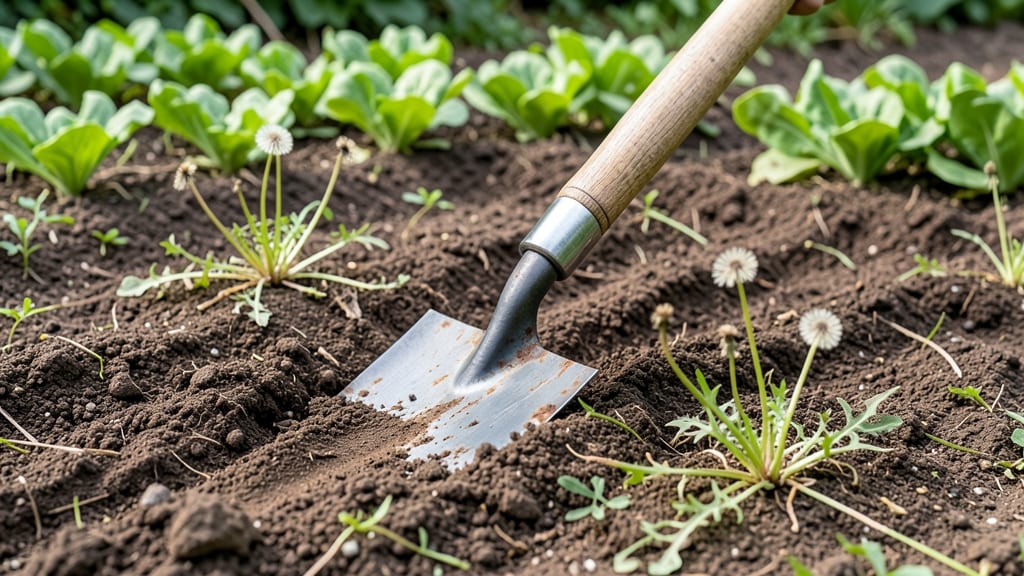
A garden hoe is used for breaking up soil, weeding, leveling garden beds, and creating furrows for planting. Its versatile blade helps cultivate, aerate, and maintain garden health efficiently.
A garden hoe transforms your gardening routine by tackling multiple tasks at once. 🌱 The blade's design lets you slice through weeds at the root while simultaneously loosening compacted soil—great for preparing new planting areas.
Unlike a shovel, which digs deep, a hoe works the top layer, improving drainage and oxygen flow for plant roots. I've found it's especially useful after rain when soil gets packed down, or before sowing seeds to create neat, straight furrows.
What makes this tool so versatile is its ability to handle both maintenance and prep work. For example, a standard draw hoe excels at cutting weeds between rows, while a stirrup hoe gives you more leverage for tougher weeds.
The key is choosing the right blade angle for your specific task—steep angles cut weeds better, while flatter blades work soil more effectively.
Regular use with a garden hoe keeps your garden looking neat while preventing weeds from competing with your plants. It's one of those tools that pays for itself through the time you save on manual weeding and soil prep. Just remember to keep the blade sharp for clean cuts!
💡 In This Article
- How a Garden Hoe Improves Soil and Plant Health
- Best Garden Hoe Types for Different Weeding and Cultivation Tasks
How a garden hoe improves soil and plant health
The magic of a garden hoe lies in its blade mechanics—specifically how it disrupts soil structure without disturbing plant roots. Most hoes feature either a cutting edge (like a draw hoe) or a scraping blade (like a scuffle hoe).
When you drag the cutting edge through soil, it severs weed roots at the surface while simultaneously breaking up compacted topsoil. This action creates tiny air pockets that improve oxygen circulation, which is crucial since roots need 10-20% air by volume for optimal growth. 🌱
What's happening at the molecular level? The blade's pressure fractures soil aggregates (those natural clumps) without destroying their internal structure. This process, called tillage without inversion, prevents the destruction of beneficial soil organisms while still improving drainage.
For example, compacted clay soil that might hold 15% air naturally can reach 25% air after proper hoeing—giving plant roots the space they need to expand.
The weed-killing effect comes from two mechanisms: first, the blade severs roots above the soil line where most weed roots grow, and second, it uproots shallow-rooted annuals completely.
For perennial weeds like dandelions, you'll need to repeat the process weekly during their active growth phase to starve them of energy reserves. The key is working when weeds are young—before they develop deep taproots that can survive multiple hoe passes.
Preventing soil compaction is another critical benefit. Every time you walk on garden beds, you're adding 10-15 psi of pressure that compresses soil particles. A garden hoe works against this by creating vertical channels through the top 2-3 inches of soil.
These channels act like tiny drainage pipes, helping water penetrate quickly rather than pooling on the surface. This is especially valuable in clay-heavy soils where water can take 24 hours to drain naturally.
For planting preparation, the hoe's precision comes into play when creating furrows. By dragging the blade at a 45-degree angle, you can create perfectly straight seed trenches with walls that support young seedlings.
The blade's width (typically 4-6 inches) matches common plant spacing, making it ideal for row crops like beans, carrots, or lettuce. The smooth surface left behind also helps prevent erosion from rain.
What most gardeners don't realize is how hoeing affects soil temperature. The disturbed top layer warms up 5-10°F faster than undisturbed soil in spring, giving cold-sensitive plants like tomatoes a head start.
Conversely, in summer, the aerated soil stays cooler, reducing stress on heat-sensitive crops. This thermal regulation happens because disturbed soil has more surface area exposed to air currents. 💫