
Tools
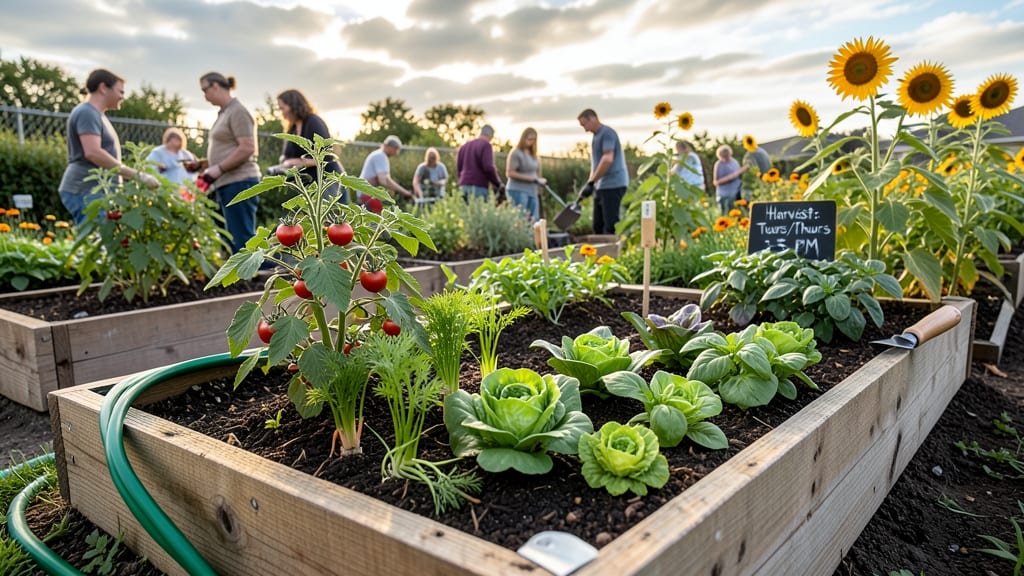
Community gardening creates shared outdoor spaces where residents collaborate to cultivate fruits, vegetables, and flowers, building stronger neighborhoods while promoting environmental stewardship and healthy eating habits. These initiatives often operate through local organizations, schools, or municipal programs.
Community gardening transforms underused urban or rural land into thriving green spaces where people of all ages can grow their own food. 🌱 The beauty of these projects lies in their dual purpose: they provide fresh, organic produce while serving as social hubs that strengthen community bonds.
Many gardens also focus on education, teaching participants about sustainable farming practices and the importance of biodiversity. What's particularly inspiring is how these initiatives often target food deserts, ensuring equitable access to nutritious options in underserved areas.
Beyond the obvious benefits, community gardens play a crucial role in urban revitalization by turning vacant lots into vibrant community assets. They reduce food miles by bringing production closer to consumers and often incorporate composting systems to minimize waste.
The collaborative nature of these projects makes them accessible to everyone—from seasoned gardeners to complete beginners—creating opportunities for skill-sharing and mutual support.
💡 In This Article
- Core Principles Behind Community Gardening
- How to Start or Join a Community Garden Near You
Core principles behind community gardening
Community gardening thrives on three foundational pillars: resource sharing, environmental sustainability, and collective action.
The shared-resource model means participants pool tools, seeds, and knowledge rather than working individually. 🌱 This approach drastically reduces costs—imagine a single $50 tool purchase serving 20 families instead of each buying their own—and creates immediate access to gardening equipment that might otherwise be out of reach.
The environmental impact is equally significant, with studies showing community gardens can increase urban greenery by 30-50% in participating neighborhoods while supporting pollinators through diverse plantings.
The historical roots of community gardening stretch back to Victory Gardens of World War II, where Americans grew 40% of the nation's produce on private and public plots to support the war effort. Today's gardens build on this legacy by addressing modern challenges like food insecurity and climate change.
Many incorporate permaculture principles, creating self-sustaining ecosystems that require minimal external inputs. For example, a well-designed community garden might include composting systems that convert food waste into nutrient-rich soil, reducing landfill contributions by up to 500 pounds per year for a medium-sized garden.
What makes these gardens uniquely effective is their ability to reduce food waste through multiple mechanisms. First, they encourage harvest-sharing systems where surplus produce gets distributed to local food banks or community fridges.
Second, they teach participants about seasonal eating and proper food storage techniques, cutting household waste by 20-30% among regular participants. The social aspect creates accountability—when you've invested time in a plot, you're more likely to use what you grow rather than let it spoil.
The food security benefits are particularly striking in urban areas. Research from Johns Hopkins University found that community gardens in food deserts increased residents' access to fresh fruits and vegetables by 46% within two years of implementation.
These gardens often prioritize heirloom varieties and nutrient-dense crops like kale, Swiss chard, and tomatoes that might otherwise be unavailable in local grocery stores.
The sensory experience of harvesting your own food—feeling the crisp texture of homegrown lettuce or smelling the sweet aroma of ripe tomatoes—creates a deeper connection to where food comes from.
Beyond the tangible benefits, community gardens function as living classrooms for environmental education. Participants learn about soil microbiology as they amend garden beds, water conservation through drip irrigation systems, and pest management using companion planting. The hands-on nature of gardening makes these lessons more memorable than traditional classroom instruction.
For instance, seeing how marigolds repel nematodes while attracting beneficial insects becomes a tangible demonstration of ecosystem relationships that textbooks can't match.
One often-overlooked principle is the intergenerational knowledge transfer that occurs naturally in these spaces. Elderly participants often share decades-old gardening wisdom with younger generations, preserving traditional techniques while adapting them to modern challenges. This cultural exchange creates a living archive of agricultural knowledge that would otherwise be lost.
The physical act of gardening also provides therapeutic benefits, with studies showing that regular gardening reduces stress hormones by 20-30% while increasing mood-enhancing neurotransmitters like serotonin.