
Tools
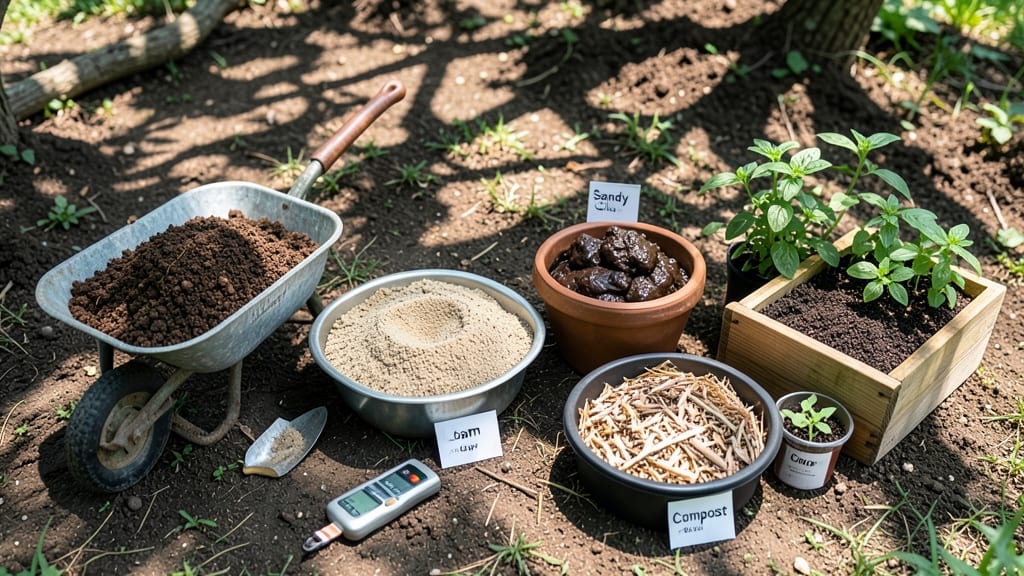
For garden beds, the best what soil to use depends entirely on your plants: nutrient-rich loam soil is ideal for most vegetables, while sandy soil thrives with drought-tolerant plants like cacti. Clay soil works well for moisture-loving deep-rooted crops, but mixing in compost or organic matter improves drainage and fertility across all soil types.
What soil to use for garden beds isn't just about texture—it's about matching your plants' needs. 🌱 Loam soil, with its perfect balance of sand, silt, and clay, provides excellent drainage while holding enough moisture for leafy greens and herbs. Sandy soil, on the other hand, drains too quickly for most plants but excels in desert landscapes. Meanwhile, clay soil's high moisture retention makes it perfect for root vegetables like carrots or beets, though it can become compacted without proper amendments. The key is understanding your garden's natural soil type and how to enhance it for optimal plant health.
Most gardeners find success by testing their soil first—simple home kits reveal pH levels and nutrient deficiencies. Amending with compost is my go-to solution for improving any soil type, whether it's breaking up heavy clay or adding organic matter to sandy soil.
For container gardens, I often blend equal parts loam, perlite, and compost to create a lightweight, nutrient-rich mix that keeps roots happy. The goal is simple: give your plants the growing medium that mimics their natural habitat as closely as possible.
💡 In This Article
- Understanding Soil Types: Loam, Sandy, and Clay Properties
- DIY Soil Mixes for Garden Beds by Plant Type
Understanding soil types: loam, sandy, and clay properties
Soil isn't just dirt—it's a living ecosystem with distinct textures that determine how plants thrive. Loam soil, often called the "gold standard," contains roughly 40% sand, 40% silt, and 20% clay, creating a crumbly texture that holds moisture while allowing excess water to drain.
This balance makes it ideal for vegetables like tomatoes and peppers, which need consistent hydration without waterlogging. The particles in loam also provide ample surface area for beneficial microbes to break down organic matter, releasing nutrients gradually. 🌱
Sandy soil, with its coarse, gritty texture, drains water at an astonishing rate—up to 10 times faster than clay—making it perfect for drought-resistant plants like succulents or rosemary. However, this speed comes at a cost: nutrients wash away quickly, often requiring regular fertilization.
The larger sand particles create air pockets that prevent root suffocation, but they also lack the nutrient-binding capacity of finer soils. For example, a cactus planted in pure sand might survive, but its growth will be stunted compared to one in amended sandy soil with 20% compost.
Clay soil, on the other hand, feels sticky when wet and hard when dry due to its tiny, plate-like particles that pack tightly together. This density retains moisture exceptionally well—up to 30% more water than loam—but can suffocate roots by limiting oxygen flow. The good news?
Clay's high nutrient-holding capacity makes it fantastic for moisture-loving plants like blueberries or watercress, provided you improve drainage with organic amendments. A simple mix of 50% clay, 30% compost, and 20% perlite can transform compacted clay into a workable medium.
The pH level of each soil type also plays a critical role in plant health. Sandy soils often have a neutral to slightly acidic pH (6.0-7.0), while clay soils tend to be alkaline (7.0-8.0), which can lock out essential nutrients like iron.
Loam typically sits in the slightly acidic range (6.0-6.8), perfect for most garden vegetables. Testing your soil's pH with a simple kit and adjusting with lime (to raise pH) or sulfur (to lower it) can make a world of difference for nutrient uptake. 🔬
Here's how these soil types affect plant growth in practice:
- Loam: Best for 90% of garden vegetables (tomatoes, lettuce, carrots) due to balanced moisture and nutrients.
- Sandy: Ideal for drought-tolerant plants (lavender, cacti) but needs frequent feeding.
- Clay: Perfect for moisture-loving perennials (hostas, ferns) once amended.
Most gardeners don't have pure soil types—nature usually blends them. For instance, a silty loam (more silt than clay) is even better for root crops like potatoes because it resists compaction. The key is observing how water behaves in your garden: if it pools after rain, you likely have clay; if it disappears instantly, you've got sand. Amending with organic matter like compost or coconut coir can bridge these extremes, creating a more versatile growing medium. 💫