
Tools
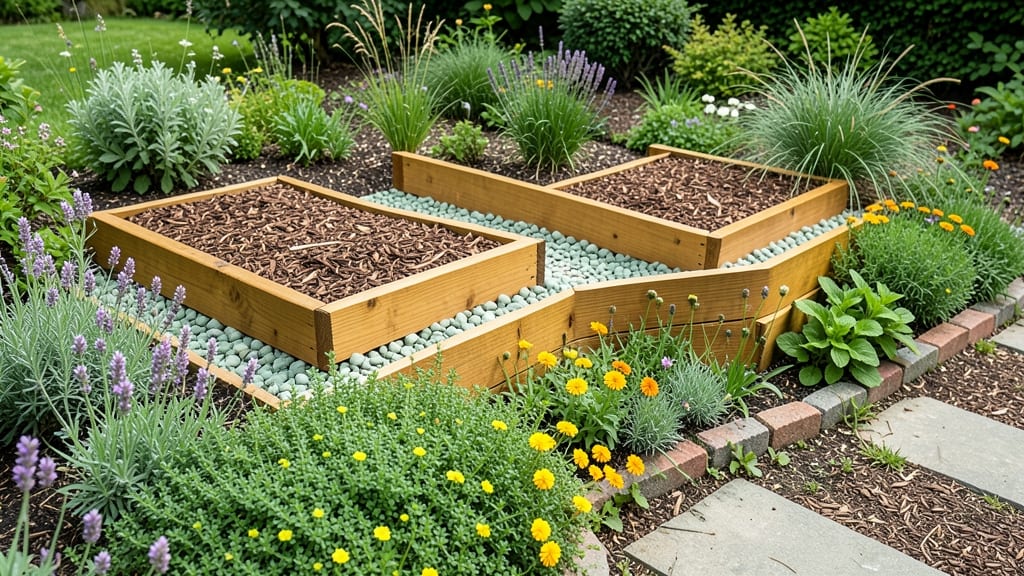
When deciding what to put around raised garden beds, use landscape fabric, mulch, or pavers to block weeds, lock in moisture, and protect bed edges. Your soil type, climate zone, and how much maintenance you're willing to handle will determine which option works best for your garden.
Landscape fabric is my go-to for weed control because it creates a physical barrier while still allowing water to penetrate. Organic mulches like straw or wood chips break down over time, enriching the soil but requiring annual replenishment, while inorganic options such as gravel or rubber mulch last longer but don't improve soil quality. Pavers or bricks offer the most durability and a polished look, though they require more upfront effort to install.
The right choice depends on whether you prioritize low-maintenance solutions or long-term soil health.
💡 In This Article
- How to Choose Mulch for Raised Garden Beds
- Best Permanent Edging Materials for Raised Beds
How to choose mulch for raised garden beds
Mulch works by creating a protective layer that blocks sunlight from reaching weed seeds while reducing soil moisture evaporation. Organic mulches like straw or wood chips break down over time, adding nutrients to the soil as they decompose.
This process improves soil structure and fertility, making it ideal for long-term garden health. For example, straw mulch decomposes at a rate of about 1-2 inches per year, while wood chips take 2-3 years to fully break down, depending on climate conditions.
The moisture-retention properties of mulch vary significantly. Organic mulches like shredded leaves or grass clippings can retain up to 30% more moisture in the soil compared to inorganic options like gravel. This is because organic materials absorb water and release it slowly to plant roots.
In contrast, inorganic mulches such as rubber or stone primarily reflect sunlight and reduce evaporation but don’t enhance soil quality. For hot, dry climates, 3-4 inches of organic mulch is ideal to maintain consistent soil moisture levels.
Your climate plays a critical role in choosing the right mulch. In cooler regions, wood chips or bark mulch insulate the soil, protecting roots from freezing temperatures. Meanwhile, in warmer climates, lighter-colored mulches like straw or pine needles reflect sunlight, keeping the soil cooler.
For example, pine straw mulch is particularly effective in the Southeast U.S., where it helps maintain soil temperatures around 70-75°F during peak summer months, reducing stress on plants.
Consider the long-term effects on your garden. Organic mulches eventually become part of the soil, enriching it with carbon and microbes. Inorganic mulches, however, remain inert and only serve to suppress weeds and retain moisture.
If you're growing vegetables or flowers that benefit from nutrient-rich soil, organic mulches like composted leaves or straw are the best choice. For purely decorative beds or pathways, inorganic mulches like gravel or rubber chips offer a low-maintenance, long-lasting solution.
Think about maintenance too. Organic mulches require replenishing every 6-12 months as they decompose, while inorganic mulches can last 2-5 years with minimal upkeep. If you prefer a "set it and forget it" approach, inorganic mulches or pavers might be the better fit.
For those who enjoy hands-on gardening, organic mulches provide ongoing benefits to the soil and plants.
For a balanced approach, consider layering materials. Start with a 1-inch layer of landscape fabric to block weeds, then add 2-3 inches of organic mulch on top. This combination gives you the best of both worlds: weed suppression from the fabric and soil enrichment from the mulch.
Over time, the mulch will break down, but the landscape fabric underneath will continue to protect your garden beds.