
Tools
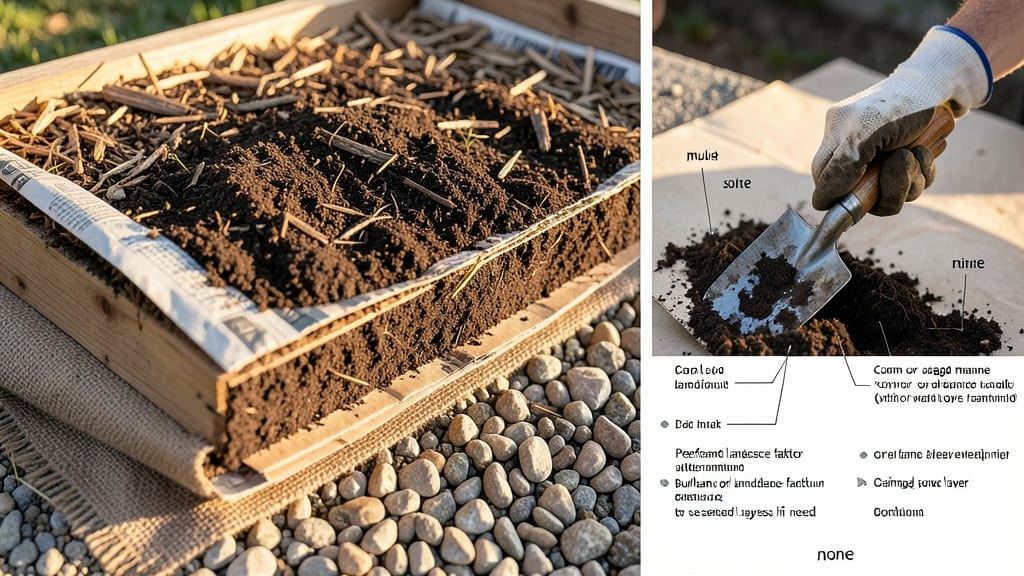
To put what on the bottom of a raised garden bed, start with 2-4 inches of coarse gravel or crushed stone to create proper drainage, then add 2-3 inches of organic material like compost or sand to enhance soil quality and prevent root rot while promoting healthy root growth.
This two-layer system works like a natural filtration system for your plants.
The gravel layer acts as a foundation, preventing water from pooling at the roots—something critical in heavy clay soils or rainy climates. 💧 Meanwhile, the organic layer improves soil aeration and breaks up compaction, giving roots room to breathe and grow.
I’ve seen beds with just one layer develop waterlogged soil within weeks, so combining both materials creates the ideal balance for most vegetables and flowers.
If you’re working with sandy soil or a dry climate, you might adjust the ratios—adding more organic material helps retain moisture, while extra gravel ensures excess water drains quickly.
For containers or lightweight raised beds, consider using landscape fabric between layers to prevent fine soil from washing down into the drainage layer.
💡 In This Article
- How Drainage Layers Protect Plant Roots
- Best Materials for Raised Garden Bed Foundations
How drainage layers protect plant roots
Drainage layers work like a plumbing system for your raised bed, ensuring water flows away from roots while allowing oxygen to circulate. When roots sit in soggy soil for more than 24 hours, they suffocate due to lack of oxygen—a condition called hypoxia.
This triggers anaerobic bacteria to multiply, producing toxins that rot roots and invite fungal diseases like Phytophthora. The gravel layer at the bottom acts as a permeable barrier, letting excess water drain while filtering out harmful pathogens. 💧
Here's the science: Gravel's rough, angular texture creates macropores (large air pockets) that water can't fill completely, leaving space for oxygen. Compare this to compacted soil, where tiny micropores hold water like a sponge, starving roots.
The organic layer above adds humus-rich material that improves soil structure, creating a 30-50% increase in aeration compared to unamended soil. This two-layer combo mimics natural forest floors, where decomposed leaves and rocks work together to prevent waterlogging.
Climate plays a huge role in how these layers perform. In humid regions, the gravel should be 3-4 inches thick to handle heavy rainfall, while arid climates can use 2 inches since water drains quickly.
The organic layer also helps: compost retains 2-3x more water than sand, making it ideal for dry areas. Without proper drainage, plants like tomatoes and peppers—sensitive to root rot—can die within 3-5 days of waterlogging. 🌱
Another critical factor is the particle size of your drainage material. Pea gravel (1/8" diameter) works well for most beds, but crushed stone (3/8") drains faster in clay-heavy soils. Avoid fine sand—it compacts over time, reducing drainage by up to 70%.
The organic layer should be 50% compost and 50% perlite or coconut coir to maintain structure. This balance prevents the layer from breaking down too quickly, which can happen in just 6-12 months with pure compost.
Think of it like a sponge cake: the gravel is the sturdy base that holds everything up, while the organic layer is the moist, airy batter where roots thrive.
Without the gravel, water pools like syrup in a sink cake; without the organic layer, roots choke like a cake without leavening. Together, they create the perfect environment where water moves freely, oxygen circulates, and roots grow strong. 🌿
For container gardens or lightweight raised beds, add a landscape fabric barrier between layers to prevent fine soil from clogging the gravel. This is especially important in windy climates, where soil erosion can reduce drainage efficiency by 40% within a year.
The fabric lets water through while blocking particles—like a coffee filter for your garden's plumbing system. 🏗️