
Tools
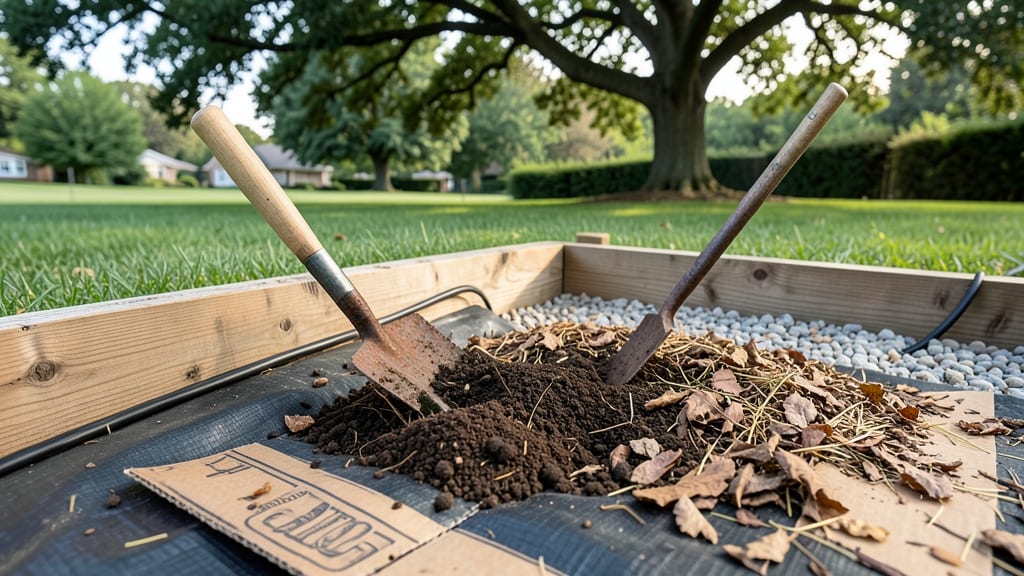
Under a garden bed, you can put the right materials—like organic mulch, landscape fabric, or cardboard—to boost drainage, block weeds, and maintain soil quality—but each option works best for different planting scenarios and soil conditions.
Cardboard breaks down quickly, making it ideal for temporary beds or when you're planting seedlings, while landscape fabric lasts longer and prevents weed growth in perennial gardens. 🌱 Organic mulch, like straw or wood chips, helps retain moisture and adds nutrients as it decomposes, but it may require more frequent replenishment.
The key is matching your choice to your garden's specific needs—whether that's weed control, moisture retention, or long-term soil health.
For example, if you're dealing with heavy weed pressure in a perennial bed, landscape fabric is your best bet because it creates a physical barrier that lasts for years.
On the other hand, if you're planting vegetables or flowers in a temporary space, cardboard is a great eco-friendly option that will eventually decompose into the soil. Mulch is perfect for established gardens where you want to improve soil structure and reduce watering needs.
💡 In This Article
- How Mulch, Fabric, and Cardboard Affect Soil Health
- Choosing the Right Garden Bed Base for Your Plants
How mulch, fabric, and cardboard affect soil health
The foundation you choose under your garden bed directly impacts soil aeration and microbial life. Organic mulch, like straw or shredded leaves, breaks down over time, adding nutrients back into the soil while improving its structure.
This decomposition process releases beneficial microbes that help break down organic matter, creating a thriving ecosystem for plant roots. For instance, wood chips can take 1-3 years to decompose fully, while straw decomposes in just 3-6 months, offering a quicker nutrient boost.
Landscape fabric, on the other hand, acts as a physical barrier that prevents weeds from sprouting while allowing water and air to penetrate. It doesn’t decompose, so it maintains its structure for 5-10 years, making it ideal for long-term beds.
However, it can trap excess moisture against the fabric, potentially leading to anaerobic conditions where harmful bacteria thrive. This is why many gardeners pair fabric with a 2-inch layer of gravel underneath to promote drainage.
Cardboard serves as a temporary solution that decomposes within 3-6 months, enriching the soil with carbon as it breaks down. Unlike fabric, it doesn’t block water or air entirely, allowing roots to penetrate naturally.
The key here is to use uncoated, ink-free cardboard—coated varieties can introduce chemicals that harm soil microbes. When wet, cardboard becomes a sponge, absorbing up to 3 times its weight in water, which helps regulate soil moisture for seedlings.
Each material also influences soil temperature differently. Mulch insulates the soil, keeping it cooler in summer and warmer in winter, while fabric can trap heat near the surface. Cardboard, when wet, acts as a heat sink, absorbing warmth during the day and releasing it slowly at night.
This thermal regulation is critical for plants like tomatoes or peppers, which thrive in consistent 65-75°F soil temperatures.
Consider the long-term trade-offs: mulch and cardboard improve soil fertility over time but require replenishment, while fabric offers durability but may need occasional aeration to prevent compaction.
For example, a vegetable garden planted in cardboard one season could see a 20-30% increase in yield the next year due to enriched soil, whereas a perennial bed with fabric might need less maintenance but could suffer from reduced microbial diversity over time.
Here’s a quick comparison of how each affects soil health:
- Mulch: Boosts microbes, improves structure, needs replenishing
- Fabric: Blocks weeds, lasts long-term, may reduce aeration
- Cardboard: Temporary nutrient boost, decomposes quickly, no weed barrier
The best choice depends on your garden’s stage—new beds benefit from cardboard’s nutrient kick, while established gardens thrive with mulch’s long-term benefits. 🌱