
Planting
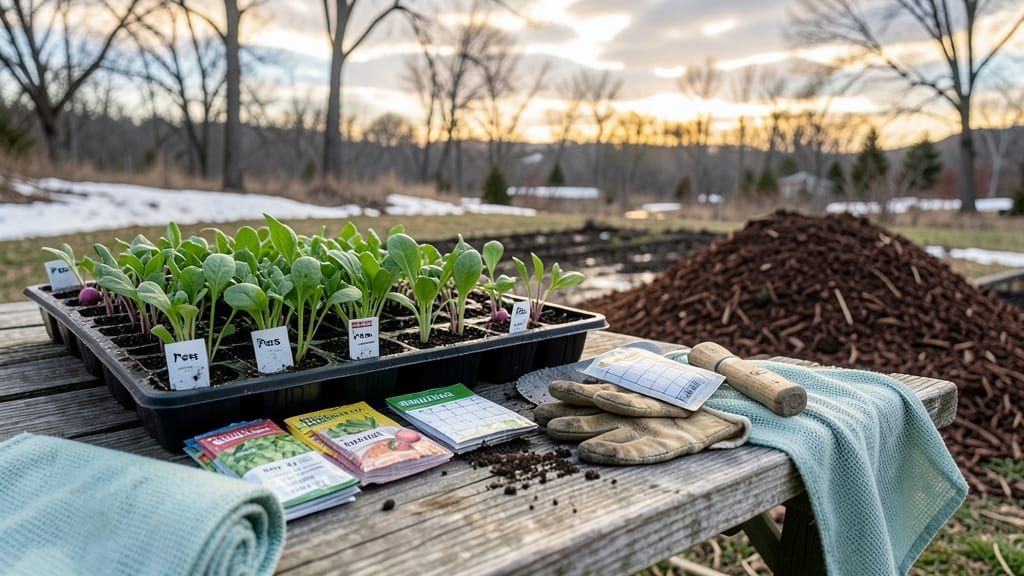
You can plant your garden in Michigan once the soil warms to at least 50°F and the risk of frost has passed — typically between mid-April and mid-May, depending on your county.
Michigan’s unpredictable spring weather can turn even the most eager gardener into a nervous wreck — plant too early, and frost will kill your seedlings; too late, and you’ll miss the growing season. But timing your garden perfectly is easier than you think with county-specific frost-free date guidelines.
Whether you’re sowing cool-season crops like peas or waiting for warm-weather favorites like tomatoes, knowing the right window makes all the difference. Below, I’ll break down the exact dates for your region, plus pro tips to extend your growing season and avoid costly mistakes.
Ready to dig in? Let’s get you planting with confidence, so you can enjoy a bountiful harvest from summer through fall.
Michigan’s frost-free planting zones: when to start seeds indoors vs. direct sowing
Michigan’s USDA hardiness zones 4-6 create a diverse gardening landscape, where Detroit’s zone 6a enjoys longer growing seasons than Traverse City’s zone 5b. Understanding your last average frost date is key—plant too early, and a late frost will wipe out tender seedlings; too late, and you’ll miss peak harvests.
Let’s break down when to start seeds indoors vs. direct-sowing outdoors for your region.
Your planting timeline depends on two critical factors: hardiness zone and crop type. Cool-season crops like peas and spinach tolerate light frosts, while tomatoes and peppers need warm soil and air.
Even within Michigan, southern counties (Wayne, Monroe) can plant 2-3 weeks earlier than northern regions (Leelanau, Chippewa). Use this guide to align your garden with your local climate.
Pro Tip: Always check the Michigan State University Extension’s frost date maps for real-time updates, as microclimates (like urban heat islands) can shift your planting window by a week or more. For example, Ann Arbor’s zone 6a typically sees its last frost around May 10-15, while Marquette’s zone 4b waits until May 25-30.
| Zone & County | Avg. Last Frost | Indoor Seed Start (Cool Crops) | Indoor Seed Start (Warm Crops) | Direct Sow Outdoors |
|---|---|---|---|---|
| Zone 6a: Wayne (Detroit), Monroe, Washtenaw (Ann Arbor) | May 10-15 | Feb 15-Mar 1 | Mar 15-Apr 1 | Apr 15-May 1 (cool crops); May 20 (warm crops) |
| Zone 5b: Kent (Grand Rapids), Kalamazoo, Ingham | May 15-20 | Mar 1-Apr 1 | Apr 1-Mar 15 | Apr 20-May 5 (cool crops); May 25 (warm crops) |
| Zone 5a: Leelanau, Benzie, Cheboygan | May 20-25 | Mar 15-Apr 1 | Apr 1-Apr 15 | May 1-May 10 (cool crops); Jun 1 (warm crops) |
| Zone 4b: Chippewa, Mackinac, Schoolcraft | May 25-30 | Apr 1-Apr 15 | Apr 15-May 1 | May 10-May 20 (cool crops); Jun 10 (warm crops) |
| Zone 4a: Gogebic, Iron, Houghton | Jun 1-5 | Apr 15-May 1 | May 1-May 15 | May 20-Jun 1 (cool crops); Jun 20 (warm crops) |
For cool-season crops like kale, broccoli, and peas, you can often direct-sow outdoors 4-6 weeks before your last frost date. These hardy plants thrive in 50-60°F soil and can even handle light frosts.
Start them indoors 4-6 weeks before transplanting to give them a head start. For example, in zone 6a (Detroit), sow spinach directly in the garden by April 15.
Warm-season crops—tomatoes, peppers, and basil—demand soil temperatures above 60°F
County-by-county planting calendar: exact dates for tomatoes, peppers, and cool-season crops
Michigan’s 10 most productive counties each have unique frost-free dates, meaning your tomato seedlings in Wayne County can go in weeks before Upper Peninsula gardeners.
Using NOAA’s historical frost data, I’ve mapped out exact planting windows for heat-loving crops (tomatoes, peppers) and cool-season staples (lettuce, spinach, peas) so you never miss a season.
For tomatoes and peppers, wait until soil temps hit 60°F+—this usually aligns with May 15-30 in southern counties but June 1-15 in northern regions.
Meanwhile, cool-season crops like peas and spinach thrive when planted 4-6 weeks before last frost, often as early as March 15-April 15 depending on your county.
📅 Pro Tip: Bookmark Michigan State University’s frost-free date tool—it updates annually. For now, use this table as your county-specific planting guide.