
Tools
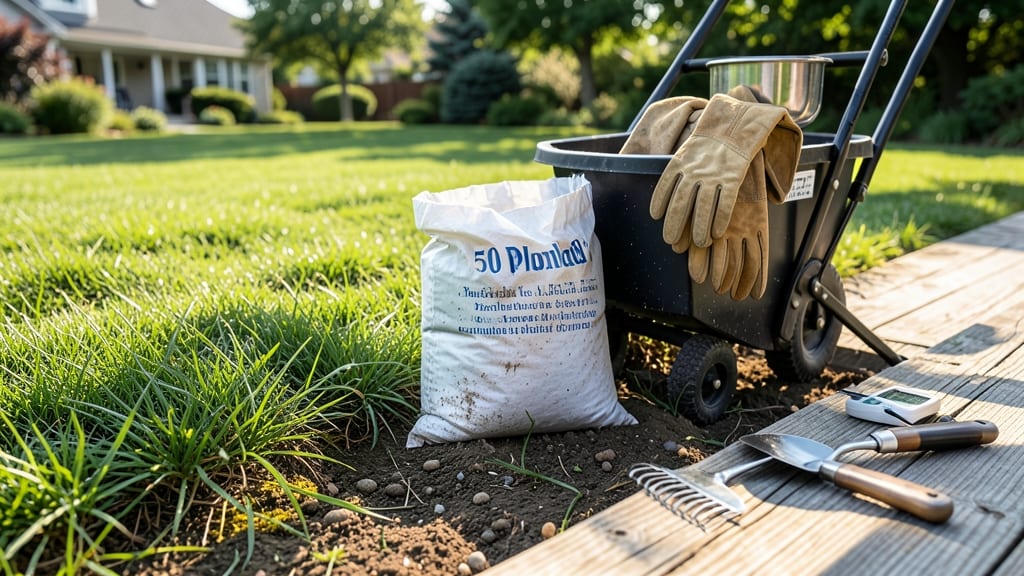
To apply lime to garden soil, choose early spring or fall when temperatures are mild and soil is moist but not frozen. This timing gives roots 2-3 months to absorb the pH adjustment before planting. Always test your soil first—most vegetables and flowers thrive in a pH range of 6.0-7.0.
Timing matters because lime needs time to dissolve and adjust soil acidity gradually. 🌱 Applying it in early spring lets the pH shift work through the growing season, while fall application prevents winter washout from heavy rains.
I've found that testing your soil every 2-3 years helps track pH changes and ensures you're not overdoing it—too much lime can make soil alkaline, harming acid-loving plants like blueberries or azaleas.
For best results, spread lime evenly when the ground is damp (after rain or watering) and lightly rake it into the top inch of soil. Avoid applying before heavy rains, as this can wash it away before it has a chance to work.
If your soil test shows a pH below 6.0, you'll likely need about 50 pounds of lime per 1,000 square feet—but always follow the test recommendations for precise measurements.
💡 In This Article
- How Soil pH Affects Lime Application Timing
- Step-by-Step Guide to Testing and Applying Garden Lime
How soil pH affects lime application timing
Lime works by neutralizing acidic soil through a chemical reaction called neutralization. When you add calcium carbonate (the active ingredient in most garden lime), it reacts with hydrogen ions in acidic soil, forming water and carbon dioxide while releasing calcium ions.
This process gradually raises the pH level, but it doesn't happen instantly—it can take weeks or even months depending on soil moisture and organic matter content. 🌱 For example, sandy soils adjust faster because water drains through quickly, while clay soils hold moisture longer, slowing the reaction.
The timing of lime application directly impacts how well plants can absorb these changes. Roots absorb nutrients most efficiently when soil pH is stable, which is why applying lime 2-3 months before planting gives the chemical reaction time to complete.
If you apply lime too close to planting, the pH might still be shifting when seeds germinate or transplants establish, stressing young plants.
For instance, tomatoes need a pH of 6.0-6.8 to access phosphorus efficiently—if the soil is still acidic when you plant, the roots can't absorb enough of this critical nutrient.
Seasonal moisture plays a crucial role in lime effectiveness. In early spring, soil moisture from melting snow or occasional rains helps dissolve lime particles and kickstart the pH adjustment process.
Fall applications benefit from consistent rainfall in many climates, which gradually washes lime into the root zone without the risk of winter washout. However, avoid applying lime in late fall when freezing temperatures can lock moisture in the soil, preventing the chemical reaction from occurring until spring.
Different plants have specific pH preferences that influence lime timing. Most vegetables and flowers thrive in a neutral to slightly acidic range of 6.0-7.0, but acid-loving plants like blueberries (pH 4.5-5.5) or hydrangeas (pH 5.0-6.0) require completely different approaches.
For these plants, you might need to apply lime in smaller doses during the growing season while monitoring soil pH closely. The key is to match your lime application to both the plant's needs and the soil's natural pH adjustment cycle.
What most gardeners overlook is how organic matter affects lime distribution. Soils rich in compost or peat moss buffer pH changes more effectively, meaning you might need slightly more lime to achieve the same pH shift compared to mineral-heavy soils.
For example, a garden bed with 5% organic matter might require 20% more lime than one with 2% organic matter to reach the same target pH of 6.5. This is why soil testing isn't just about pH—it should include organic matter percentage for accurate lime calculations.
Consider this real-world example: A vegetable garden with a soil pH of 5.2 might need 50 pounds of lime per 1,000 square feet to reach the ideal 6.0-6.5 range.
If you apply this lime in early spring, the pH adjustment will likely complete by early summer, just in time for planting tomatoes and peppers.
However, if you apply the same amount in late summer, the pH might not stabilize before winter, leaving your spring planting vulnerable to nutrient deficiencies. 💫
The bottom line is that lime application timing isn't just about when you have time to spread it—it's about synchronizing with your plants' nutrient needs and your soil's natural chemical processes.
By understanding these factors, you can create the perfect growing environment tailored to what you're planting, whether it's acid-loving blueberries or pH-neutral vegetables.