
Watering
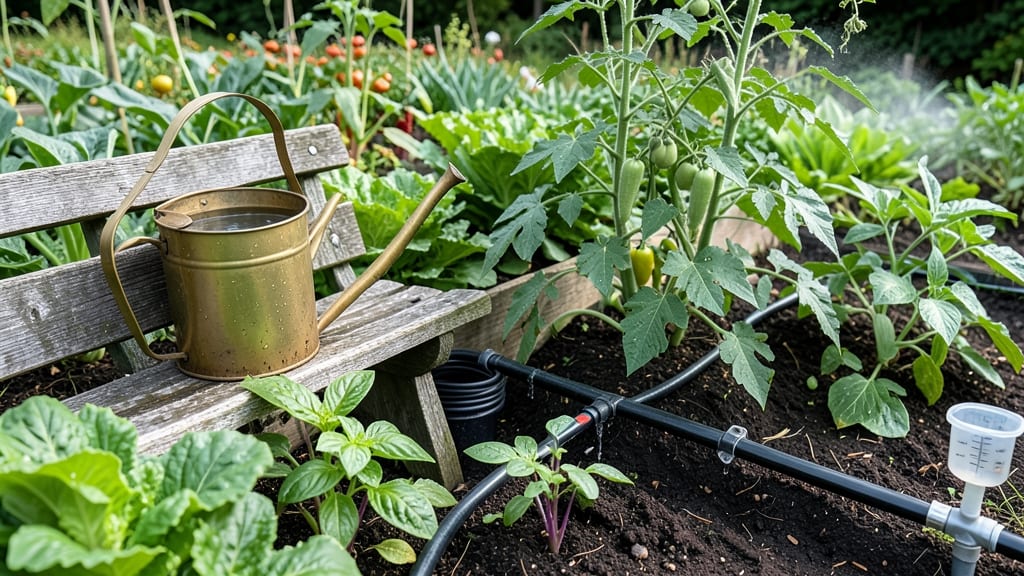
Watering your vegetable garden the right amount saves plants and conserves water—aim for 1-2 inches of water per week, adjusted for soil and weather.
Overwatering or underwatering your vegetable garden can kill your plants—and waste hundreds of gallons of water. The secret to thriving crops lies in knowing exactly when to water, not just how often.
Most gardeners guess, but a simple finger test or moisture meter tells you the truth: is the soil damp just below the surface? Too dry? That’s the difference between a bountiful harvest and wilting leaves.
Below, I’ll show you how to read your soil, water by the plant type, and spot the signs of over- or under-watering before it’s too late.
5 Soil moisture tests to determine when vegetables need watering
Your vegetable garden thrives when soil moisture is just right—not too soggy, not too dry. The 5 soil moisture tests I’ve perfected help me avoid guesswork, saving water and preventing plant stress.
These methods work for leafy greens, root crops, and everything in between, adapting to your garden’s unique conditions.
First, understand that vegetables have different thirst levels. Lettuce wilts faster than carrots, and tomatoes need deeper watering than herbs. That’s why relying on a consistent schedule (like watering every morning at 8 AM) often backfires. Instead, these tests let you check soil conditions before reaching for the hose.
Here’s the game-changer: soil moisture tests reveal what’s happening below the surface. A quick finger check might tell you one thing, but a moisture meter gives you precise data.
I’ll walk you through each method, including how to adjust for sandy soil (dries fast) vs. clay soil (holds moisture longer).
| Test Method | How It Works | Best For | Frequency |
|---|---|---|---|
| Finger Test | Stick finger 1-2 inches deep; dry soil = water time | Leafy greens, herbs | Daily (morning) |
| Moisture Meter | Digital probe reads moisture %; 40-60% = ideal | Root crops, tomatoes | Every 2-3 days |
| Weight Check | Lift pot or container; lighter = needs water | Potted plants, seedlings | Every 1-2 days |
| Chopstick Test | Push chopstick in; pull out—dry = water needed | Large gardens, raised beds | Every 3-4 days |
| Visual Inspection | Check soil surface; cracked = dry; shiny = too wet | All vegetables | Daily (quick check) |
Let’s start with the finger test, my go-to for leafy greens like spinach or kale. Push your index finger 1-2 inches into the soil. If it feels dry, water immediately.
For root crops like carrots or beets, dig deeper—2-3 inches—since they need consistent moisture at their roots. Pro tip: Morning is best because evening water can encourage fungal growth.
The moisture meter is a game-changer for precision. These handheld devices give you a percentage reading (aim for 40-60% for most veggies). I use mine for tomatoes and peppers, which hate soggy roots but also can’t handle drought.
Sandy soil? Check moisture daily—it drains fast. Clay soil? Every 3-4 days suffices. Always calibrate your meter in clean water first for accuracy.
For potted vegetables or containers, the weight check is foolproof. Lift your pot—if it feels light, your plants are thirsty. Heavy pots mean hold off. This method works great for herbs like basil or cilantro, which dry out quickly in small spaces.
Pair this with a drip irrigation system to automate watering while you’re away.
Don’t have a moisture meter? The chopstick test is a clever DIY hack. Push a wooden chopstick 2 inches into the soil, wait 10 minutes, then pull it out. If it comes out clean, water now.
If it’s damp, wait another day. This test is perfect for large garden beds where digging is tedious. I’ve used it for zucchini and cucumbers, which need deep, infrequent watering.
Lastly, the visual inspection is a quick sanity check. Cracked soil signals dryness, while a shiny, muddy surface means you’ve overwatered. Pay attention to leaf color too: wilting or yellowing often means it’s time to water (or adjust your method).
For drought-prone areas, mulch with straw to retain moisture and reduce evaporation.
Remember, overwatering is just as deadly as underwatering. Too much water drowns roots, while too little stunts growth. By combining these tests, I’ve cut my water usage by 30% while growing healthier veggies.
Start with the finger test, then graduate to a moisture meter for tricky crops like tomatoes. Your garden—and your water bill—will thank you.
Watering schedules by vegetable type: how deep and how often
Not all vegetables crave the same amount of water—some thrive with frequent shallow drinks, while others demand deep, infrequent soaks. The key lies in understanding your plants' root depth and your soil's drainage characteristics.
For example, tomatoes and peppers need consistent moisture to prevent blossom-end rot, while carrots and lettuce prefer evenly damp soil to avoid cracking or bolting. Let's break down the perfect watering routine for your garden's star players.
Your soil type plays a starring role in watering decisions. Sandy soil drains quickly, requiring more frequent watering (every 2-3 days), while clay soil holds moisture longer, allowing you to stretch watering to 5-7 days.
Herbs like basil and parsley need regular moisture but hate soggy roots, making sandy soil ideal unless amended with compost. Always water deeply—aim for 1-2 inches per week—to encourage roots to grow downward for stronger plants.
For tomatoes, deep watering—1.5-2 inches per session—encourages strong root systems and prevents blossom-end rot. Water at the base (not the leaves) to avoid fungal diseases like early blight. Peppers, while drought-tolerant, need consistent moisture during fruiting.
Let the top 1-2 inches of soil dry between waterings to prevent cracked fruits. Morning watering is ideal for both, as it reduces evaporation and gives foliage time to dry before nightfall.
Leafy greens like lettuce and spinach have shallow roots and need frequent, light watering. Aim for 0.5-1 inch per week, keeping the soil evenly moist. Too much water causes bolting (premature flowering), while too little leads to bitter leaves. Carrots, on the other hand, require consistent moisture but hate soggy soil. Water deeply every 2-5 days, depending on your soil, to prevent cracking and ensure sweet, straight roots. Always water gently to avoid disturbing the soil around delicate seedlings.
Herbs like basil and parsley strike a balance between tomatoes and lettuce. They prefer moderate moisture—enough to keep the soil slightly damp but not waterlogged. Let the top 1 inch dry out between waterings to prevent root rot.
Mulching with straw helps retain moisture while keeping roots cool. Adjust your watering schedule based on weather patterns: increase frequency during hot, dry spells and reduce it when rain is forecasted.
Pro tip: Use a <