
Vegetables
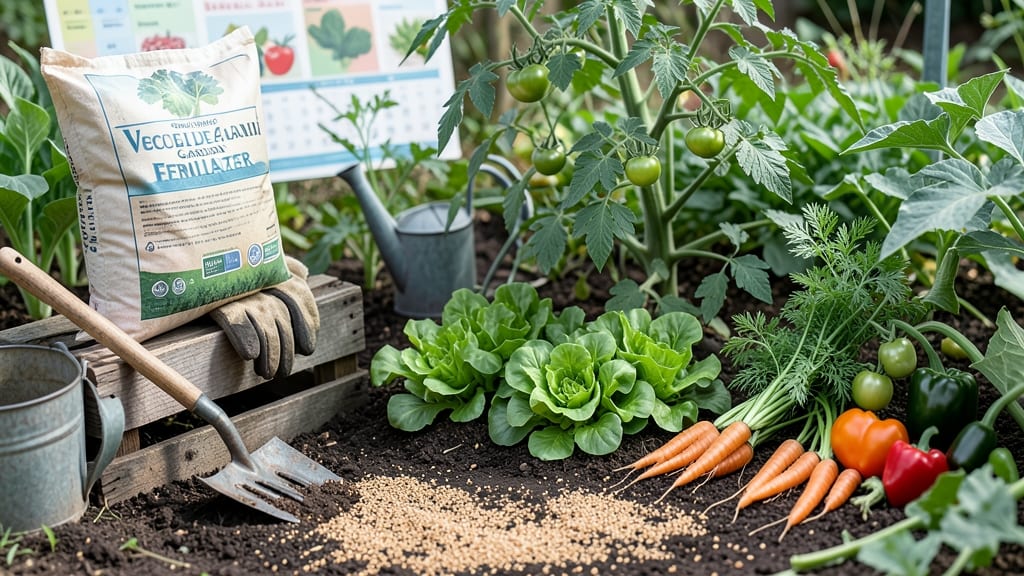
To fertilize a vegetable garden effectively, time your applications based on soil conditions and plant needs: start with compost or balanced fertilizer in early spring before planting, then use nitrogen-heavy feedings every 4-6 weeks during active growth. Fast-growing greens thrive with frequent nutrients, while root vegetables prefer mid-season boosts.
Timing matters more than most gardeners realize—soil tests reveal exactly when your plants need nutrients most. 🌱 A simple test kit checks nitrogen (leaf growth), phosphorus (root development), and potassium (overall health), with ideal pH between 6.0 and 7.0 for most vegetables.
I always test my garden in early spring and again after harvest to adjust my fertilization plan accordingly.
For example, tomatoes and peppers benefit from a balanced fertilizer at planting, followed by nitrogen-rich feedings when flowers appear. Meanwhile, carrots and beets prefer a phosphorus boost mid-season to encourage strong root development.
Organic options like composted manure or fish emulsion break down slowly, while synthetic fertilizers deliver quick results—both have their place depending on your garden's needs.
💡 In This Article
- How Soil Testing Determines Optimal Fertilizer Timing
- Plant-Specific Fertilization Calendar for Vegetable Gardens
How soil testing determines optimal fertilizer timing
Soil testing reveals the exact nutrient deficiencies your plants face, allowing you to fertilize precisely when needed. The three critical measurements—nitrogen (N), phosphorus (P), and potassium (K)—each influence different growth stages. Nitrogen fuels leafy top growth, phosphorus stimulates root development, and potassium strengthens overall plant resilience.
A test also measures pH levels, which must stay between 6.0 and 7.0 for most vegetables to absorb nutrients efficiently.
Seasonal soil cycles play a huge role in nutrient availability. For instance, nitrogen depletes quickly in spring as plants wake up from dormancy, so applying compost or a balanced 10-10-10 fertilizer at planting time replenishes what was lost over winter.
Phosphorus, however, becomes more available when soil temperatures rise above 50°F, making mid-season applications ideal for root crops. The test results tell you exactly how much of each nutrient to add—never guesswork!
What most gardeners overlook is how soil microbes interact with fertilizers. Organic matter like compost feeds these microbes, which then convert nutrients into forms plants can absorb.
This process takes time—typically 4-6 weeks—so applying compost in early spring gives microbes ample time to break it down before peak growing season. Synthetic fertilizers, on the other hand, dissolve immediately, providing a quick nutrient boost but requiring more frequent applications.
Interpreting test results is simpler than it seems. If your soil tests low in nitrogen, focus on side-dressing with alfalfa meal or blood meal during active growth. Low phosphorus? Work in bone meal at planting time.
Potassium deficiencies show up as weak stems—fix this with wood ash or greensand. Each nutrient has a specific job, and timing applications to match plant needs maximizes yield and flavor.
Consider this example: My soil test showed high phosphorus but low nitrogen. I knew my leafy greens (like spinach and kale) would suffer without extra nitrogen, so I applied a 5-10-10 fertilizer when they were 3 inches tall.
Meanwhile, my tomato plants got a phosphorus boost at flowering to encourage fruit set. The test results became my roadmap for the entire season!
One final tip: Test your soil again after harvest. Nutrient levels change as plants grow, and knowing your soil's baseline helps you plan next year's fertilizing strategy. This proactive approach saves money and prevents over-fertilizing, which can harm plants and pollute groundwater.