
Picking
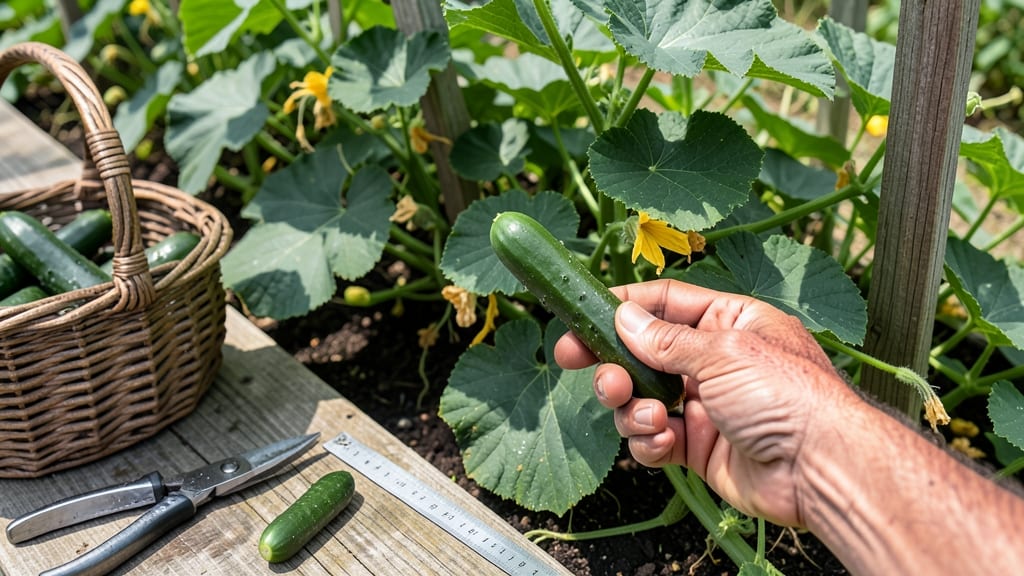
Harvest cucumbers from the garden when they reach 6-8 inches and their skin resists gentle pressure—this is the sweet spot for that perfect crunch 🥒.
Picking too early means underdeveloped flavor, while waiting too long turns them mealy and bitter. I’ve made both mistakes, and trust me, the 3 PM taste test will tell you which one you’re doing wrong.
Beyond size, look for a deep, even green color and a stem that snaps cleanly when bent. These visual cues are your best friends for maximizing yield and keeping your plants productive all season.
In this guide, I’ll break down the exact size checks, hidden ripeness signs, and common mistakes that ruin your harvest—so you can go from guessing to confidently picking cucumbers at their peak.


3 Key size indicators to harvest cucumbers at peak freshness
Harvesting cucumbers at the right size ensures maximum flavor, texture, and yield. Size matters because cucumbers continue growing after reaching maturity, turning bitter and seedy if left too long on the vine.
The key is knowing when your specific variety is ready—whether you're growing slicing cucumbers or pickling cucumbers, each has its own ideal harvest window.
For slicing varieties like 'Straight Eight' or 'Marketmore', aim for a length between 6 to 8 inches. These cucumbers should be firm but not rock-hard, with smooth skin that resists gentle pressure.
If you wait too long, they'll develop a thick, tough skin and bitter taste. Pickling cucumbers, on the other hand, like 'Boston Pickling' or 'National Pickling', are best harvested smaller—around 3 to 5 inches—when their skin is still tender and thin.
Variety-specific sizing is crucial because even within the same plant, cucumbers can vary. Always check the seed packet or plant tag for recommended harvest sizes. For example, bush varieties often produce smaller cucumbers faster than vining types, which may take longer to reach ideal size. Regular harvesting also encourages more production, so don’t skip this step!
| Cucumber Type | Ideal Size | Skin Texture | Stem Color | Best For |
|---|---|---|---|---|
| Slicing (e.g., 'Straight Eight') | 6–8 inches | Firm, smooth | Green stem end | Salads, sandwiches |
| Pickling (e.g., 'Boston Pickling') | 3–5 inches | Tender, thin skin | Yellow/brown blossom end | Pickles, relish |
| Bush Varieties (e.g., 'Bush Champion') | 4–6 inches | Slightly bumpy | Green stem end | Containers, small gardens |
| Vining Varieties (e.g., 'Arkansas Little Leaf') | 5–7 inches | Smooth, glossy | Green stem end | Long-season harvests |
Beyond size, pay attention to the blossom end (the end opposite the stem). When it turns yellow or brown, that’s a clear sign your cucumber is ready to pick. This color change indicates the cucumber has stopped growing and is at its peak flavor.
If you ignore this cue, the cucumber will continue swelling, becoming watery and seedy—definitely not the crunchy, sweet treat you’re after!
Another size-related trick is the "thumbnail test." Gently press your thumbnail into the cucumber’s skin. If it leaves a slight dent but doesn’t puncture, it’s ready. If the skin resists completely, it’s too young.
If it gives too easily, it’s overripe. This simple test helps you avoid the mealy texture that comes from harvesting too late.
Don’t forget to harvest frequently—ideally every 2 to 3 days during peak production. This encourages your plants to produce more cucumbers and prevents overcrowding, which can lead to disease.
Use a sharp pair of pruning shears or a knife to cut cucumbers from the vine, leaving a small stem attached. This reduces damage to the plant and keeps it healthy for future harvests.
Regional climate also plays a role in sizing. In hotter climates, cucumbers may grow faster and reach harvest size sooner, while in cooler regions, they might take longer. Adjust your expectations based on your local growing season.
For example, if you’re in Zone 9 or 10, you might see cucumbers ready in as little as 45 days, whereas in Zone 5 or 6, it could take up to 70 days.
One common mistake is assuming all cucumbers are ready at the same time. Even on one plant, some may be ready while others aren’t. Check individual cucumbers rather than harvesting the whole bunch at once.
This ensures you’re always picking at the perfect moment for maximum flavor and texture. Over time, you’ll develop an eye for spotting the ideal harvest size for your specific variety.
Pro tip: Keep a small harvest journal to track when your cucumbers reach peak size. Note the days to maturity for your specific variety and growing conditions. This helps you plan future plantings and ensures you’re always harvesting at the right time.
With practice, you’ll become a cucumber-harvesting pro, enjoying that perfect crunch every time!
How to check cucumber ripeness beyond size: 5 hidden signs
Size isn't the only way to tell when your cucumbers are ready for harvest. While length matters, these hidden signs reveal the perfect moment for peak flavor and texture.
Ignoring them can lead to bitter, seedy cucumbers that fall short of your garden goals. Let me show you how to read your plants like a pro!
Start by examining the blossom end—the opposite end of the stem. A yellow or brown spot here signals maturity, while a bright green end means the cucumber still has growing to do.
This subtle color change is your first clue that harvest time is near. Don't overlook this simple but powerful indicator!
- 1. Stem Separation: Gently tug near the vine—if the stem snaps cleanly, it's ready!
- 2. Skin Texture: Smooth, firm skin with a slight sheen means peak ripeness.
- 3. Blossom End Color: Look for yellow/brown where the flower was—this shows maturity.
- 4. Thumbnail Test: Press gently—if it leaves a slight dent but doesn't bruise, it's perfect!
- 5. Weight: Heavy for its size? That dense weight means juicy, flavorful flesh.
Next, run your thumbnail test on the cucumber's side. Press gently—if it leaves a slight indentation but doesn't bruise, you've hit the sweet spot. Overripe cucumbers will feel mushy, while underripe ones stay rock-hard. This tactile check ensures you're harvesting at the perfect firmness for slicing or pickling.
Pay attention to the skin texture too. Mature cucumbers develop a smooth, slightly glossy surface that resists scratches. If the skin feels rough or dull, the cucumber may still need time.
This subtle texture change often appears just before the cucumber reaches its ideal size, giving you a head start on harvest timing.
Finally, consider the weight-to-size ratio. A perfectly ripe cucumber feels heavy for its length, thanks to its water content and dense flesh. Lift a few candidates—if one stands out as noticeably heavier than its siblings, that's your winner.
This simple trick helps you avoid hollow, waterlogged cucumbers that taste bland.
Mastering these hidden signs will transform your harvest from hit-or-miss to consistently delicious. The next time you're in your garden, grab a cucumber and test these methods—your taste buds will thank you! 🥒