
Picking
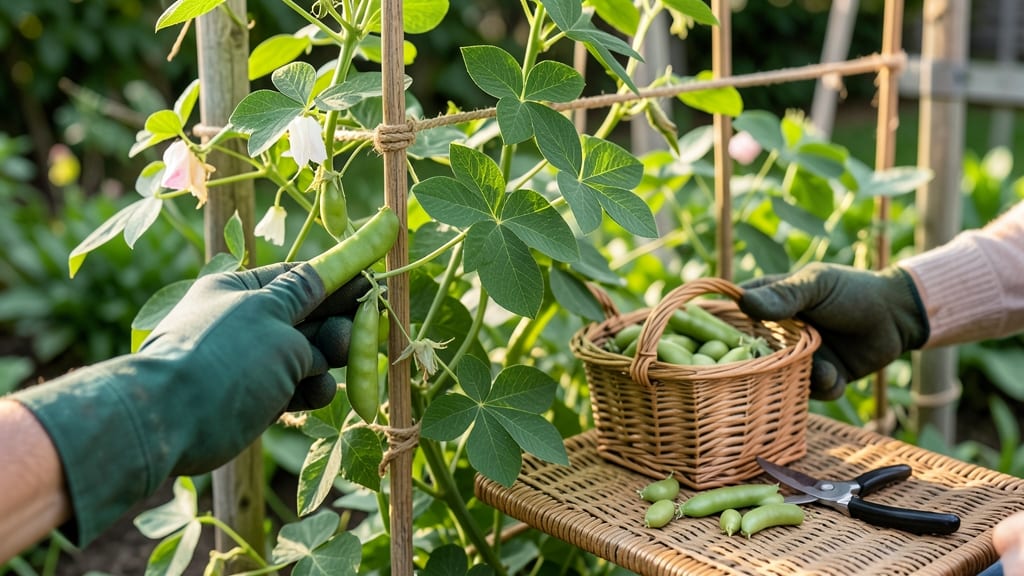
To pick peas from your garden at their sweetest, watch for pods that are 2-3 inches long and bright green—any longer, and they’ll turn tough and lose flavor.
Peas straight from your garden taste like sunshine—until you wait too long. Knowing the exact moment to harvest ensures sweet, tender pods, not tough, stringy disappointments. Here’s how to time it perfectly.
Most varieties reach peak flavor in 60-70 days, but the real test is the pod itself: firm to the touch, with visible seeds that aren’t yet bulging. Snap peas and sugar snaps are ready slightly earlier, while shelling peas need a bit more time.
Harvest in the morning for the best flavor, and don’t wait—once peas toughen, they won’t soften again. I’ll show you how to check readiness every day and keep your plants producing for weeks.


3 Visual and physical signs your peas are ready to harvest
Nothing beats the taste of fresh peas picked straight from the vine—if you harvest them at the perfect moment. Miss the window, and you’ll end up with tough, stringy pods that taste more like cardboard than sunshine.
The key is knowing three critical signs that tell you when your peas are ready to pick, not overripe. These visual and physical cues will transform your harvest from disappointing to downright delicious.
First, let’s talk about pod size, the most obvious clue. When peas reach 2 to 3 inches long, they’re usually at their sweetest. Smaller pods (under 1 inch) are still immature, while larger ones have already started converting sugars into starches, making them less tender.
I like to measure a few pods against my thumb—if they’re about the length of my thumb from the tip to the first knuckle, they’re ready.
Next, check the color and texture of the pods. Ready-to-harvest peas should be bright green and firm to the touch. If they’re pale green, yellowish, or feel soft or mushy, they’re past their prime.
A gentle squeeze should make the pod snap easily—this is your green light to harvest. Overripe pods, on the other hand, feel tough and may even split open on the vine.
Finally, peek inside the pod to check seed visibility and size. At the perfect harvest time, you should see small, plump seeds through the pod’s skin, but they shouldn’t fill the entire pod.
If the seeds are large and fully developed, the peas have passed their peak flavor and are becoming fibrous. This is a common mistake—many gardeners wait too long, thinking bigger seeds mean better peas, but it’s the opposite!
To avoid guesswork, I recommend harvesting peas in the morning when they’re cool and crisp. This is when their sugar content is highest, and the pods are at their firmest.
Use sharp scissors or your fingers to snip pods just above the vine—this prevents damage to the plant and encourages more production. Pro tip: Pick peas every 2-3 days to keep the plants focused on producing new pods instead of letting old ones overripe.
If you’re growing multiple pea varieties, like sugar snaps and shelling peas, timing can vary slightly. Sugar snaps, for example, are best when the entire pod is tender and crisp, while shelling peas should have small, plump seeds but still be easy to shell.
Always check the specific variety’s guidelines, as some mature faster than others. For instance, dwarf varieties like ‘Little Marvel’ might be ready in 60 days, while climbing types like ‘Wando’ take closer to 70 days.
One of the biggest mistakes I see is waiting until the pods look “full” before harvesting. By then, the peas have already started converting their natural sugars into starches, which makes them less sweet and more fibrous.
Think of it like waiting for a tomato to turn fully red—you’ll miss the peak flavor if you’re not paying attention. The same rule applies to peas: harvest early and often for the best results.
For a foolproof method, try the “squeeze test”. Hold a pod between your thumb and forefinger and give it a gentle squeeze. If it snaps with a crisp sound, it’s ready. If it bends or feels mushy, it’s overripe.
This simple trick saves me from harvesting peas too early or too late. Pair it with the other signs, and you’ll never miss the sweet spot again.
Remember, peas are fast growers, and their flavor declines quickly once they reach maturity. The more consistently you harvest, the more your plants will produce.
Aim to pick at least once every 2-3 days during peak season, and you’ll enjoy a steady supply of sweet, tender peas all season long. Happy harvesting!
Pea variety harvest times: when shelling vs. snap peas reach peak flavor
Not all peas are created equal when it comes to harvest timing. Sugar snap peas, snow peas, and shelling peas each have distinct sweetness peaks.
Missing the window means tough, bitter pods instead of crisp, tender bites. Let’s break down the exact moments to harvest each type for maximum flavor.
Climate plays a surprising role too. Cooler temperatures slow ripening by 1-2 weeks, while hot summer days can rush maturity. Even in the same garden, your neighbors’ peas might be ready days before yours. Pay attention to these variety-specific cues to avoid disappointment.
| Variety | Pod Size | Seed Visibility | Days to Harvest | Climate Adjustment |
|---|---|---|---|---|
| Sugar Snap Peas | 3-4 inches | Seeds visible but small | 60-70 days | +1-2 weeks in heat |
| Snow Peas | 2-3 inches | Flat pods, no seeds | 55-65 days | -1 week in cold |
| Shelling Peas | 2 inches | Seeds fully formed | 65-75 days | +2 weeks in drought |
For sugar snap peas, aim for pods that are 3-4 inches long with seeds just visible inside. These are best picked in the morning when sugars are highest. If you wait too long, the pods become fibrous and lose their signature crunch.
Snow peas, on the other hand, are ready when pods reach 2-3 inches and remain flat. Their sweetness peaks when seeds are barely visible—harvesting too late turns them tough. In cooler climates, they may mature faster, so check daily once pods start forming.
Shelling peas are the most forgiving but still need attention. Harvest when pods are 2 inches long and seeds are fully developed but not oversized. These peas continue to sweeten slightly after picking, so don’t stress if they’re not perfect—just avoid letting them dry on the vine.
Pro tip: Harvest every 2-3 days for all varieties. This not only preserves flavor but also encourages plants to produce more pods. And always use sharp scissors or pruners to avoid damaging the vines—this keeps your pea patch productive all season.