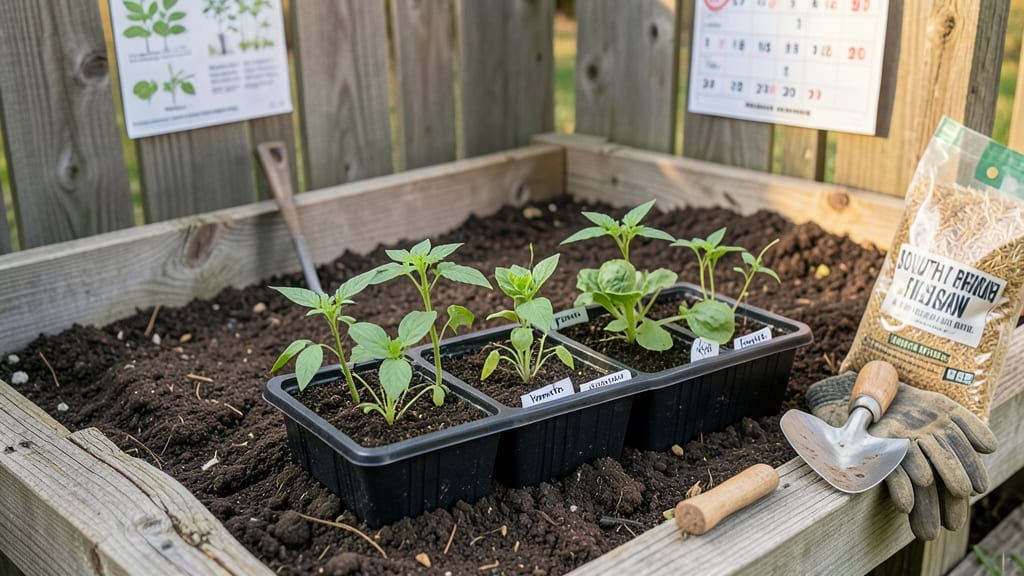
Planting a garden in South Carolina requires knowing when the soil warms up and the last frost passes—typically mid-March to mid-April for most of the state, with coastal areas getting a head start.
South Carolina’s warm climate and long growing season make it a gardener’s paradise—but planting too early or late can mean wasted seeds and stunted crops. Timing is everything, especially when balancing heat-tolerant varieties with frost-sensitive favorites.
If you’ve ever watched your seedlings bolt in the heat or wither from a late frost, you know how critical the right window is. The key is matching your crops to the USDA zones 7b–8b and adjusting for microclimates like the Piedmont’s cooler nights or the Lowcountry’s humidity.
Here’s how to pinpoint your exact planting dates by county, plus the heat-tolerant crops that thrive when the thermometer climbs—and how to protect them when summer hits.
Jan
❄️
Feb
❄️
Mar
🌱
Apr
🌱
May
🌱
Jun
🌱
Jul
☀️
Aug
☀️
Sep
🍂
Oct
🍂
Nov
🍂
Dec
❄️
South Carolina planting zones & frost-free deadlines by county
South Carolina spans USDA hardiness zones 7b through 8b, giving gardeners a long growing season—but frost dates vary dramatically from the mountains to the coast. Knowing your last spring frost and first fall frost is critical for timing cool-season crops like broccoli and heat-lovers such as okra.
Let’s break down the specifics by region so you can plan with confidence.
Most of South Carolina falls within zones 7b (0-10°F) and 8a (10-15°F), but coastal areas like Charleston (zone 8b) enjoy earlier springs and later falls. Inland counties like Greenville (zone 7b) face colder nights that can delay planting.
These microclimates mean Charleston’s frost-free window lasts 300+ days, while Greenville’s stretches just 240 days.
Here’s the county-by-county breakdown of average last frost dates (spring) and first frost dates (fall), along with ideal planting windows for your favorite crops. Use this as your garden calendar to avoid frost damage or wasted seeds.
| County |
USDA Zone |
Last Frost (Spring) |
First Frost (Fall) |
Spring Planting Window |
Fall Planting Window |
| Charleston |
8b (15-20°F) |
Feb 20 - Mar 5 |
Nov 15 - Dec 5 |
Mar 15 - Apr 30 |
Aug 1 - Sep 15 |
| Columbia |
8a (10-15°F) |
Mar 1 - Mar 15 |
Nov 1 - Nov 15 |
Mar 20 - Apr 15 |
Jul 20 - Aug 31 |
| Greenville |
7b (0-10°F) |
Mar 15 - Apr 1 |
Oct 20 - Nov 5 |
Apr 10 - May 1 |
Jul 1 - Aug 15 |
| Spartanburg |
7b (0-10°F) |
Mar 20 - Apr 5 |
Oct 15 - Nov 1 |
Apr 15 - May 10 |
Jul 10 - Aug 10 |
| Beaufort |
8b (15-20°F) |
Feb 15 - Mar 1 |
Nov 10 - Nov 25 |
Mar 1 - Apr 15 |
Aug 1 - Sep 10 |
Best heat-tolerant vegetables for South Carolina’s summer planting
South Carolina’s summer heat can reach 90°F+, making traditional cool-season crops wilt before harvest. But don’t let the heat stop you—these 10 heat-tolerant vegetables thrive in the Palmetto State’s sweltering conditions.
From okra’s crisp pods to sweet potatoes’ sweet tubers, these varieties reward gardeners with bountiful harvests when planted at the right time.
For optimal success, focus on planting after the last frost date (typically mid-March to early April in most counties) and use mulch and shade cloth to protect young plants from intense afternoon sun.
These heat-lovers often perform best when direct-sown in well-draining, sandy loam soil—common across SC’s coastal plains and Piedmont regions.
-
1. Okra – Thrives in 90°F+ heat; plant seeds after last frost (April–May). Harvest pods at 3–4 inches for tenderness.
-
2. Sweet Potatoes – Direct-sow slips in May–June; vines spread aggressively—give them space (18–24 inches apart).
-
3. Black-Eyed Peas – Sow March–May or August–September for fall harvests. Prefers 60–90°F soil temps.
-
4. Malabar Spinach – A heat-loving vine (not true spinach); plant April–June in partial shade. Harvest young leaves for milder flavor.
-
5. Cowpeas – Drought-tolerant; sow April–July. Fixes nitrogen in soil—great for rotating crops.
-
6. Eggplant – Start seeds indoors in March, transplant after last frost. Use black plastic mulch to warm soil.
-
7. Peppers (Hot & Sweet) – Transplant April–May; prune for better airflow to prevent disease in humidity.
-
8. Sorghum – A drought-resistant grain; sow May–July. Harvest seeds or young shoots for syrup.
-
9. Amaranth – Edible leaves and seeds; direct-sow April–June. Tolerates poor soil and heat.
-
10. Tomatillos – Plant March–April; prefers partial shade in peak heat. Harvest green husks for salsa.
Pro tip: Pair these heat-lovers with shade-tolerant companions like bush beans or Swiss chard to create a balanced summer garden. For example, plant okra near cucumbers—the cucumbers’ vines will shade okra’s roots while the okra deters pests like squash bugs.
Watering is critical during SC’s summer—aim for 1–1.5 inches per week, delivered early in the morning to reduce evaporation and fungal risks. Use drip irrigation to keep foliage dry, especially for peppers and eggplants, which are prone to blight in humid conditions.
Don’t forget to harvest regularly to encourage production. For instance, black-eyed peas and cowpeas will keep yielding if you pick pods before they mature. And when summer winds down, save seeds from your okra, sorghum, or amaranth for next year’s garden—SC’s heat is perfect for seed maturation! 🌱
★★★★★4.7(9 reviews)