
Planting
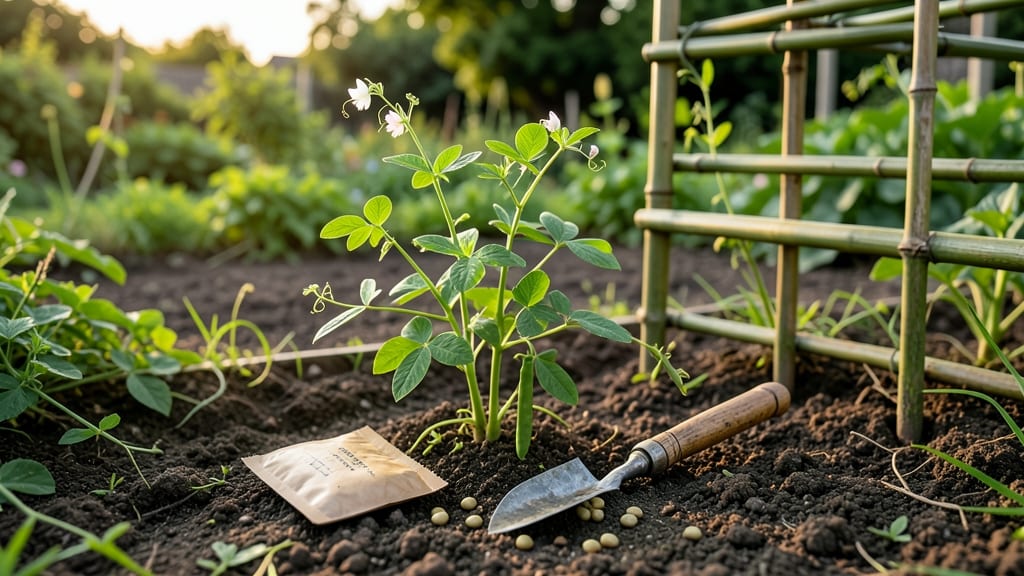
To plant garden peas at the right time means catching that sweet spot between frost and heat—4-6 weeks before your last spring frost or 75-100 days before your first fall frost.
Miss that window, and you’re either staring at frozen seedlings or wilting vines before they produce a single pod.
I’ve lost entire batches because I planted too late in spring or too early in fall, and the lesson is clear: timing isn’t just about the calendar—it’s about the soil temperature and your local frost dates.
Garden peas 🌱 thrive in cool weather, which is why early spring and late summer are their best bets. In USDA Zone 6a, that means aiming for late March to early April or late July to early August.
But if you’re in a warmer zone, you might squeeze in a fall crop—just don’t let the soil warm above 50°F.
Below, I’ll break down the exact dates by zone, how to prep your soil for success, and a few companion planting tricks to keep pests at bay. Ready to turn your pea patch into a harvest goldmine?
Pea planting calendar by USDA hardiness Zones: exact dates to avoid frost damage
Garden peas thrive in cool weather but wilt under 50°F soil or 32°F air temperatures. Planting too early risks frost damage, while waiting too long means missed harvests. The key? Zone-specific timing that aligns with your last frost date and soil warmth.
I’ll break down exact windows for USDA Zones 3-8, plus how to adjust for early vs. late varieties.
Peas need 40-50°F soil temperatures to germinate—cold soil delays sprouting or causes rot. Use a soil thermometer or the finger test: press your finger into the soil; if it feels cool but not freezing, it’s ready.
In warmer zones (7-8), you can also plant a fall crop 75-100 days before first frost for a second harvest.
Here’s your zone-by-zone planting guide, including frost-free dates and variety recommendations to maximize success:
In Zones 3-4, where winters are harsh, focus on early varieties like Alaska or Lincoln, which tolerate cooler soils. These can handle 35°F air temps once established but still need 40°F soil to sprout.
I’ve planted these in late April in my Zone 4 garden, and they’ve consistently outpaced later varieties.
For Zones 5-6, aim for March 15 to April 15 planting. This gives peas time to mature before summer heat sets in. If you miss this window, try a fall crop in July—just ensure you plant 75-100 days before your first frost.
For example, in Zone 6, with a first frost on October 15, your fall planting deadline is July 15.
Warmer zones (7-8) offer flexibility. You can start as early as February 15 for a spring harvest or plant in August for a fall crop. However, avoid planting when soil temps exceed 75°F, as this stresses peas.
In my Zone 7b garden, I’ve had success with Oregon Sugar Pods planted in late February under row covers.
Protect young pea shoots from frost with lightweight row covers or cloches if temperatures dip below 32°F. Even a single night of frost can kill tender seedlings. I’ve used floating row covers in early spring to extend my planting window by 2-3 weeks without risking damage.
Soil preparation is just as critical as timing. Peas prefer well-draining, slightly acidic soil (pH 6.0-7.0). Amend heavy clay with compost or sand to improve drainage. I’ve also found that adding aged manure or bone meal at planting boosts phosphorus, which peas need for strong roots and pods.
Don’t forget to soak seeds overnight before planting, especially in dry or cool soils. This speeds up germination and gives you a head start. I’ve seen 30-50% faster sprouting with soaked seeds compared to dry ones.
Just be sure to plant them 1 inch deep and 2-3 inches apart for optimal growth.
For a continuous harvest, stagger plantings every 2 weeks in spring. This ensures you’re always picking fresh peas while others are still maturing. In my garden, this method has extended my harvest by 3-4 weeks compared to a single planting.
🌱
3 Critical signs your soil is ready for peas (and when to wait)
Even if you’ve marked your calendar for pea planting season, your soil might not be ready—especially in cooler climates. Garden peas thrive in 40-50°F soil, but rushing can lead to stunted growth or frost damage. Here’s how to check without a fancy thermometer or lab test.
First, look for moisture consistency. Peas need well-drained but damp soil. Stick your finger 2-3 inches deep—if it feels cool but not icy, and crumbles easily, it’s ideal. Overly dry or waterlogged soil delays germination, even with the perfect timing.
Don’t overlook soil pH, either. Peas prefer a slightly alkaline pH of 6.0-7.5. If your soil is too acidic (common in northern climates), mix in lime or wood ash 2 weeks before planting. A simple DIY pH test uses red cabbage juice—purple indicates neutral soil, perfect for peas.
Finally, observe local wildlife. If earthworms are active or robins are digging, your soil is warming up. These signs often appear 1-2 weeks before your soil hits the ideal 40-50°F range. Pair this with your calendar, and you’ll nail the perfect planting window.
If your soil isn’t ready, don’t panic—peas can wait. Use the time to amend soil with compost or start seeds indoors. Patience now means sweeter pods later, especially in shorter growing seasons. 🌱