
Tools
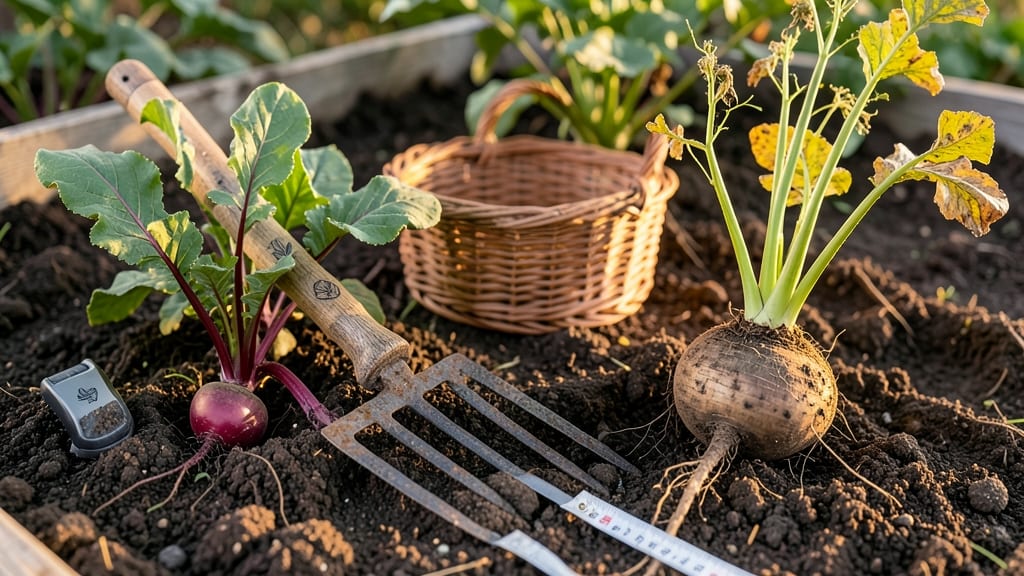
Know when to pull beets from garden by harvesting at 1.5 to 2 inches for tender, sweet roots or waiting until 2.5 to 3 inches for heartier varieties. Check soil moisture and root firmness—dry soil and smooth texture indicate perfect timing, while woody stems mean they've overstayed.
Timing your beet harvest makes all the difference in taste and texture. 🌱 Smaller beets (1.5 to 2 inches) develop sweeter flavors because their cells haven't had time to convert sugars into starches.
Larger varieties (2.5 to 3 inches) build more complex earthy notes, but wait too long and they'll turn tough and fibrous. I've found that checking soil moisture—dry conditions around the roots—is the most reliable indicator of readiness, while leaf yellowing signals overmaturity.
For consistent results, I recommend harvesting baby beets every 2-3 weeks once they start appearing. The key is balance: pull them too early, and you'll get undersized roots; leave them too late, and you'll sacrifice tenderness.
Pro tip: Use a fork to gently loosen soil before pulling to avoid damaging those delicate roots.
💡 In This Article
- How Beet Size Affects Flavor and Texture
- Field-Tested Methods to Determine Beet Readiness
How beet size affects flavor and texture
The science behind beet maturation starts with their cell structure. As beet roots grow, their cells expand and thicken, converting simple sugars into complex starches. Baby beets (1.5 to 2 inches) have a higher sugar-to-starch ratio, which is why they taste sweeter and more delicate.
Their cells remain tender because they haven't developed thick cell walls yet. Think of it like comparing a ripe peach to an overripe one—the smaller beet is the peach at its peak, bursting with natural sweetness.
When beets grow larger (2.5 to 3 inches), their cells produce more lignin—a structural polymer that gives plants rigidity. This is what makes mature beets earthier and slightly tougher, similar to how potatoes develop a waxier texture as they mature.
Soil pH plays a surprising role too: slightly acidic soil (pH 6.0 to 6.8) enhances sugar accumulation, while alkaline soil can make beets bitter. I've noticed this especially in my garden—beets grown in slightly acidic loam develop a deeper sweetness compared to those in neutral soil.
Texture changes dramatically with size. Baby beets have a silky, almost buttery texture when cooked, while mature ones develop a firmer bite. This difference comes from increased cell wall thickness in larger roots.
For example, a 2-inch beet will melt in your mouth when roasted, whereas a 3-inch beet maintains structure better when used in soups or salads. The trade-off? Larger beets often have more concentrated earthy flavors that pair well with rich sauces or meats.
Seasonal timing also affects flavor development. Early-season beets tend to be sweeter because cooler temperatures slow starch conversion. In my experience, harvesting in late spring or early fall yields the most flavorful baby beets.
Meanwhile, summer heat can accelerate maturation, making beets tougher if left too long. This is why consistent harvesting every 2-3 weeks is crucial—it prevents overgrowth and ensures you always have tender roots.
Another fascinating detail: beet color deepens with size. Smaller beets often have lighter hues because their anthocyanin pigments (what gives them color) haven't fully developed. Larger beets develop richer reds or purples due to increased pigment concentration.
This color change isn't just visual—it's a sign of the beet's biochemical maturity, where more complex flavors are forming. For example, a 1.5-inch beet might be pale pink, while a 3-inch one could be deep ruby red.
Here's what most gardeners miss: the skin's texture changes too. Younger beets have smoother skins because their outer cells haven't thickened. Mature beets develop slightly rougher skins as protective layers form. This isn't just cosmetic—it's a natural defense mechanism that also affects cooking time and tenderness.
When you're deciding between sizes, run your fingers over the skin: smooth means sweet, rough means earthy.