
Tools
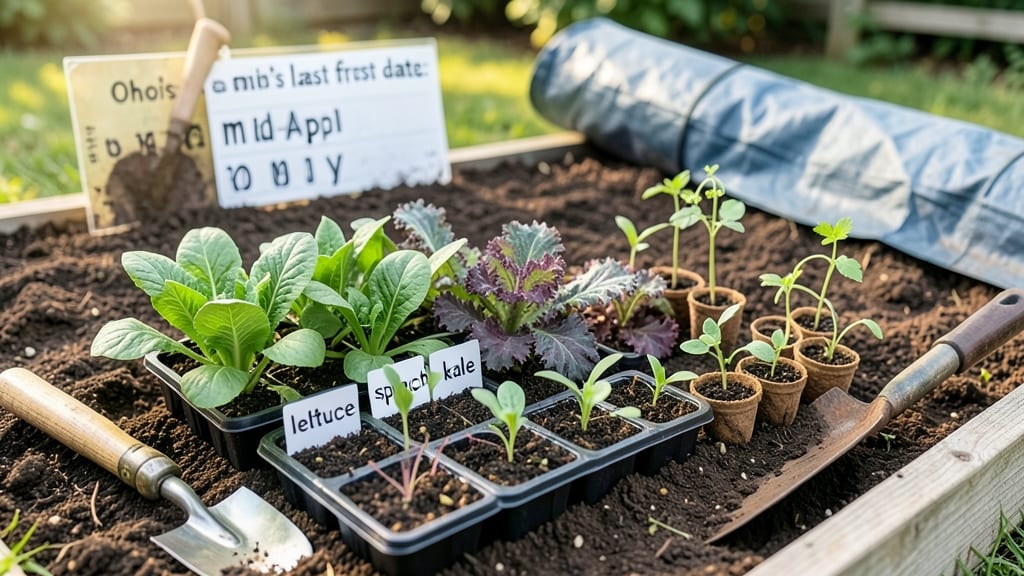
Starting a garden in Ohio means timing your first seeds and transplants for April 15 in the north or May 1 in the south—when soil warms and frost risks fade.
Ohio gardeners know timing is everything—plant too early and risk frost damage, too late and miss peak harvests. But with Ohio’s diverse microclimates, the "perfect" planting window varies dramatically from county to county.
This guide breaks down frost dates by region, soil prep tips, and how to adjust for urban heat islands or lake-effect zones. You’ll learn which crops to start indoors in March and which can wait until mid-May.
Skip the guesswork: discover the exact windows for your county, plus tricks to extend your season with cold frames and frost-tolerant varieties.
Ohio frost date map: when to plant by county (2024 guide)
Ohio’s diverse climate zones mean your neighbor’s perfect planting window might not work for you. Northern counties like Ashtabula often see frost until May 15, while southern Lawrence County can safely plant by April 1.
These differences can mean the difference between a bountiful harvest and wilted seedlings.
To help you pinpoint your local frost dates, I’ve broken down Ohio’s 88 counties into three key regions—North, Central, and South—with average last spring frost dates and first fall frost timelines.
This guide ensures you plant cool-season crops like spinach and peas early enough to thrive, while warm-season plants like tomatoes and peppers get in the ground after all danger of frost has passed.
Use this county-by-county breakdown to determine your ideal planting windows for both spring and fall. For example, Cuyahoga County (home to Cleveland) typically has a last frost around April 22, while Adams County in southern Ohio averages April 5.
These dates help you schedule seed-starting indoors (usually 6–8 weeks before last frost) and direct sowing outdoors.
| Region | County Examples | Last Spring Frost | First Fall Frost | Cool-Season Window | Warm-Season Window |
|---|---|---|---|---|---|
| North Ohio | Ashtabula, Erie, Trumbull | April 20–May 5 | October 5–15 | March 15–April 10 | May 15–June 10 |
| Central Ohio | Franklin, Delaware, Licking | April 10–20 | October 15–25 | March 1–April 1 | April 25–May 15 |
| South Ohio | Lawrence, Scioto, Adams | March 25–April 10 | November 1–10 | February 15–March 15 | April 1–April 15 |
| Lake-Effect Zones | Lucas (Toledo), Ottawa | April 5–15 | October 20–November 5 | March 1–March 25 | April 20–May 5 |
Note: Use your county’s last frost date to calculate seed-starting indoors (6–8 weeks prior) and direct sowing outdoors (2 weeks after last frost).
If you’re unsure about your local frost dates, check the Ohio State University Extension or use the National Weather Service’s frost prediction tools. For example, Cincinnati (Hamilton County) often sees its last frost around April 12, while Columbus (Franklin County) averages April 15.
These subtle differences can help you time your plantings perfectly.
For cool-season crops like kale, broccoli, and peas, plant them 4–6 weeks before your last frost date. These hardy plants can often tolerate light frosts, so starting them early gives them a head start.
Conversely, warm-season crops like tomatoes, peppers, and cucumbers need to wait until 2 weeks after your last frost to ensure they won’t be damaged by unexpected cold snaps.
How to adjust planting times for Ohio’s microclimates
Ohio’s diverse microclimates mean your neighbor’s perfect planting time might be too early or late for you. Urban areas like Columbus can be 5–10°F warmer than rural spots, while lake-effect zones near Toledo experience delayed springs. Understanding these differences helps you extend growing seasons and avoid frost damage.
Start by identifying your local microclimate. Urban gardens often warm up faster due to concrete heat retention, while wooded areas stay cooler longer. Elevation changes—even just 100 feet—can shift frost dates by 1–2 weeks. Use these strategies to fine-tune your planting schedule for your specific zone.
- Urban Heat Islands: Plant heat-tolerant varieties (e.g., Okra, Swiss Chard) 1–2 weeks earlier than rural areas. Use shade cloth for delicate greens like lettuce.
- Lake-Effect Zones: Near Lake Erie or Lake Michigan? Delay warm-season crops (e.g., tomatoes, peppers) by 10–14 days due to cooler springs.
- Soil Warming Tricks: Use black plastic mulch or cold frames to warm soil 2–3 weeks faster in cooler microclimates. Ideal for cold-sensitive crops like cucumbers.
- Frost-Tolerant Varieties: Choose ‘Early Girl’ tomatoes or ‘Winterbor’ kale to plant 2–3 weeks before your average last frost date.
- Elevation Adjustments: Every 1,000 ft gain in elevation delays planting by 3–5 days. Check USDA maps for your exact elevation.
For urban gardeners, leverage vertical gardening and container planting to create microenvironments. Pots heat up faster, letting you start warm-season crops like basil or peppers indoors 4–6 weeks before rural gardeners. Monitor soil temps with a soil thermometer—aim for 60°F+ for most vegetables.
In lake-effect areas, like Toledo or Cleveland, embrace season-extending tools. Use row covers or low tunnels to protect cool-season crops (e.g., spinach, radishes) until May 15. For fall gardens, start hardy greens like kale or arugula as early as August 1 in warmer microclimates.
Don’t overlook elevation differences. If you’re in Appalachian Ohio, plant cool-season crops like broccoli or cabbage 2 weeks later than flatland areas. Use frost clocks or local Cooperative Extension data to track frost probabilities in your specific elevation zone.
Pro tip: Combine microclimate knowledge with succession planting. In urban heat islands, follow early tomatoes with fast-maturing greens like bush beans. In cooler zones, stagger cold-hardy crops (e.g., peas, carrots) every 2 weeks for continuous harvests. Adaptability is key to Ohio gardening success! 🌱