
Tools
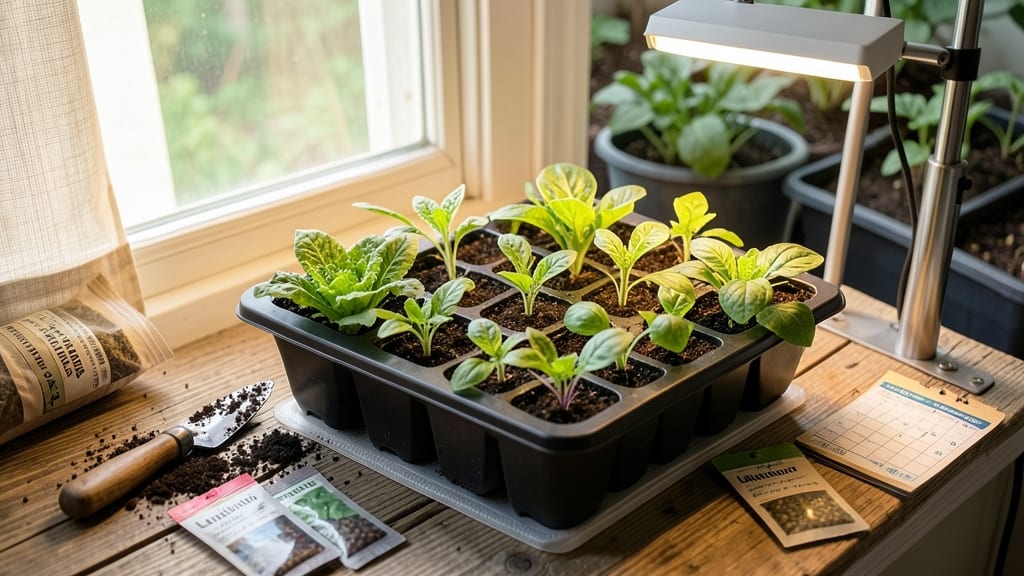
Starting garden seeds at the right time ensures a bountiful harvest—not too early to rot, not too late to miss the season.
Timing is everything in gardening—plant seeds too early, and they’ll rot; too late, and your harvest suffers. But knowing exactly when to start seeds indoors (or outdoors) can mean the difference between a thriving garden and a wasted season.
For Zone 6a, like many regions, the window opens in early spring and closes before the first frost. Whether you're growing General Garden Seeds 🌱 like tomatoes, peppers, or herbs, the countdown begins 6–10 weeks before your last frost date.
Here’s how to pinpoint the perfect moment for your seeds, whether you’re starting them indoors under grow lights or sowing directly into the soil—plus how to adjust for cool-season crops and warm-weather favorites.
Indoor seed starting timeline by crop type: when to begin for optimal growth
Starting seeds indoors gives you a head start on the growing season, but timing is everything. Plant too early, and seedlings will become leggy and weak. Too late, and your garden won’t produce a full harvest.
The key is understanding your last frost date, your USDA hardiness zone, and each plant’s maturity timeline. For example, tomatoes need 6–8 weeks indoors before transplanting, while broccoli can handle 4–6 weeks—but only if you’re in a cooler zone.
Your last frost date is the starting point for all calculations. In Zone 6a (like many northern U.S. regions), this typically falls around April 15th. Count backward from that date based on each plant’s days to maturity and indoor growth time.
For instance, if your peppers need 8–10 weeks indoors and another 6–8 weeks outdoors, you’ll need to start them by February 1st at the latest.
Here’s a quick reference for common crops, but always double-check your seed packet instructions for exact timing. Some varieties, like basil, are heat-lovers and can be started just 4–6 weeks before your last frost, while cabbage and brassicas need a longer 8–10 week head start to handle cooler soils.
For gardeners in warmer zones (Zones 7–10), adjust your timeline accordingly. In Zone 8b, for example, you might start tomatoes as late as March 1st instead of February, while peppers can wait until March 15th.
Always check your local frost dates—they can vary by 1–2 weeks even within the same zone.
Pro tip: Use a grow light if your indoor space lacks sufficient sunlight. Seedlings stretched toward a window? That’s a sign they’re not getting enough light intensity.
A 12–16 hour light day mimics spring conditions and prevents leggy growth. I swear by a T5 fluorescent bulb on a timer—it’s a game-changer for compact, sturdy seedlings.
Don’t forget to harden off your seedlings before transplanting! This means gradually exposing them to outdoor conditions over 7–10 days. Start with 1–2 hours in a sheltered spot, then increase daily.
Skip this step, and your seedlings will bolt or wilt under the stress of sudden change. Trust me, your plants will thank you with stronger roots and faster growth.
If you’re still unsure about your exact start dates, plug your zip code into a seed-starting calculator like the one from Johnny’s Selected Seeds or Burpee. These tools factor in your local climate, soil conditions, and crop preferences to give you a personalized timeline.
It’s like having a gardening GPS for your seeds!
Lastly, keep a seed-starting journal to track what works (and what doesn’t). Note the exact dates you started each crop, how long it took to sprout, and when you transplanted.
Over time, you’ll refine your indoor seed-starting routine to match your unique growing conditions. Happy planting—your future harvest depends on it!
Outdoor seed planting guide: direct-sowing timing for fast-growing vegetables
Direct-sowing seeds outdoors is one of the fastest ways to get your garden growing. Unlike indoor starts, you skip the transplanting process entirely, which means healthier roots and earlier harvests for many fast-growing crops. The key? Understanding soil temperature thresholds and climate-specific timing to avoid frost damage or stunted growth.
Cool-season crops like radishes and lettuce thrive when soil temps hover between 40°F and 50°F, while warm-season favorites such as beans and cucumbers need soil to reach at least 60°F.
Even a few degrees difference can mean the difference between success and failure. Let’s break down the best times to sow seeds directly in your garden.
- 🌱 Cool-Season Crops (40°F-50°F soil): Sow peas, radishes, and spinach 2-4 weeks before your last frost date. These thrive in cooler temps and can even handle light frosts.
- 🌿 Warm-Season Crops (60°F+ soil): Plant beans, cucumbers, and squash only after soil warms up—usually 2-3 weeks after your last frost. Use a soil thermometer to confirm.
- ⏰ Succession Planting: For continuous harvests, sow lettuce and radishes every 2-3 weeks. Fast growers like these can be replanted up to 6 weeks before your first frost.
- ☀️ Adjust for Your Climate: In hot climates, plant heat-tolerant varieties like okra or sweet potatoes in late spring. In cool climates, extend the season with row covers for crops like kale.
- 📅 Frost-Free Window: Calculate your last frost date (average April 15 in Zone 6a) and work backward. Most fast crops mature in 30-60 days, so plan accordingly.
If you’re in a warm climate, you might even get two growing seasons—planting cool-season crops in fall for a winter harvest. Meanwhile, succession planting is your best friend for maximizing space.
For example, after harvesting early radishes, sow bush beans in the same spot—they’ll be ready in just 50-60 days.
Pro tip: Use black plastic mulch to warm soil faster for warm-season crops, or straw mulch to protect cool-season plants from temperature swings. Always check seed packets for specific spacing and depth requirements, as these vary wildly—even between varieties of the same plant.
For beginner gardeners, start with radishes or bush beans—they’re forgiving, fast, and perfect for direct sowing. Once you master timing, you can experiment with carrots, beets, and turnips, which also thrive when sown directly.
The key is patience and observation: watch your soil and plants closely, and adjust as needed.