
Tools
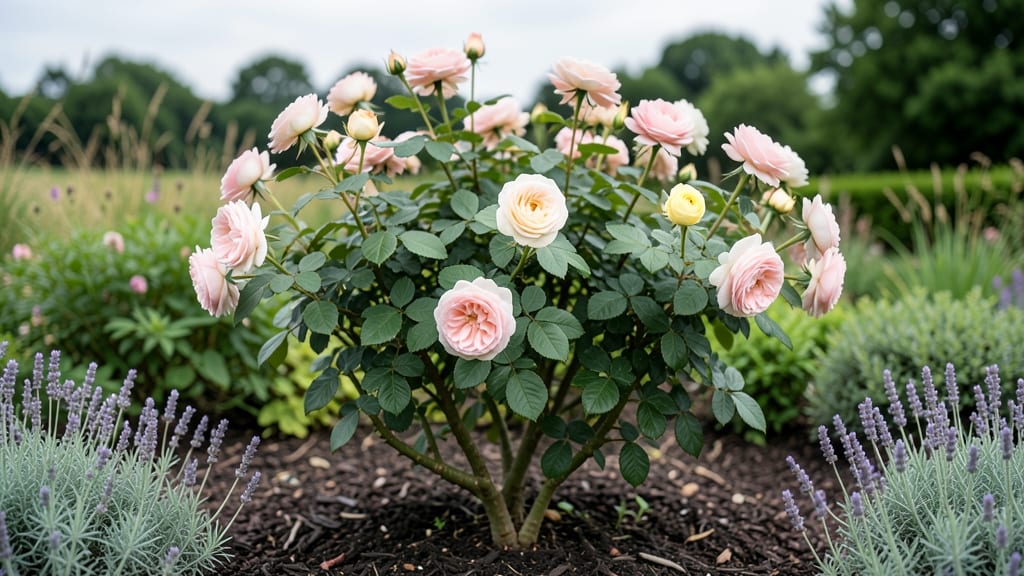
First Lady Jacqueline Kennedy created the White House Rose Garden in 1961, collaborating with landscape architect Luther W. Smith to design its historic layout and seasonal blooms.
The White House Rose Garden wasn't just a personal project—it was a deliberate cultural statement. 🌹 Kennedy envisioned a space that honored American horticultural history while serving as a public garden for all visitors.
Smith's design incorporated over 100 rose varieties, including historic breeds from the Revolutionary War era, creating a living tribute to the nation's past. What's fascinating is how this garden became a symbol of presidential influence on public spaces, blending politics with botany in a way few other gardens achieve.
The garden's creation also marked a shift in how White House grounds were perceived. Before Kennedy, these spaces were often seen as private presidential retreats, but her vision transformed them into a national showcase.
The geometric symmetry of the design and the careful selection of roses weren't just aesthetic choices—they were deliberate nods to America's agricultural heritage and the Kennedy administration's commitment to public access.
Interestingly, this wasn't the first time a First Lady had shaped the White House gardens. Eleanor Roosevelt's Victory Garden during World War II had similar public engagement goals, but Kennedy's approach was more ambitious in scale and historical significance.
The Rose Garden became so iconic that it inspired similar public garden projects across the country, proving how presidential initiatives can leave lasting horticultural legacies.
💡 In This Article
- Luther W. Smith’s Design Vision for the White House Rose Garden
- Presidential and First Lady Influence on White House Gardens
Luther W. Smith’s design vision for the White House rose garden
Luther W. Smith, a renowned landscape architect from Washington, D.C., brought a meticulous blend of historical reverence and modern horticulture to the White House Rose Garden. His design wasn't just about beauty—it was a deliberate restoration of America's botanical heritage.
Smith selected over 100 rose varieties, including rare breeds like 'Old Blush' and 'Louis Philippe,' which date back to the American Revolution era.
These historic roses weren't chosen randomly; each variety had ties to early American gardens, creating a living museum of horticultural history right on the White House lawn.
The garden's geometric symmetry was another hallmark of Smith's vision, reflecting the formal gardens of colonial Virginia and the Founding Fathers' estates. He incorporated circular flower beds surrounded by boxwood hedges, a design element that echoed Thomas Jefferson's gardens at Monticello.
What made this particularly innovative was Smith's use of seasonal blooming strategies—he arranged roses to ensure continuous color from spring through fall, a technique that required precise timing and plant selection. 🌸 The result was a garden that felt both timeless and vibrantly modern.
Smith's work also addressed practical challenges. The White House lawn had been used for military parades and other events, leaving the soil compacted and unsuitable for delicate roses.
To prepare the site, Smith implemented a layered soil improvement system, mixing in compost and sand to create the ideal growing medium. This wasn't just about aesthetics—it was about making the garden sustainable for future generations.
The careful planning paid off; today, the garden remains one of the most photographed public spaces in Washington, D.C.
What's often overlooked is how Smith integrated public accessibility into the design. Unlike private gardens of the era, Kennedy and Smith ensured the Rose Garden would be open to visitors year-round. They installed wide pathways and benches, making it easy for tourists to enjoy the space without disturbing the plants.
This was revolutionary for its time—most presidential gardens were off-limits to the public. The design even included shade structures to protect both visitors and delicate roses from harsh D.C. summers.
Smith's collaboration with Kennedy went beyond the initial design. He provided ongoing consultation to maintain the garden's historical integrity while adapting to modern horticultural practices. For example, when new rose varieties became available in the 1970s, Smith helped curate additions that complemented the original collection.
This long-term partnership ensured the garden remained both a historical monument and a living, evolving space. 🌿 The result is a garden that continues to inspire similar public horticultural projects across the country.
One fascinating detail is how Smith incorporated symbolic plantings. Along the northern border, he planted 'George Washington' roses—a variety named in honor of the first president—while the southern border featured 'Thomas Jefferson' roses.
These choices weren't just decorative; they were political statements about the garden's role in connecting Americans to their founding history. The careful placement of these symbolic roses created a narrative walk through the garden, making history tangible for visitors.