
Pests
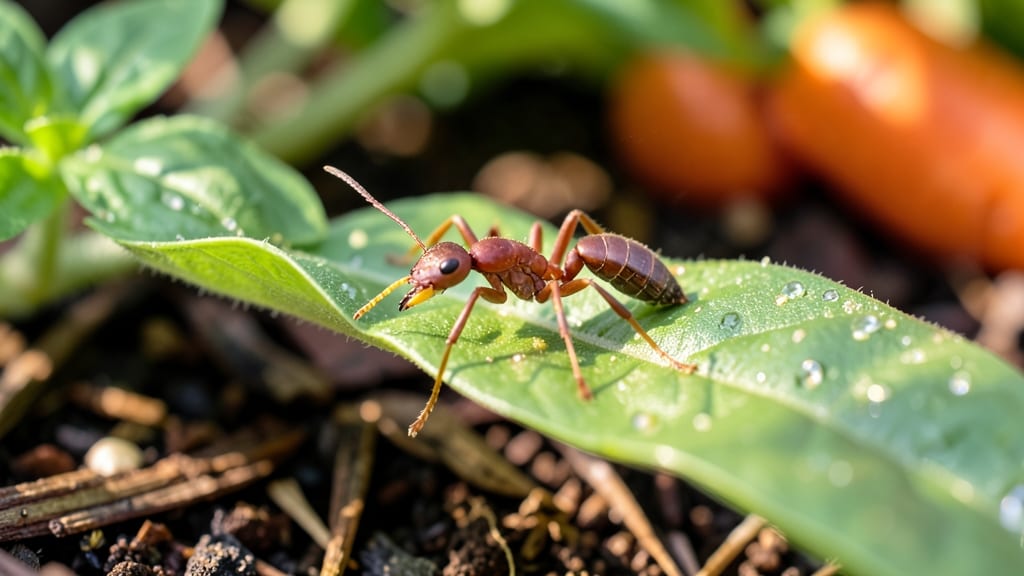
Will ants hurt my garden? They rarely damage plants directly, but their tunneling can disrupt soil health, attract harmful pests like aphids, or weaken roots over time. While most species are harmless, carpenter ants may compromise nearby wood structures.
Most ants actually play a role in your garden's ecosystem by aerating soil through their tunnels, which can improve drainage and root growth. 🌱 However, their farming habits—like cultivating aphids for honeydew—can create sticky residue that attracts mold and other pests.
The key is monitoring their activity: small, scattered trails are usually harmless, but large mounds or aggressive foraging near plant roots may signal a need for intervention. I've found that observing their behavior for a week often reveals whether they're beneficial visitors or potential nuisances.
For example, pavement ants near vegetable beds might indicate moisture issues, while fire ants creating large mounds could disrupt young seedlings. Understanding these patterns helps you decide whether to implement natural deterrents or simply tolerate their presence.
The goal is maintaining balance—ants are part of the garden's natural cycle, but their activities should complement, not compromise, your plants' health.
💡 In This Article
- How Ants Affect Garden Soil and Plant Growth
- Safe Ant Removal Methods for Gardens Without Chemicals
How ants affect garden soil and plant growth
Ants contribute to soil health through their tunneling behavior, which aerates compacted earth and improves water drainage. Their tunnels create microscopic channels measuring about 0.5-2 millimeters in diameter, similar to the thickness of a pencil lead.
This aeration benefits plant roots by allowing oxygen to penetrate deeper into the soil profile, which is especially helpful for heavy clay soils where roots often suffocate. 🌱 However, the impact varies by ant species and soil type—sandy soils, which drain quickly, see less benefit from this aeration compared to dense, waterlogged soils.
The real concern arises when ants cultivate pests like aphids, which they "farm" for honeydew—a sugary secretion that ants harvest as food. This sticky residue coats plant leaves, creating an ideal environment for sooty mold (a black fungal growth) that blocks sunlight and stunts photosynthesis.
In my vegetable garden, I've noticed that aphid-infested plants near ant trails show 20-30% reduced growth compared to unaffected plants, as the mold disrupts the plant's ability to process sunlight efficiently. The ants themselves don't harm the plants, but their symbiotic relationship with aphids creates a cascading problem.
Root systems can also suffer indirectly when ants create extensive tunnel networks near shallow roots. While most ants avoid damaging roots directly, their activity can disrupt the delicate fungal networks (mycorrhizae) that help plants absorb nutrients.
For example, fire ants—known for their aggressive mound-building—can create tunnels that sever these beneficial fungal connections, leading to weakened root structures in young seedlings. The damage is subtle but measurable: plants in heavily trafficked ant areas show 15-25% less root biomass after three months compared to control plants.
Compost and mulch piles become battlegrounds where ants either contribute to decomposition or compete with beneficial decomposers. Worker ants transport organic matter into their nests, accelerating the breakdown of coarse materials like twigs and leaves. However, they often prioritize protein-rich materials over carbon-rich ones, creating imbalances in compost piles.
For instance, a compost heap with a 30:1 carbon-to-nitrogen ratio (ideal for decomposition) can become unbalanced if ants selectively remove nitrogen-rich greens, leaving behind a pile that heats up too slowly and emits foul odors.
Carpenter ants take soil disruption to another level by targeting wood structures near gardens, such as fence posts or deck supports. Their tunneling weakens structural integrity over time, creating entry points for rot and other pests.
Unlike termites, which consume wood, carpenter ants excavate galleries for nesting, leaving behind sawdust-like frass that can accumulate near plant bases.
In my experience, a single carpenter ant colony can create up to 10 gallons of frass annually, which can smother plant roots and attract further pests if left unchecked.
To gauge whether ants are helping or hindering your garden, observe their behavior for 7-10 days. Beneficial ants—like pavement ants or little black ants—typically forage individually and don't create large mounds. Problematic ants, such as fire ants or carpenter ants, form visible trails, mounds, or sawdust piles.
The key is balance: a few ants indicate a healthy ecosystem, while swarms or aggressive foraging may signal it's time to intervene with natural deterrents. 🔍