
Advice
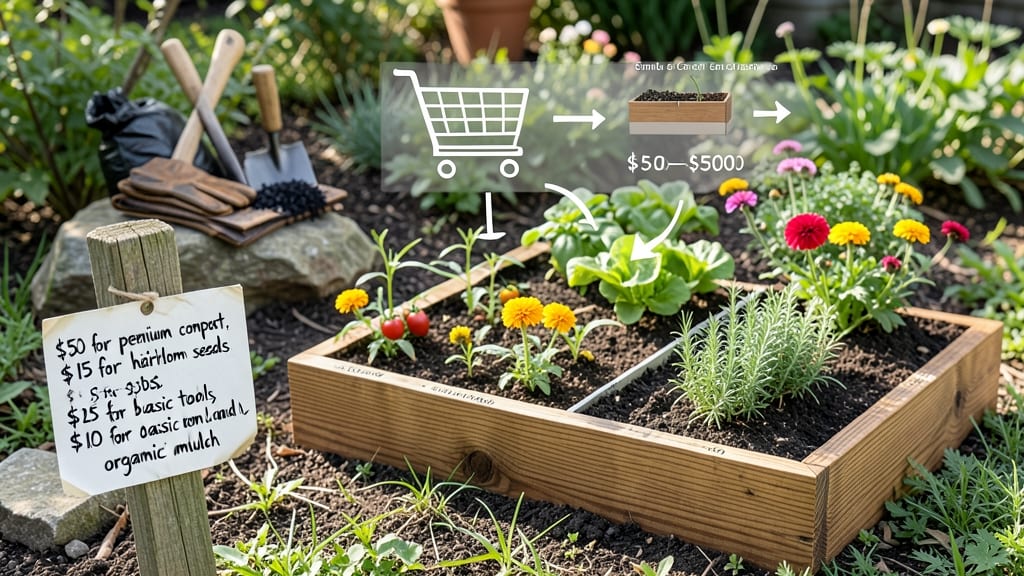
The average cost of a garden for a 500-square-foot space typically ranges between $1,000 and $5,000, covering essentials like soil preparation, plants, tools, and basic irrigation systems. Your final budget will vary widely based on location, soil quality, and plant choices, with urban areas often requiring higher investments than rural ones.
Creating a garden isn't just about picking plants—it's a full investment that includes soil testing, amendments, and long-term maintenance. 🌱 In cities like Los Angeles or New York, where space is limited and labor costs are high, you might pay double for the same quality plants compared to a rural area.
Even within the same region, soil quality can add unexpected expenses—sandy soil might need costly compost blends, while clay-heavy ground could require drainage solutions. Don't forget to account for seasonal replacements or tool upgrades, which often sneak into budgets when first-time gardeners overlook them.
What many people miss is how quickly costs add up when you factor in unexpected challenges. For example, a drought-resistant plant might seem like a smart choice, but if your local climate shifts unexpectedly, you could face replacement costs.
I always recommend setting aside an extra 10-15% of your initial budget for these surprises—it's saved me from multiple headaches over the years.
💡 In This Article
- Factors That Influence Garden Costs Across Regions
- Hidden Expenses to Budget for in Your Garden Project
Factors that influence garden costs across regions
Soil quality is one of the biggest cost drivers in gardening, and it varies dramatically by region. For example, in the Pacific Northwest, where soil is often rich in organic matter, you might spend as little as $200 on amendments for a 500-square-foot plot.
But in Florida's sandy soils, you could face $500+ in compost and peat moss to achieve similar fertility. The difference comes down to organic content—Northeast gardens often need less amendment than Southern ones, where clay-heavy soils require gypsum or sand for proper drainage.
Plant selection also creates regional price swings. Native plants like black-eyed Susans or coneflowers typically cost $3-$5 per plant in their natural growing zones, while exotic varieties like orchids or bamboo can run $20-$50 each due to import costs.
Climate zones further impact pricing—desert regions require drought-tolerant species that might cost 30% more than traditional perennials, while tropical areas need humidity-loving plants that can double the nursery bill.
Urban vs. rural pricing creates another major divide. In cities, labor costs for professional installation can add $1,500-$3,000 to a garden project, while rural areas often rely on DIY solutions that cut costs by 50% or more.
For instance, a raised bed in Manhattan might cost $800 for materials plus $500 for delivery, whereas the same bed in rural Ohio could be built for $300 using local lumber.
Even irrigation systems show this gap—drip irrigation in suburban areas averages $2-$3 per square foot, while urban setups with smart controllers can exceed $5 per square foot.
Climate-related expenses add another layer. In USDA Zone 5 (northern regions), you might budget $100-$200 for cold-hardy plants and winter protection, while Zone 10 (southern California) requires heat-tolerant varieties that can cost $300-$500 more for the same space.
Windbreaks in coastal areas or frost cloth for early spring planting are often overlooked but can add $150-$400 to your initial budget.
Don't overlook local regulations that affect costs. Some cities charge $200-$500 for permits on raised beds or fences, while rural areas may have no restrictions. Water rights in drought-prone states like Colorado can add $500-$1,000 in legal fees for proper irrigation setup.
These regional variations mean what costs $1,000 in one area could easily become $3,000 in another.
Here's what to watch for in your area:
- Soil tests: Cost $50-$150 but can save $500+ by avoiding costly amendments
- Native plant nurseries: Often 30-50% cheaper than big-box stores for local species
- Seasonal labor rates: Spring planting peaks drive up costs by 40% in some regions
- Water restrictions: Can add $200-$800 for drought-resistant plant upgrades
Pro tip: Call your local extension office—they'll provide free soil testing and plant recommendations tailored to your microclimate, potentially saving you hundreds.