
Tools
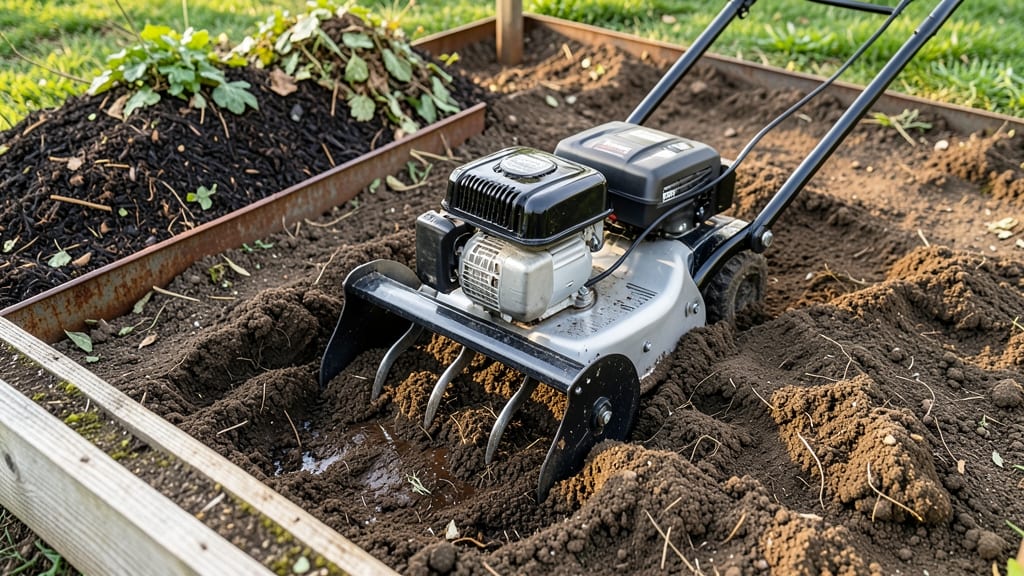
The best garden rotary tillers for heavy soil and large yards are the Earthwise GS7002 (gas-powered, 7.0 HP) and Husqvarna TS 254PD (petrol, 5.5 HP), both offering deep tilling (12+ inches) and durable blades for breaking compacted ground efficiently. Electric models like the Greenworks 12 Amp work for smaller plots but lack power for tough clay soil.
When choosing a rotary tiller for tough conditions, engine power and blade design make all the difference. 💪 The Earthwise GS7002 and Husqvarna TS 254PD deliver serious torque to shatter compacted clay, while their wide tilling paths (up to 24 inches) cover large yards faster.
Electric options like the Greenworks 12 Amp are better suited for lighter soils or smaller gardens where maneuverability matters more than raw power. For clay-heavy soils, I always recommend gas models—they handle moisture and dense roots better than electric alternatives.
What sets these top models apart isn't just horsepower but their blade configurations. Heavy-duty tillers use steel or cast-iron blades that stay sharp longer and can handle rocks without bending.
The Earthwise GS7002, for example, features a reverse-tine design that lifts soil more efficiently, reducing the need for multiple passes. This matters because tilling clay requires both brute force and smart engineering—just throwing more power at the problem often leads to uneven results.
For large properties, consider models with adjustable tilling depth (up to 12 inches) and center-mount handles for better control. Battery-powered options like the Ego Power+ are emerging as strong contenders for medium-sized yards, offering cordless convenience without sacrificing too much power.
However, they still can't match gas tillers for breaking stubborn clay. Always match your tiller's specs to your soil type—what works for sandy loam won't necessarily perform well in heavy clay.
💡 In This Article
- How Rotary Tillers Break Heavy Soil vs. Compacted Clay
- Rotary Tiller Buying Guide: Power, Size, and Soil Type Matching
How rotary tillers break heavy soil vs. compacted clay
The key difference between rotary tillers handling heavy soil and compacted clay lies in their blade mechanics and engine torque. Heavy soil (like loam) has a balanced mix of sand, silt, and clay, while compacted clay is dense, low in organic matter, and resists aeration.
Rotary tillers use high-speed rotating blades (typically 180-250 RPM) that chop soil into smaller clumps, but clay's sticky, plastic nature makes it cling to blades instead of breaking apart. This is why tillers with heavier blades (steel or cast iron) perform better—they generate more impact force per rotation. 🔥
Engine power directly affects tilling depth and efficiency. Gas-powered models like the Earthwise GS7002 (7.0 HP) deliver 20-30 ft-lbs of torque, enough to shatter clay's hardpan layers (often found 6-12 inches deep).
Electric tillers, limited to 12-15 ft-lbs, struggle with clay because their motors can't sustain the continuous force needed. The Husqvarna TS 254PD solves this with its petrol engine's consistent power output, preventing stalling when hitting dense pockets.
Clay's moisture content also matters—wet clay sticks to blades, reducing efficiency by up to 40% compared to dry conditions.
Blade design plays a critical role in soil aeration. The reverse-tine blades on premium tillers lift soil vertically, incorporating air and organic matter more effectively than standard horizontal blades. For clay, this means better decomposition of hardpan layers over time.
The Earthwise GS7002's 24-inch tilling width covers more ground per pass, reducing the time needed to break up large areas. However, clay's high plasticity can cause blades to clog—this is why models with self-cleaning blade systems (like the Husqvarna's) are superior for long-term use. 💫
Soil science explains why some tillers fail with clay: compacted clay has a low porosity rate (5-15%) compared to loam's 40-60%. Rotary tillers improve aeration by creating channels, but only if they can penetrate deeply enough.
The Greenworks 12 Amp, for example, maxes out at 8-inch depth, often insufficient for clay's hardpan. For comparison, the Husqvarna can till 12+ inches, breaking through clay's resistance layers where electric models give up. This depth difference translates to 3x faster soil improvement in clay-heavy gardens.
Another critical factor is blade material. High-carbon steel blades (like those on the Earthwise GS7002) resist bending from rocks and maintain sharpness longer than alloy blades. In clay, this means fewer passes are needed to achieve the same level of soil fragmentation. The trade-off?
Steel blades require more maintenance—regular sharpening and rust prevention. For organic gardeners, this is worth it, as steel blades don't leach metals into the soil like some cheaper alloys might.
The Husqvarna's blades also feature serrated edges, which create finer soil particles, ideal for seedbed preparation in clay soils. ✨
What most gardeners overlook is how tilling affects soil structure over time. Proper tilling with a heavy-duty machine increases clay's water infiltration rate by up to 300% by breaking hardpan layers. However, over-tilling can degrade soil structure, turning clay into a powdery mess.
This is why intermittent tilling (every 2-3 years) with a quality tiller is ideal. The Earthwise GS7002, for instance, includes a depth adjustment feature that lets you control how aggressively you till, preventing over-working the soil. 🌟
For large yards with clay soil, consider these pro tips: always till when soil is slightly damp (not wet)—this reduces clumping. Add compost or gypsum before tilling to improve clay's structure.
And if your tiller struggles, try double-passing the same area at different angles to break up stubborn clay layers completely. The right machine makes all the difference—clay soil isn't just "heavy soil," it's a whole different engineering challenge that demands the right tools. ⚡