
Tools
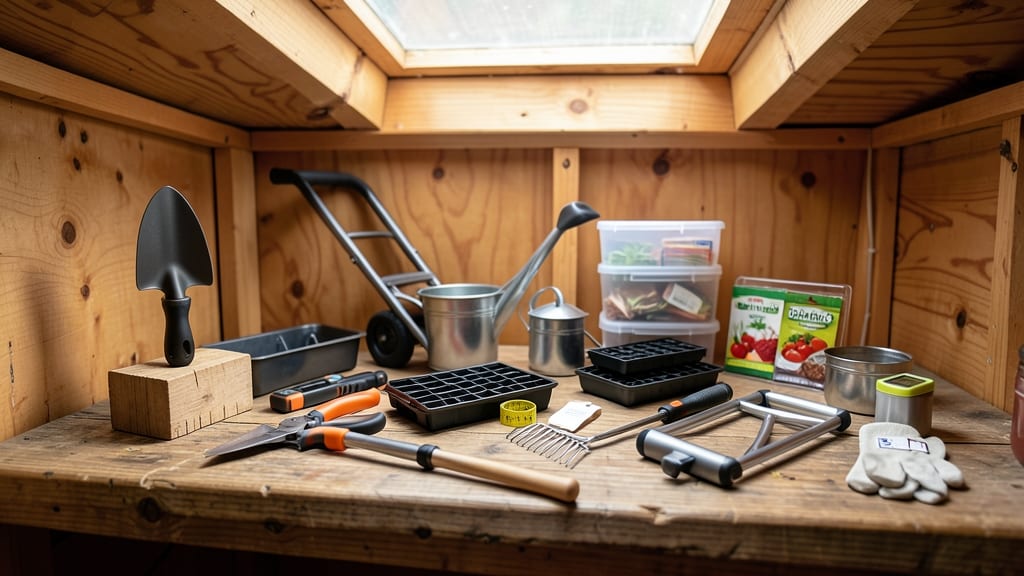
The best gardening tools for small wooden shed spaces are foldable trowels, compact pruners, multi-functional hand tools, and wall-mounted organizers that maximize storage while keeping essentials accessible. Lightweight materials like aluminum or fiberglass ensure easy handling and durability.
When working with limited shed space, every inch counts—and your tool selection should reflect that. 🌱 Foldable designs like telescoping handles or collapsible blades cut storage needs by up to 50%, while modular attachments (like interchangeable pruning heads) eliminate the need for multiple single-purpose tools.
The lightweight materials I recommend aren't just about saving space; they also reduce fatigue during long gardening sessions. For example, aluminum tools resist rust better than steel in humid conditions, which is crucial for wooden sheds prone to moisture buildup.
Beyond the tools themselves, how you store them makes an even bigger difference. Wall-mounted racks or pegboards let you hang tools vertically, freeing up floor space for larger equipment.
I've found that clear plastic bins with labeled dividers keep tools organized while protecting them from dust and pests—critical in wooden sheds where ventilation can be limited. For tools you use less often, consider hanging them from hooks or using over-the-door organizers to utilize every available surface.
💡 In This Article
- How to Select Space-Saving Gardening Tools for Sheds
- Smart Storage Solutions for Small Shed Gardening Tools
How to select space-saving gardening tools for sheds
When choosing tools for a small wooden shed, the design mechanics focus on three key areas: foldability, modularity, and weight distribution. Foldable tools like telescoping trowels or collapsible pruners can reduce their footprint by up to 60% when stored.
For example, a 12-inch foldable pruner occupies just 4 inches of vertical space compared to a rigid 18-inch version. The secret lies in their pivoting joints—typically made from stainless steel or high-grade aluminum—that maintain cutting strength while allowing compaction.
Material selection directly impacts both storage efficiency and functionality. Aluminum tools weigh 30-40% less than steel equivalents while offering comparable durability, making them ideal for small spaces where every ounce matters. Fiberglass handles (common in premium models) add another 20% weight reduction without sacrificing grip strength.
The trade-off? Aluminum tools may dull faster than steel—so opt for serrated edges or titanium-coated blades for longevity. Ergonomics also play a role: tools with angled handles (like the Fiskars X7 pruners) reduce wrist strain during extended use in confined spaces.
Modular attachments are the ultimate space-savers. A single multi-tool handle can accommodate 6-8 different heads, replacing dedicated trowels, cultivators, and weeding knives. For instance, the Gorilla Cutter system lets you swap between pruning shears, grape snips, and branch cutters using the same grip.
This modular approach cuts your tool collection by 40% while maintaining versatility. The key is choosing systems with quick-release mechanisms—tools that require wrenches to change heads defeat the purpose in tight spaces.
Weight distribution affects both storage and usability. Tools with balanced centers of gravity (like the Felco F-2 pruners) feel lighter in hand and stack more efficiently. In wooden sheds, this matters because uneven weight can cause tools to tip over during storage.
For hanging solutions, look for tools with built-in loops or magnetic strips that attach directly to metal pegboards. The Burgon & Ball line offers tools with integrated wall-mounting hooks, eliminating the need for separate hangers.
Don't overlook the tool sheaths—many space-saving designs include retractable covers that protect blades while keeping the tool compact. For example, the Fiskars StaySharp shears come with a magnetic blade guard that folds into the handle.
In humid shed environments, this prevents rust buildup that could ruin steel tools. The downside? These guards add 0.5-1 inch to the stored length, so measure your wall space carefully before committing.
Pro tip: Test tools in your shed before buying. Place them in your tightest storage spots to ensure they fit when fully extended. I once bought a compact rake that looked perfect in the store—until I realized it wouldn't fit between my shed's 24-inch ceiling beams.
Always measure both the tool's length and width when folded, and account for 1-2 inches of clearance for easy access.