
Vegetables
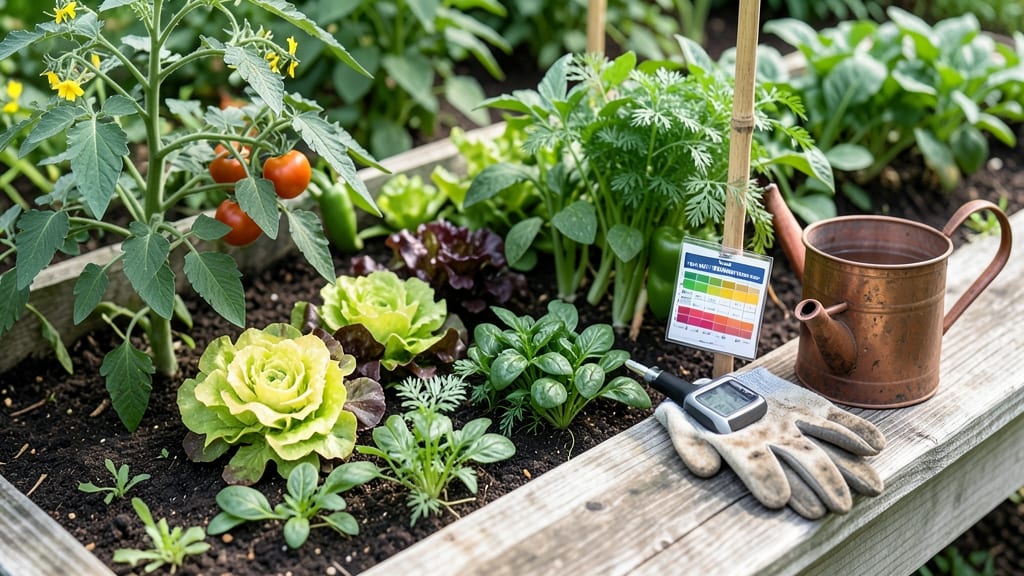
The best pH for a vegetable garden ranges between 6.0 and 7.0, though specific crops like blueberries (4.5–5.0) or carrots (6.0–6.8) thrive at slightly different levels. Testing soil annually and amending with lime (to raise pH) or sulfur (to lower it) ensures optimal nutrient uptake and plant health.
Soil acidity or alkalinity directly impacts which nutrients your plants can absorb—think of it like a lock-and-key system. 🌱 For example, tomatoes need slightly acidic soil (6.2–6.8) to access enough phosphorus, while spinach prefers neutral soil (6.5–7.0) to prevent iron deficiency.
Many gardeners assume their soil is fine without testing, but even small pH shifts can lead to stunted growth or yellowing leaves. I recommend starting with a simple DIY test kit to check your baseline before making adjustments, since overcorrecting can harm beneficial microbes in the soil.
Once you know your soil's pH, adjustments are straightforward but require patience. Adding elemental sulfur lowers pH gradually over weeks, while pelletized lime raises it more quickly. The key is to amend in small batches—too much too soon can disrupt your garden's ecosystem.
For instance, if your soil tests at 5.5 but you're growing peppers (ideal 6.0–6.8), I suggest adding lime in two applications, testing between each to avoid overshooting.
💡 In This Article
- How Soil pH Affects Nutrient Availability in Vegetable Gardens
- Step-by-Step Guide to Testing and Adjusting Garden Soil pH
How soil pH affects nutrient availability in vegetable gardens
Soil pH acts like a gatekeeper for nutrients, controlling which minerals your plants can absorb. At pH 6.0-7.0, most vegetables access essential nutrients like nitrogen, phosphorus, and potassium efficiently.
For example, nitrogen—crucial for leafy greens—becomes less available below pH 5.5, causing stunted growth or yellowing leaves. 🌱 The reason? Nitrogen exists primarily as ammonium (NH₄⁺) in acidic soils, but plants prefer nitrate (NO₃⁻), which thrives in neutral ranges.
Micronutrients like iron and manganese follow different rules. These elements become more soluble in acidic conditions (pH 5.5-6.5), which is why blueberries and potatoes (both acid-lovers) need lower pH. However, excess acidity can trigger toxicity—zinc and manganese build up in soils below pH 5.0, harming roots.
Conversely, alkaline soils (pH 7.5+) lock out micronutrients entirely, causing deficiencies like calcium shortages in tomatoes, leading to blossom-end rot.
Phosphorus availability peaks at pH 6.5-7.0, making this range ideal for fruiting vegetables like peppers and eggplants. The science? Phosphorus binds tightly to soil particles in acidic or alkaline extremes, forming insoluble compounds.
This is why soil tests often show "high phosphorus" yet plants still starve—it's chemically trapped. 💡 The solution? Adjusting pH to the plant's sweet spot unlocks these nutrients, like turning a key in a lock.
Calcium and magnesium also play critical roles. Calcium deficiency (common in alkaline soils) causes structural weaknesses in cell walls, leading to cracked fruits or wilting leaves. Magnesium, vital for chlorophyll production, becomes scarce above pH 7.5, turning older leaves yellow—a classic sign of deficiency.
The balance is delicate: too much lime (raising pH) can create these very problems, while sulfur (lowering pH) may release toxic levels of aluminum in clay soils.
Consider the case of strawberries, which prefer pH 5.5-6.5. In overly acidic soil, aluminum toxicity stunts roots, while in alkaline conditions, boron deficiency causes poor fruit set. The same soil can support both strawberries and carrots (ideal pH 6.0-6.8) if you create micro-zones with targeted amendments.
This precision is why gardeners often test multiple spots in their yard—soil pH isn't uniform!
Even organic matter decomposes differently based on pH. Compost breaks down faster in neutral to slightly acidic soils (6.0-7.0), releasing nutrients gradually. In highly acidic conditions, decomposition slows, reducing microbial activity.
The result? Nutrient starvation for plants, despite ample compost. 🌿 This is why adjusting pH isn't just about plants—it's about the entire soil ecosystem.