
Planting
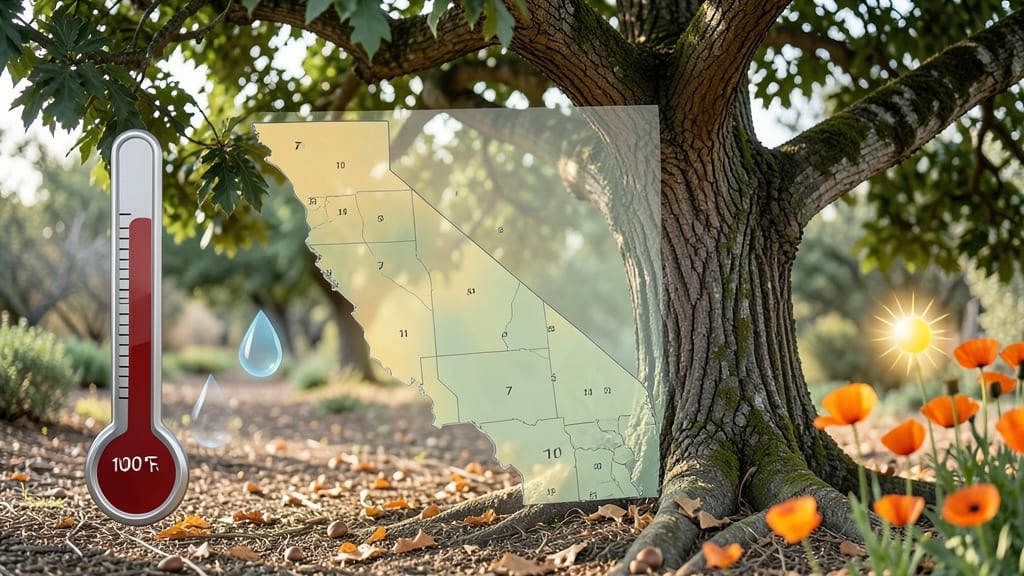
California gardening zones span from USDA Zone 5 in high mountain areas to Zone 11 along coastal deserts, with most urban gardens falling between Zones 8 and 10. Use the USDA interactive map or consult your local extension office to determine your precise zone and receive tailored planting advice for your specific microclimate.
Understanding California's gardening zones is crucial because the state's diverse geography creates wildly different growing conditions. 🌵 Coastal areas near San Francisco often experience milder winters (Zone 9-10) due to ocean currents, while inland valleys like the Central Valley can reach Zone 11 with hot summers.
Meanwhile, mountain regions like Lake Tahoe drop to Zone 5, where frost dates occur much later in spring. These variations mean a plant that thrives in Los Angeles might struggle in Sacramento just 100 miles north.
The key is recognizing how elevation, proximity to water bodies, and local topography create microclimates that can shift zones by 2-3 levels within just a few miles.
For practical application, start by entering your exact address into the USDA Plant Hardiness Zone Map to get your base zone. However, don't stop there—cross-reference with your local agricultural extension office, as they often maintain more granular maps that account for specific microclimates in your area.
For example, the foggy coastal regions of Big Sur might actually be Zone 9 despite being geographically close to Zone 10 areas. This level of precision helps you select plants that will thrive year-round and avoid costly mistakes with frost-sensitive varieties.
💡 In This Article
- How California’s Microclimates Affect Plant Hardiness Zones
- Step-by-Step Guide to Finding Your Exact California Gardening Zone
How California’s microclimates affect plant hardiness zones
California’s dramatic topography creates gardening zones that can shift by 5 degrees or more within just 50 miles. The state’s 3,000-foot elevation changes between coastal plains and mountain peaks directly influence temperature extremes.
For example, Death Valley (Zone 11) sits at 282 feet below sea level with summer highs reaching 120°F, while nearby Mount Whitney (Zone 5) at 14,505 feet experiences winter lows of -20°F. This vertical shift forces gardeners to consider elevation as their primary zone determinant.
The Pacific Ocean plays a dramatic cooling role along the coast. Cities like San Francisco (Zone 9-10) benefit from marine layer fog that keeps summer temperatures 10-15°F cooler than inland areas. This "fog belt" effect creates a 2-3 zone difference between coastal gardens and those just 20 miles inland.
Meanwhile, the Central Valley’s heat island effect pushes zones upward by 1-2 degrees due to urban heat retention and lack of cooling breezes. The result? A tomato plant that thrives in Zone 10 Santa Barbara might struggle in Zone 9 San Luis Obispo just 120 miles north.
Microclimates within cities add another layer of complexity. Urban heat islands can create Zone 10 conditions in downtown Los Angeles while suburban areas remain in Zone 9. Even your garden’s orientation matters—south-facing slopes gain 2-3 hours more sunlight daily, effectively raising the local zone by 0.5-1 degree.
This is why professional gardeners recommend testing your microclimate by planting a frost-sensitive species like bougainvillea and observing its winter survival rate for 3+ years.
Soil type compounds these variations. Coastal gardens often have sandy, nutrient-poor soils that require amendments like compost to support plants, while inland areas may have clay soils that retain moisture longer. The combination of zone, microclimate, and soil creates a unique growing equation.
For instance, a Zone 9 garden in Pasadena might successfully grow citrus trees year-round, while an identical zone garden in Zone 9 Fresno would need winter protection due to colder night temperatures.
What most gardeners overlook is how these microclimates affect seasonal planting. In Zone 10 coastal areas, you can plant warm-season crops like okra in early March, while inland Zone 10 gardens might wait until mid-April due to later soil warming.
The key is tracking your local last frost date—coastal areas often see their final frost in January-February, while inland valleys may experience frost until March or April.
To visualize these differences, imagine standing at the Golden Gate Bridge (Zone 9-10) and looking east toward the Bay Area hills. Within 10 miles, you cross into Zone 8 due to higher elevation, then into Zone 7 in the Berkeley Hills.
This rapid transition explains why some nurseries carry both frost-tender and cold-hardy plants—they’re serving multiple zones within their storefront. 🌿