
Advice
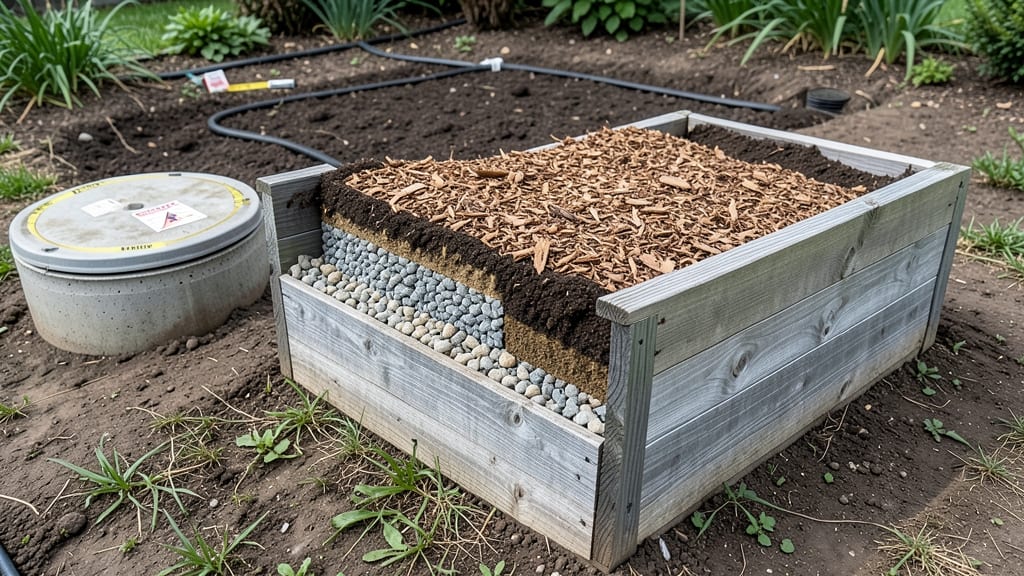
You can put raised garden beds over septic fields only if they follow strict safety guidelines: maintain at least a 10-foot distance from the drain field, use lightweight soil mixes without gravel, and limit watering to prevent soil saturation that could compromise the system. Always verify local septic regulations before building.
Septic systems rely on soil absorption to treat wastewater, so adding weight or excessive moisture above them can disrupt this process. 🔥 The 10-foot buffer zone prevents compaction that slows drainage, while gravel-free soil prevents clogging in the drain field's pipes.
Many homeowners mistakenly assume raised beds won't affect septic systems, but improper placement can actually increase maintenance costs by forcing costly repairs.
I recommend using composite lumber for beds (like cedar or plastic) to prevent rot near moisture-sensitive areas, and always install drip irrigation instead of overhead watering to control moisture levels precisely.
Local health departments often have additional requirements—some jurisdictions mandate specific bed heights or soil compositions to prevent root intrusion into drain lines. Before digging, check with your county's environmental health office for their septic-safe construction standards, as penalties for violations can exceed $1,000.
The key is balancing your gardening goals with the septic system's needs—it's all about maintaining that careful equilibrium.
💡 In This Article
- Septic System Safety Rules for Raised Garden Beds
- Building Septic-Safe Raised Beds: Materials and Design Tips
Septic system safety rules for raised garden beds
Septic systems work by distributing wastewater through a network of perforated pipes in the drain field, where soil bacteria break down organic matter. The soil's natural filtration process removes pathogens before water percolates into groundwater.
When you place raised beds over or near this area, you risk two major problems: soil compaction from the bed's weight and excessive moisture from irrigation. Compacted soil reduces the void spaces where oxygen and microbes need to thrive, slowing down the treatment process by up to 40%.
The EPA recommends maintaining a 10-foot buffer zone around drain fields to prevent this compression and maintain proper drainage patterns.
Pathogen spread is another critical concern. Septic systems handle human waste containing harmful bacteria like E. coli and viruses that can contaminate vegetables grown in beds placed too close. Studies show that even light rainfall can carry these microbes upward through soil, a process called "capillary action."
Raised beds with overhead irrigation systems exacerbate this by adding extra moisture that pushes contaminants toward the surface. The 10-foot minimum distance helps create a natural barrier, giving soil microbes time to fully decompose waste before any potential upward movement reaches garden vegetables.
Local health departments often enforce stricter rules than federal guidelines. For example, some counties require a 20-foot buffer zone for beds with overhead sprinklers, while others mandate gravel-free soil mixes to prevent pipe clogging.
The key difference lies in how different soils absorb water—sandy soils drain faster but offer less filtration, while clay soils retain moisture longer but can become waterlogged. Always check your county's specific regulations, as violations can lead to fines or even forced removal of non-compliant beds.
What most people don't realize is how bed height affects safety. Taller beds (12 inches or higher) create more pressure on underlying soil, potentially damaging drain field pipes over time.
The solution is using lightweight materials like composite lumber and organic soil mixes (such as coconut coir) that won't settle and compact.
Even the type of irrigation matters—drip systems deliver water directly to plant roots without saturating surrounding soil, while overhead sprinklers can add 1-2 inches of extra moisture per week, overwhelming the system's capacity.
Consider this real-world example: A homeowner in Florida installed raised beds just 5 feet from their drain field using gravelly soil. Within two years, they noticed slower drainage and higher septic maintenance costs.
After switching to a 15-foot buffer zone with coconut coir and drip irrigation, their system performed normally again. The lesson? Proper spacing and construction aren't just about following rules—they're about protecting your investment in both your garden and septic system.