
Advice
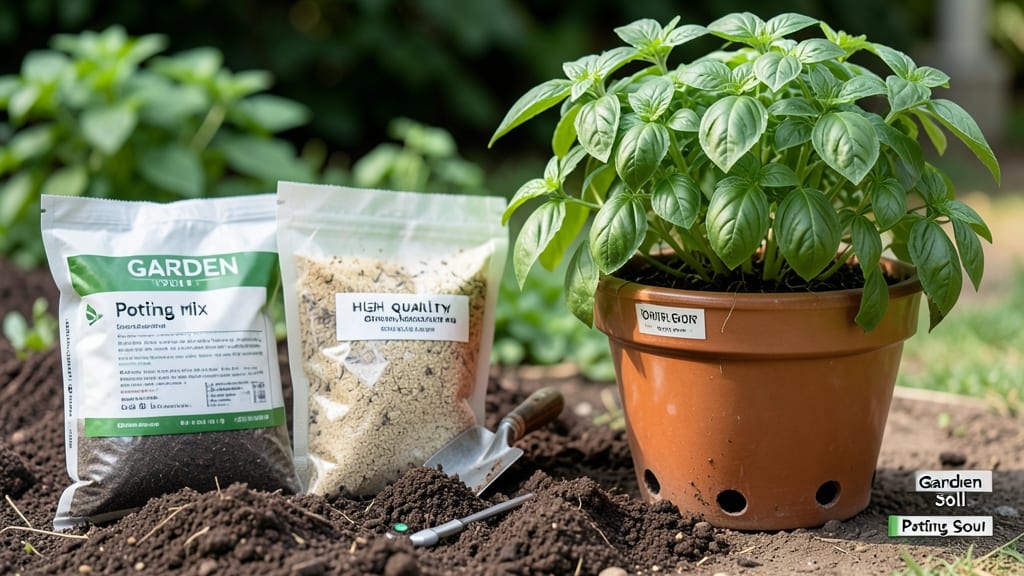
You shouldn't use garden soil as potting soil because it compacts easily, lacks drainage, and may contain pests or diseases. Instead, mix it with perlite, sand, or compost (1:1 ratio) to improve aeration and fertility for container plants.
Garden soil is packed with heavy clay and silt that suffocate plant roots by blocking airflow and water flow. 🌱 Without proper amendments, moisture pools at the bottom of pots, leading to rot. Even worse, garden soil often carries weed seeds, fungi, or larvae that thrive in confined spaces.
I’ve seen beginners ruin entire seedling batches because they skipped this critical step—always test your mix by squeezing it: if it holds a tight ball, it’s too dense.
For a quick fix, combine garden soil with coarse sand or perlite (both improve drainage) and add compost (for nutrients). This DIY blend works well for hearty plants like tomatoes or herbs, but delicate varieties like orchids still need specialized mixes.
Pro tip: Sterilize garden soil first by baking it at 200°F for 30 minutes to kill pathogens.
💡 In This Article
- Why Garden Soil Fails as Potting Mix
- DIY Potting Soil Blends Using Garden Soil
Why garden soil fails as potting mix
Garden soil's heavy clay and silt particles create a dense matrix that smothers roots by reducing oxygen levels to less than 10%—critical for healthy root respiration. Compare this to ideal potting soil, which maintains 25-30% air porosity through organic matter like peat moss or coconut coir.
This porosity difference explains why plants in garden soil often show stunted growth or yellowing leaves, a clear sign of oxygen deprivation.
The compaction issue worsens in containers where water can't drain freely. When you press garden soil in your hand, it forms a tight ball that resists breaking—this indicates poor drainage. 🌱 The ideal potting mix should crumble easily when dry, allowing water to flow through while retaining moisture for roots.
Without proper amendments, excess water pools at the bottom, creating anaerobic zones where harmful bacteria thrive, leading to root rot within 3-5 days for sensitive plants.
Pathogen risks are another critical factor. Garden soil often contains dormant weed seeds, fungal spores like Phytophthora, or insect larvae that become active in warm, moist containers. These pathogens spread rapidly in confined spaces, while commercial potting mixes are pasteurized to eliminate them.
Even "sterile" garden soil can harbor issues—always bake it at 200°F for 30 minutes if you must use it, though this kills beneficial microbes too.
Nutrient imbalances further complicate things. Garden soil provides a broad spectrum of minerals, but potting mixes are formulated to release nutrients gradually. Without organic matter like compost, essential elements like nitrogen and phosphorus become locked in clay particles, making them unavailable to plants.
This explains why container-grown vegetables often show deficiency symptoms despite appearing healthy at first glance.
Consider the texture contrast: garden soil feels gritty and heavy, while potting mixes have a light, almost fluffy consistency. This difference isn't just aesthetic—it directly impacts root development.
Plants in heavy soil struggle to establish extensive root systems, limiting their ability to absorb water and nutrients efficiently. 🌿 The solution lies in understanding these fundamental differences before attempting any soil modifications.