
Plants
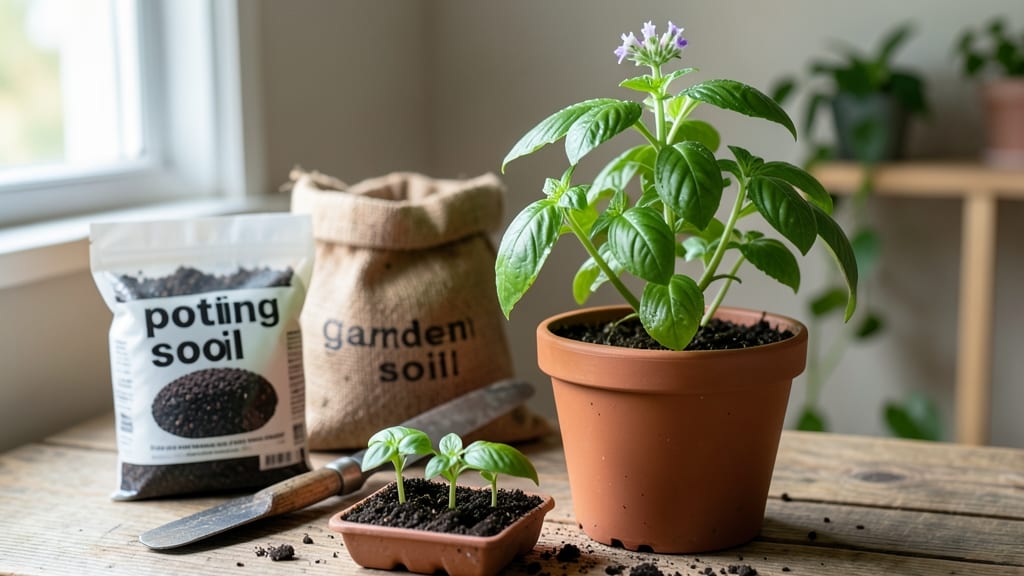
You can't use garden soil for potting plants directly because it compacts easily, retains too much moisture, and lacks the nutrients needed for container growth. Instead, mix it with potting soil, perlite, and compost to improve drainage and aeration for healthier potted plants.
Garden soil is heavy and dense, which means it doesn't allow air or water to move freely through the pot. 🌱 This creates a suffocating environment for roots, leading to rot and stunted growth.
The nutrient profile is also unbalanced for container plants, which rely on a consistent supply of food in a confined space. For best results, combine garden soil with 30% potting mix and 20% perlite—this lightens the texture while adding essential organic matter.
Many gardeners make the mistake of assuming any soil will work, but container plants have different needs than those in the ground. 💡 They need soil that drains quickly, stays loose, and provides a steady release of nutrients.
That's why I always recommend testing your homemade mix by squeezing a handful—if it holds its shape like clay, it's too compact. The ideal potting blend should crumble easily while still holding moisture.
💡 In This Article
- Why Garden Soil Fails in Potted Plants
- Best Ways to Modify Garden Soil for Pots
Why garden soil fails in potted plants
Garden soil is designed for in-ground planting where roots can spread freely, but container plants face a completely different challenge. The key issue is soil compaction: when you pack garden soil into pots, its natural clay and silt particles press together, reducing pore space by up to 50%.
This creates a dense matrix that restricts both oxygen and water movement—roots suffocate because they can't access the air they need to respire. 🌱 Compare this to potting mix, which contains 20-30% air space by volume, allowing roots to breathe and absorb nutrients efficiently.
The moisture retention problem stems from garden soil's high clay content. Clay particles hold water tightly through capillary action, creating a waterlogged environment that promotes root rot within 3-5 days of overwatering.
Potting mixes, however, incorporate perlite or vermiculite (up to 20-30% by volume) that act like tiny water reservoirs, releasing moisture gradually. This is why container plants in garden soil often show symptoms like yellowing leaves or mushy stems—signs of oxygen deprivation and poor drainage.
Nutrient deficiencies are the third major issue. Garden soil contains a broad spectrum of organic matter that breaks down slowly over seasons, but container plants exhaust nutrients in just 6-12 months due to their confined root zones.
The nitrogen, phosphorus, and potassium ratios in garden soil are optimized for perennial growth, not the rapid nutrient uptake needed by potted annuals or vegetables.
For example, a tomato plant in garden soil may produce stunted fruit because it can't access enough phosphorus for flowering, even if the soil appears fertile. 💡
Root systems also behave differently in containers. In garden soil, roots can grow downward indefinitely, accessing deeper moisture and nutrients. But in pots, roots hit the container walls and circle around in a phenomenon called root binding.
This restricts growth and makes plants more vulnerable to stress. Potting mixes with added compost or worm castings provide a steady nutrient supply while encouraging upward root growth, which is critical for container plants.
Consider this comparison: a 1-gallon pot filled with garden soil may hold 15-20% air space after settling, while the same pot with a proper potting mix maintains 30-40% air space.
This difference explains why plants in garden soil often wilt quickly after watering—they're not getting enough oxygen to their roots. The solution lies in understanding that container plants need a lighter, more porous medium that mimics the natural aeration of forest floor litter or compost piles.
For visual learners, imagine holding two handfuls of soil: one from your garden (dense, cold, and heavy) and one from a potting mix (light, warm, and crumbly). The potting mix feels almost fluffy because it's designed to replicate the loose, organic texture where wild plants thrive in nature.
This structural difference is what makes all the difference for container gardening success. 🌿