
Plants
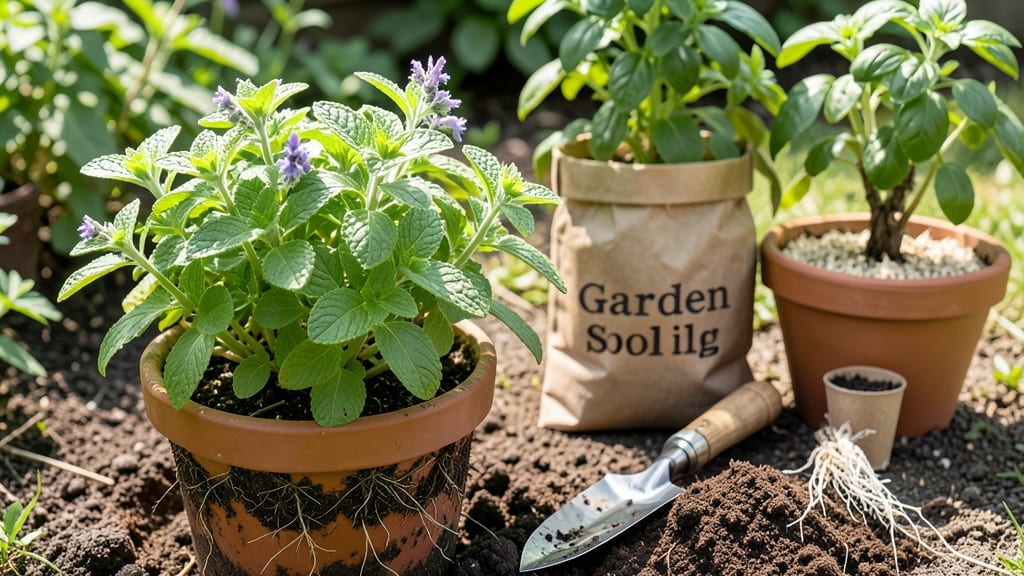
You can use garden soil for potted plants only if you mix in 20% coarse sand or perlite, as it tends to compact and retain too much moisture, which can suffocate roots. Always improve drainage and aeration for container success.
Garden soil's heavy clay content makes it ideal for in-ground planting but a poor choice for containers. 🌱 The dense structure blocks airflow, preventing roots from breathing properly, while its tendency to hold water creates soggy conditions that promote rot.
Even plants like ferns, which tolerate moisture, may struggle without adjustments. For best results, combine garden soil with perlite or coarse sand to mimic the loose, well-draining texture of commercial potting mixes.
This modification creates vital air pockets that roots need while preventing waterlogging. I've found that adding 20% perlite improves drainage without altering the soil's natural fertility, making it suitable for nutrient-loving plants like tomatoes or peppers.
For succulents, I recommend increasing the sand ratio to 30% to create an even drier environment. Always test your mix by squeezing a handful—it should crumble easily rather than form a tight clump.
💡 In This Article
- Why Garden Soil Fails in Potted Plants
- How to Modify Garden Soil for Potted Plants
Why garden soil fails in potted plants
Garden soil's natural composition makes it a terrible fit for containers because its high clay content creates a dense, impermeable structure. When packed into pots, it compresses under the weight of plants and water, reducing pore space by up to 60% compared to ideal potting mixes.
This compaction suffocates roots by blocking oxygen exchange—something critical for root respiration, where roots "breathe" through microscopic air channels in the soil.
The drainage disaster begins with clay's water-holding properties. While this helps in-ground plants by maintaining moisture during dry spells, it turns containers into water traps. A standard garden soil can retain 40-50% of its weight in water after heavy watering, while potting mixes typically hold only 20-30%.
This excess moisture creates anaerobic conditions (no oxygen) that trigger root rot within 48-72 hours—a silent killer that often goes unnoticed until plants wilt despite damp soil.
Nutrient imbalance is another hidden issue. Garden soil's organic matter decomposes slowly, releasing nutrients in unpredictable bursts that can overwhelm container plants with sudden spikes in nitrogen or phosphorus.
Unlike potting mixes designed for controlled nutrient release, garden soil often lacks the balanced micronutrients that container plants need in concentrated form. For example, a tomato plant in unamended garden soil might show yellowing leaves (nitrogen deficiency) while simultaneously suffering from phosphorus toxicity.
Consider the texture difference: Garden soil feels heavy and sticky when wet, while ideal potting mixes have a light, almost fluffy consistency that crumbles easily.
This physical difference translates directly to root health—roots in compacted soil must work harder to penetrate the dense matrix, using precious energy that could go toward growth. Even moisture-loving plants like ferns struggle because their delicate root systems can't tolerate prolonged waterlogging.
The science of soil aeration explains why this matters so much. Healthy potting soil maintains a 20-30% air-to-water ratio—meaning one-fifth to one-third of the soil volume should be air pockets.
Garden soil typically falls below 10% air space, creating a suffocating environment where beneficial microbes that help roots absorb nutrients can't thrive. These microbes are essential for breaking down organic matter and making nutrients available to plants.
What most gardeners don't realize is how quickly these problems develop. Within just 2-4 weeks of planting in unamended garden soil, you'll see signs of stress: yellowing leaves, stunted growth, or roots growing in circles along the pot's edges (a clear sign of restricted space).
The root zone becomes a battleground between oxygen deprivation and waterlogging, forcing plants to adapt by growing fewer, shallower roots—exactly what you don't want in a container where space is limited.