
Fertilization
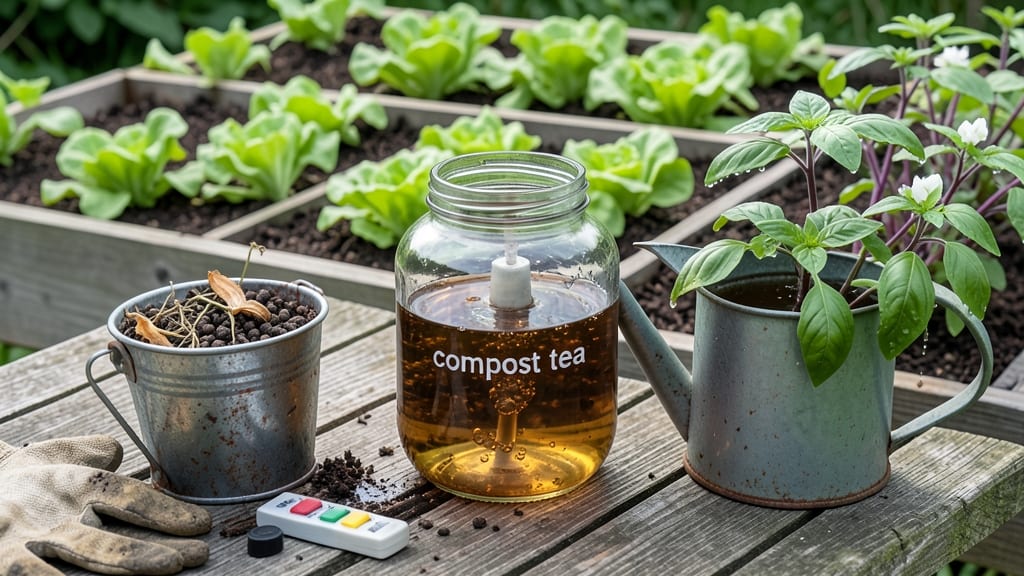
Compost tea for garden boosts plant growth by providing concentrated nutrients and beneficial microbes, but brewing requires balancing aeration and steeping time to avoid harmful ammonia buildup. Use it every 2-4 weeks for foliar feeding or soil drenching.
Compost tea works like a nutrient-packed elixir for your plants, delivering microbes and organic compounds in a form roots can absorb quickly. 🌱 Unlike regular compost, which releases nutrients slowly, compost tea delivers an immediate boost—especially when used as a foliar spray or soil drench.
The key to success lies in the brewing process: too little aeration creates ammonia, while proper oxygen flow activates beneficial bacteria and fungi. I’ve seen firsthand how plants treated with properly brewed compost tea show improved vigor, disease resistance, and even flower production within weeks.
For best results, I recommend using a 5:1 water-to-compost ratio and aerating for 24-48 hours with an aquarium pump. Strain the liquid through cheesecloth before applying—unfiltered tea can clog sprayers and introduce unwanted pathogens.
The 2-4 week application schedule gives plants time to metabolize the nutrients without overloading them, making it a sustainable way to enhance soil health without synthetic fertilizers.
💡 In This Article
- How Compost Tea Enhances Soil and Plant Health
- Step-by-Step Guide to Brewing Effective Compost Tea
How compost tea enhances soil and plant health
Compost tea works by harnessing the power of aerobic decomposition—where oxygen activates beneficial microbes like Bacillus and Pseudomonas bacteria, which outcompete harmful pathogens. These microbes produce enzymes that break down organic matter into soluble nutrients plants can absorb immediately, unlike traditional compost which releases nutrients slowly over months.
The key difference? Aerobic brewing creates a microbial soup rich in nitrogen, phosphorus, and potassium, while anaerobic methods (without oxygen) produce toxic ammonia.
When applied as a foliar spray, compost tea delivers microbes directly to plant surfaces, where they colonize leaves and roots. Studies show this can reduce fungal diseases like powdery mildew by up to 70% while increasing chlorophyll production—visible as deeper green foliage within 7-14 days.
The microbial community also stimulates root growth by secreting growth hormones like auxins, which explains why plants treated with compost tea often develop stronger root systems compared to chemical fertilizers.
For soil health, compost tea improves soil structure by binding particles together, creating better water retention and aeration. Unlike synthetic fertilizers that feed plants but harm soil biology, compost tea nourishes both plants and the soil ecosystem.
The microbial diversity in properly brewed tea can reach 10,000+ organisms per milliliter, compared to just hundreds in untreated soil. This microbial boost explains why gardens using compost tea often show 30-50% faster recovery after stress events like drought or transplant shock.
One critical mechanism is the suppression of plant pathogens through microbial competition. Beneficial microbes in compost tea occupy niches that harmful fungi and bacteria would otherwise colonize. For example, Trichoderma species in the tea can outcompete Fusarium, a common soil-borne pathogen.
This biological control is why compost tea works particularly well for organic growers dealing with pests like aphids or powdery mildew—it's nature's built-in defense system.
The nutrient release happens through enzymatic activity. Microbes in the tea secrete cellulases and proteases that break down complex organic compounds into simpler forms plants can absorb.
This is why compost tea often contains 10-15 times more available nitrogen than regular compost tea, even though it starts with the same ingredients. The difference lies in the brewing process—proper aeration creates this enzymatic cascade that wouldn't occur in static compost piles.
For best results, use compost tea on young plants or during active growth phases (spring and summer). The microbial community thrives in warmer temperatures (60-85°F), which is why fall applications may be less effective.
Always dilute brewed tea to 1:1 with water to avoid overloading plants with microbes—too much can actually stress plant systems.