
Landscaping
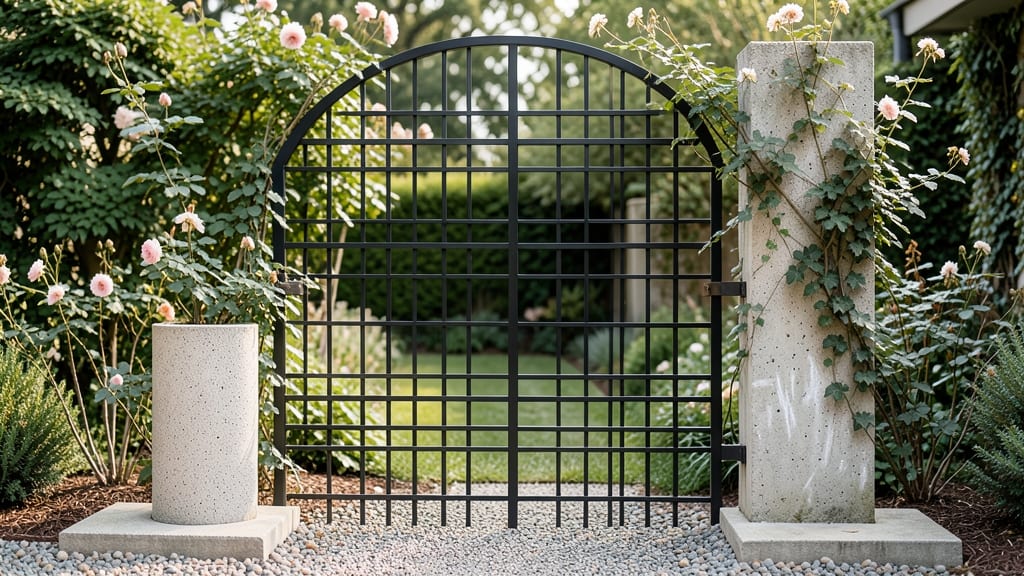
Garden concrete pillars create sturdy vertical supports for climbing plants, trellises, and arbors, with DIY height limits of 6–8 feet using reinforced forms. Build with 4-inch-thick bases and embedded rebar for stability, then allow at least 7 days for proper curing before planting.
These sturdy structures handle everything from heavy grapevines to decorative arbors, thanks to their reinforced concrete composition. 🔥 The 6–8 foot height limit ensures safety while maintaining structural integrity, and proper rebar placement—typically #4 rebar spaced 12–18 inches apart—distributes weight evenly.
I always recommend digging 12–18 inches deep below the frost line to prevent seasonal shifting, which can compromise stability over time.
For optimal results, use a 3000–4000 psi concrete mix and keep forms oiled to prevent sticking. The curing period is critical—skipping it risks cracking under plant weight or weather exposure. Pro tip: Water the pillars daily for the first 3 days to maintain moisture levels during curing.
💡 In This Article
- How to Calculate Load Capacity for Garden Concrete Pillars
- Step-by-Step DIY Concrete Pillar Installation Guide
How to calculate load capacity for garden concrete pillars
Understanding load capacity means considering three key forces: the weight of the plant itself, wind loads, and soil bearing capacity. For example, a mature wisteria vine can weigh up to 20–30 pounds per foot of stem, while grapevines average 15–25 pounds per vine.
The concrete must support this distributed load plus potential wind gusts—especially in exposed areas where 40–60 mph winds can exert 10–20 pounds of lateral force per square foot on vertical structures.
Start with soil bearing capacity, which varies by type. Sandy soil typically supports 1,000–1,500 pounds per square foot (psf), while clay can handle 2,000–3,000 psf. For a 4-inch-thick base (16 square inches), multiply by the soil capacity to find the maximum safe load.
For instance, clay soil allows 3,000 psf × 16 sq in = 48,000 pounds—plenty for most garden structures. Rebar spacing follows the formula: #4 rebar at 12-inch centers for heights under 6 feet, reducing to 18-inch centers for 6–8 feet to maintain stability.
A 3000–4000 psi concrete mix provides the tensile strength needed to resist cracking under plant weight. The compressive strength formula—σ = P/A, where σ is stress, P is load, and A is base area—shows why wider bases distribute weight better.
For a 12-inch-diameter pillar, the base area is 113 square inches, meaning it can support 45,200 pounds at 4000 psi before structural failure. This exceeds typical garden loads, but proper rebar placement (vertical and horizontal ties) prevents shear failure from wind or plant movement.
Wind resistance becomes critical at heights over 6 feet. The drag coefficient for a cylindrical pillar is about 1.2, meaning wind exerts 1.2 × velocity² × projected area in pounds.
A 6-foot-tall, 6-inch-diameter pillar has a 3.5-square-foot projected area, so a 50 mph wind generates 25 pounds of force. To counteract this, use horizontal rebar ties every 24 inches to create a "cage" that resists lateral bending.
For climbing plants like clematis or morning glories (lighter loads of 5–10 pounds per vine), you can reduce rebar to #3 at 18-inch centers and use a 2000 psi mix. However, always exceed the minimum requirements—over-engineering by 20–30% accounts for soil settlement or unexpected loads.
For instance, a 4-inch-thick base with #4 rebar at 12 inches in a 3000 psi mix safely supports 10-foot-tall trellises with moderate vine weight.
Pro tip: Test soil bearing capacity with a simple plate load test. Drive a 12-inch-square steel plate into the ground and load it incrementally with weights. If the plate sinks 1 inch under 1,000 pounds, your soil can support 1,000 psf.
Adjust rebar spacing or base thickness accordingly. This hands-on check prevents costly mistakes during installation.