
Container Gardens
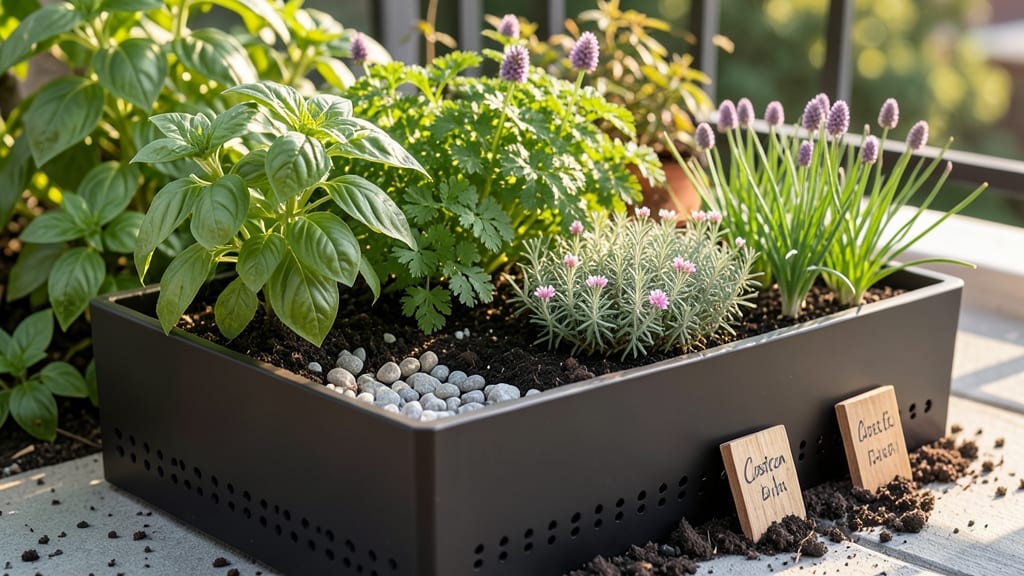
The Costco raised garden planter measures 48 inches long, 20 inches wide, and 10 inches deep, offering a planting volume of 15-20 cubic feet. Its lightweight, modular design makes it perfect for urban balconies, small patios, or compact yards while ensuring adequate drainage for healthy plant growth.
This planter's dimensions strike the ideal balance for growing a diverse mix of plants without overwhelming limited spaces. 🌱 The 10-inch depth is particularly well-suited for root vegetables like carrots or radishes, while the 48-inch length allows you to cultivate multiple rows of leafy greens or herbs.
I've found that the planter's fabric material resists UV damage better than many plastic alternatives, though it requires occasional watering adjustments since it dries out faster in hot weather.
The modular design also lets you expand vertically with stacking options or connect multiple planters for larger harvests. For example, pairing two planters side-by-side creates a 96-inch growing space—ideal for tomato cages or trellised cucumbers.
Just remember to space plants according to their mature sizes, as overcrowding can lead to poor airflow and increased pest risks.
💡 In This Article
- Costco Raised Garden Planter Dimensions and Material Breakdown
- Optimizing Plant Selection for Costco’s Raised Garden Planter
Costco raised garden planter dimensions and material breakdown
The Costco raised garden planter's dimensions—48 inches long, 20 inches wide, and 10 inches deep—were designed with urban gardeners in mind. That 10-inch depth is crucial because it accommodates root vegetables like carrots (which need 6-8 inches of soil) while still being shallow enough to prevent waterlogging.
The 20-inch width provides ample space for multiple plants side-by-side, reducing competition for nutrients. 🌱 What's often overlooked is how these dimensions create a 15-20 cubic foot planting volume, which translates to roughly 4-5 cubic feet per plant when spaced properly.
The planter's material—typically a durable, UV-stabilized fabric—plays a key role in its functionality. Unlike plastic containers, this fabric allows for better airflow to the roots while still retaining moisture. However, it's not waterproof, which means you'll need to place it on a tray or elevated surface to catch runoff.
The fabric's weight is surprisingly light (usually 10-15 pounds when empty), making it easy to move or reposition—ideal for renters or those with limited space.
The edges are reinforced to handle the weight of soil and plants, though they can flex slightly under heavy loads, so avoid overfilling with wet soil.
Drainage is built into the design through strategically placed holes along the bottom edges. These holes prevent root rot by allowing excess water to escape, but they also mean you'll need to place a drip tray or saucer underneath to protect surfaces.
The planter's modular nature lets you connect multiple units, creating a continuous growing space. For example, two planters side-by-side provide 96 inches of growing length—perfect for trellised plants like cucumbers or pole beans.
The fabric material also resists cracking from temperature fluctuations, unlike some plastic alternatives that become brittle in cold weather.
One often-ignored factor is how the planter's dimensions affect plant spacing. With a 48-inch length, you can fit 4-6 plants in a row, depending on their mature size. For instance, basil plants need only 6 inches of spacing, while tomato plants require 18-24 inches.
The 20-inch width allows for 2-3 rows of plants, creating a compact but productive layout. This modularity also means you can adjust the planter's orientation to maximize sunlight exposure, whether placed horizontally on a patio or vertically against a fence.
For those concerned about durability, the fabric material holds up well to seasonal changes but may require occasional repairs. UV exposure can cause slight fading over time, but the planter's design minimizes this by allowing you to rotate it periodically.
The edges, while reinforced, aren't indestructible—avoid placing heavy objects on them to prevent tearing. The planter's lightweight nature also makes it susceptible to tipping in windy conditions, so securing it to a stable surface is a good idea for outdoor use.
Consider these key factors when setting up your planter:
- Weight capacity: Supports up to 50-75 pounds when filled with soil and plants
- Drainage needs: Requires a tray to prevent water damage to surfaces
- Mobility: Lightweight enough to move but may need stabilization for outdoor use
- Material care: Occasional cleaning with mild soap extends lifespan
The planter's dimensions and material work together to create a versatile growing solution that balances functionality with ease of use. Whether you're growing herbs on a balcony or vegetables in a small yard, this design maximizes your space without sacrificing productivity. 💫