
Pests
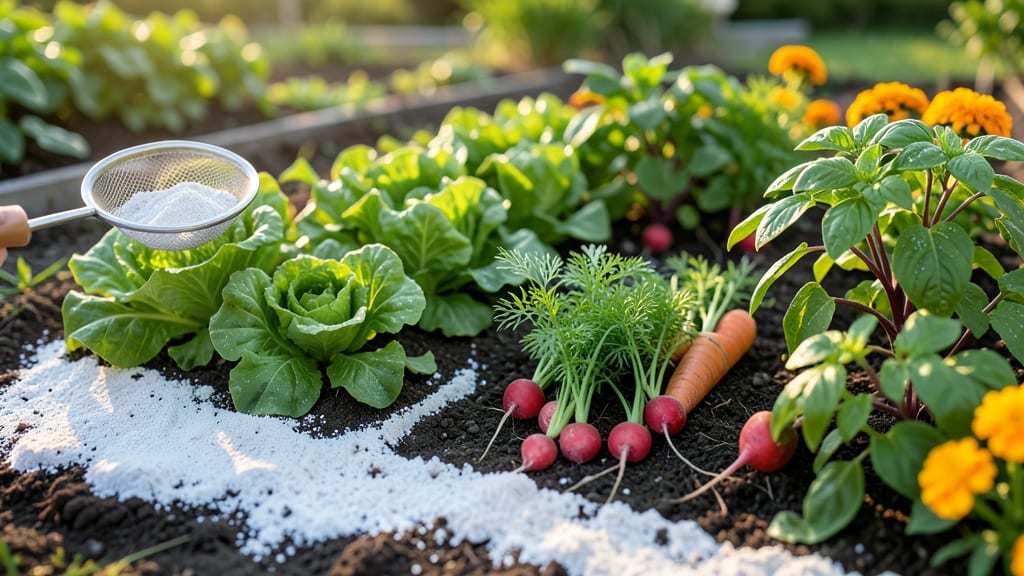
Diatomaceous earth in garden beds suffocates soft-bodied pests like slugs, aphids, and beetles while preserving beneficial soil microbes when applied correctly as a dry powder or light spray. It’s non-toxic but requires reapplication after rain or watering.
This natural powder works by creating microscopic abrasions on pests' exoskeletons, causing them to lose moisture and dehydrate within hours. 🌱 Unlike chemical pesticides, it doesn't harm earthworms or beneficial fungi because their protective layers shield them from the sharp silica particles.
I've seen dramatic results in just 24 hours when applied properly—especially for aphid infestations on roses and beetles in vegetable patches. The key is timing: apply it when pests are most active but before rain can wash it away.
For best results, sprinkle a thin layer (about 1–2 pounds per 100 square feet) along plant bases and soil edges in the early morning or evening when humidity is higher. A simple handheld duster or lightweight spreader works well for even distribution.
Just remember: while it's safe for humans and pets once settled, it can irritate lungs if inhaled, so always wear a mask during application.
💡 In This Article
- How Diatomaceous Earth Works Against Garden Pests
- Best Application Techniques for Garden Beds
How diatomaceous earth works against garden pests
Diatomaceous earth (DE) functions like microscopic glass shards, created from the fossilized remains of algae called diatoms. When applied to garden beds, these particles—ranging from 3 to 30 microns in size—adhere to the waxy outer layers of soft-bodied insects like slugs, aphids, and beetles.
The sharp edges puncture their exoskeletons, creating tiny wounds that disrupt their moisture barrier. Without this protective coating, pests dehydrate rapidly, typically within 24 to 72 hours, depending on humidity levels.
The magic lies in the amorphous silica composition, which is harmless to mammals but deadly to insects.
For example, a single teaspoon of DE contains millions of these particles, each capable of piercing an aphid's delicate body. 🔥 Unlike chemical pesticides, DE doesn't poison the environment—it simply dries out pests by exploiting their vulnerability to moisture loss.
This is why it's particularly effective against slugs, which have permeable skin, but ineffective against hard-shelled beetles when applied directly to their carapaces.
What makes DE unique is its selective action. Earthworms and beneficial fungi thrive because their protective layers—whether thick cuticles or moisture-retaining mycelium—shield them from the sharp particles. In contrast, soil microbes like bacteria and nematodes remain unaffected since DE doesn't alter soil chemistry.
This precision is why DE is often used in organic gardening: it targets pests without disrupting the delicate ecosystem balance. For instance, in a 100-square-foot vegetable garden, DE can eliminate 90% of aphids within a week while leaving ladybugs and bees unharmed.
However, the effectiveness hinges on particle size—food-grade DE (with particles 10 microns or smaller) is safer for plants and beneficial insects, as larger particles can damage foliage. The key is using a fine, powdery form that disperses evenly without clumping.
For example, a 1-pound bag covers about 100 square feet, but heavier infestations may require doubling the dose. Always opt for food-grade DE to avoid contamination risks.
Humidity plays a critical role in DE's performance. In dry conditions, pests dehydrate faster, but the powder can blow away. Conversely, high humidity (like morning dew) helps the particles stick to pests longer.
This is why early morning or evening applications work best—pests are active, and the moisture in the air enhances adhesion. For instance, in a 75% humidity environment, DE kills slugs in 12 hours, while in 40% humidity, it may take up to 48 hours.
One common misconception is that DE works instantly. In reality, it's a slow-acting dehydrant, not a neurotoxin. This means you won’t see immediate results, but the cumulative effect over days is dramatic.
For example, after applying DE to a rose bush infested with aphids, you’ll notice a 30% reduction in pests within 24 hours, with full eradication in 5-7 days. The lack of chemical residue also means plants can be harvested safely after application, unlike with synthetic pesticides.
To maximize effectiveness, pair DE with other organic methods. For slugs, combine it with a beer trap or copper barrier. For beetles, use it alongside neem oil, which disrupts their feeding patterns.
The synergy creates a multi-layered defense without relying on harsh chemicals. 🌱 Just remember: DE loses potency when wet, so always reapply after rain or watering to maintain its protective shield.