
Vegetables
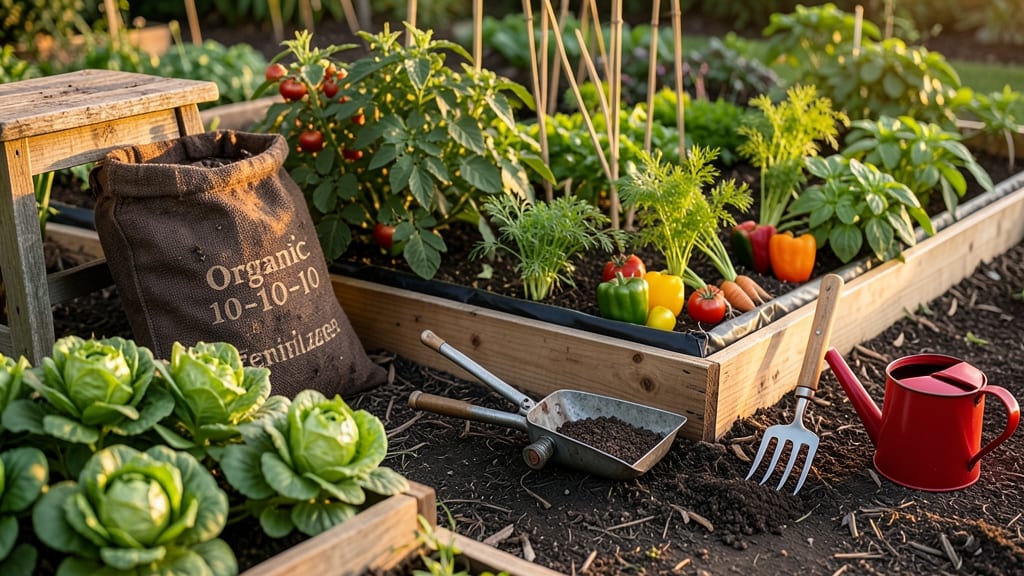
Whether you need fertilizer for a vegetable garden depends on your soil—well-amended soil with compost or aged manure often supplies enough nutrients, though heavy feeders like tomatoes and leafy greens may still benefit from occasional balanced fertilizer applications.
Your vegetable garden's nutrient needs start with the soil itself. 🌱 Healthy soil packed with organic matter—like compost or well-rotted manure—can provide all the essential nutrients most plants need.
The key is testing your soil first: if your pH is balanced and the soil has good structure, you might skip synthetic fertilizers entirely. I've found that many home gardeners overlook this step and jump straight to fertilizers, which can actually disrupt the natural soil ecosystem if not needed.
For plants that are particularly hungry—think tomatoes, peppers, or leafy greens like spinach—you might need to supplement with a balanced organic fertilizer during the growing season. The difference comes down to how quickly your plants deplete nutrients.
For example, tomatoes draw heavily from the soil, so they often respond well to a mid-season boost of compost tea or a low-dose fertilizer.
💡 In This Article
- How Soil Health Determines Fertilizer Needs
- Best Organic Alternatives to Synthetic Fertilizers
How soil health determines fertilizer needs
Soil health acts like a bank account for your plants—when it's rich in organic matter, nutrients are slowly released as plants need them. Compost and well-rotted manure break down into humus, which holds onto nutrients like nitrogen, phosphorus, and potassium (NPK) while making them available over time.
A single application of compost can feed plants for months, unlike synthetic fertilizers that provide a quick but short-lived boost. 🌱 The key is that healthy soil maintains a balance between microbial activity and nutrient availability, creating what scientists call "soil food web" stability.
Testing your soil reveals what's truly happening beneath the surface. A basic soil test measures pH (ideal range for most vegetables is 6.0-7.0) and NPK levels—if your soil tests show sufficient nutrients (typically 100-200 ppm nitrogen for vegetables), you can skip fertilizers entirely.
For example, my garden soil tested at pH 6.5 with 150 ppm nitrogen last spring, and my zucchini plants thrived without any additional fertilizer. The texture also matters: sandy soils drain nutrients quickly, while clay holds them too tightly—both scenarios often require amendments before planting.
Organic matter improves soil structure by increasing porosity, which helps roots access oxygen and water while preventing compaction. When organic matter decomposes, it releases nutrients gradually through microbial activity—this process is why composted materials work better than fresh ones.
For instance, fresh manure can burn plants due to high ammonia levels, while well-aged manure provides a steady nutrient release. The microbial diversity in healthy soil also helps break down organic residues, creating a self-sustaining nutrient cycle that reduces the need for external inputs.
Synthetic fertilizers become necessary when soil tests reveal deficiencies or when you're growing nutrient-hungry crops in depleted soil. For example, tomatoes typically require 0.5-1.0 lbs of nitrogen per 100 sq ft during the growing season, which may exceed what healthy soil can provide naturally.
In such cases, a balanced organic fertilizer (like 5-5-5) applied at planting and mid-season can prevent deficiencies like blossom end rot. The trade-off is that synthetic fertilizers provide immediate results but don't improve soil structure or microbial life like organic amendments do.
Consider this analogy: healthy soil is like a well-stocked pantry where nutrients are always available when needed, while fertilizers are like takeout—convenient but not sustainable. The best approach combines soil testing with organic amendments to build long-term fertility.
For instance, adding 2-3 inches of compost before planting often eliminates the need for fertilizers in the first year, while cover crops like clover can replenish nitrogen between seasons naturally. 🌿
One common mistake is assuming all soils need fertilizers—many backyard gardens have enough nutrients if properly managed. The University of Massachusetts Extension found that home gardens with 3-5% organic matter typically don't require additional fertilizers for most vegetables.
The solution often lies in improving soil health first through composting and proper drainage before considering fertilizers.