
Light Requirements
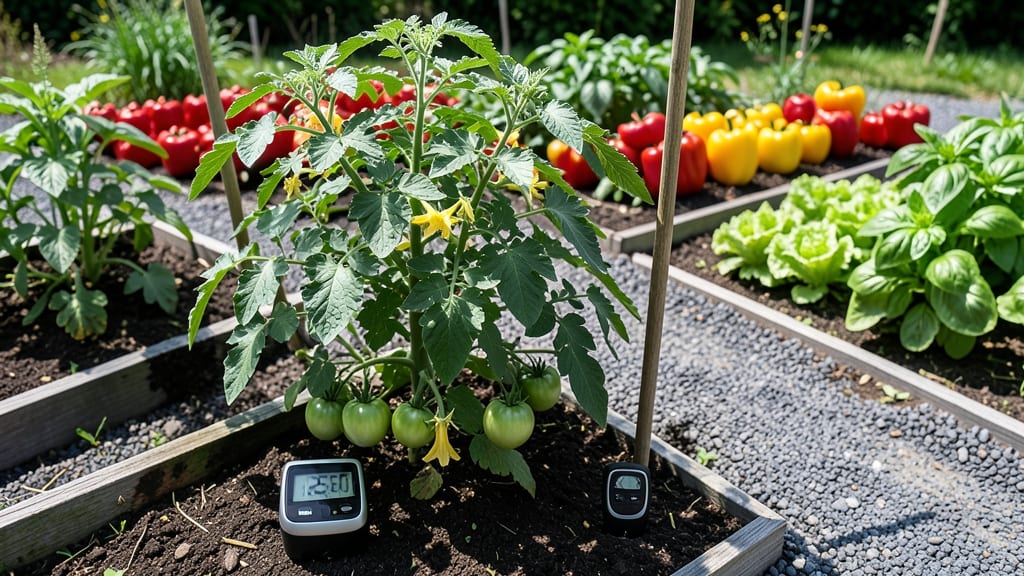
Vegetable gardens need full sun (6-8 hours daily) for most crops to thrive, but specific plants have unique light needs—leafy greens like spinach grow well in partial shade, while sun-loving tomatoes and peppers demand direct sunlight for optimal fruit production and flavor.
Sunlight acts as fuel for photosynthesis, but not all vegetables require the same intensity. Leafy vegetables like lettuce, kale, and Swiss chard can handle 3-4 hours of sunlight daily, making them perfect for shadier garden corners.
On the other hand, fruiting plants such as peppers, cucumbers, and eggplants need full sun exposure to develop properly—without it, you'll often see smaller yields or bland flavors. 🌱 Even root vegetables like carrots benefit from consistent sunlight to prevent woody textures.
If your garden has limited sun, consider arranging taller plants on the north side to avoid shading shorter crops.
For gardens with uneven sunlight, rotational planting can help maximize productivity. For example, you might start sun-loving tomatoes in the spring when sunlight is strongest, then replace them with shade-tolerant greens as summer heat intensifies.
Another trick is using reflective surfaces like white mulch or light-colored containers to redirect sunlight to shaded areas. If you're dealing with partial shade, opt for varieties bred for lower light conditions—like 'Black Seeded Simpson' lettuce or 'Mammoth Melting' onions—to avoid disappointment.
💡 In This Article
- Sunlight Requirements for Different Vegetable Types
- Maximizing Garden Productivity with Sunlight Strategies
Sunlight requirements for different vegetable types
Photosynthesis is the engine behind plant growth, and sunlight acts as its primary fuel source.
Most vegetables fall into three broad categories based on their light needs: full sun lovers, partial shade tolerators, and shade specialists. Full sun plants like tomatoes, peppers, and squash require 6-8 hours of direct sunlight daily to produce optimal yields and develop their signature flavors.
Without this exposure, you'll notice stunted growth, fewer fruits, and often a bitter taste in vegetables like peppers. For example, bell peppers need intense sunlight to convert starches into sugars, which is why homegrown peppers often taste sweeter than store-bought ones grown under artificial lights.
The science behind this involves chlorophyll production. Plants with higher light requirements produce more chlorophyll, which is essential for converting sunlight into energy through photosynthesis.
Leafy greens like spinach and Swiss chard, however, have adapted to thrive with 3-6 hours of sunlight—they focus energy on leaf production rather than fruit development.
These plants often have thinner leaves and grow more rapidly in partial shade, making them perfect for early spring or late fall when sunlight is less intense. 🌿 Even herbs like cilantro and parsley prefer partial shade, especially in hot climates where too much sun can cause them to bolt (flower prematurely) and become bitter.
Root vegetables present an interesting middle ground. Carrots and beets, for instance, need 4-6 hours of sunlight to develop properly, but too much direct sun can cause them to become woody or develop a tough texture.
The key here is balance—enough light to fuel growth but not so much that it stresses the plant. Similarly, onions and garlic thrive with 5-6 hours of sunlight and actually prefer cooler temperatures, making them ideal for early spring planting when days are longer but not scorching.
Understanding these nuances allows you to strategically place crops in your garden to maximize both yield and quality.
One common misconception is that all vegetables need the same amount of sunlight. In reality, the light requirements often correlate with the plant's growth habit. Fruiting plants (tomatoes, peppers, eggplants) demand full sun because they invest energy into producing flowers and fruits, which require significant sunlight.
Meanwhile, leafy vegetables prioritize foliage growth and can thrive with less intense light. Even within the same family, varieties can differ—some lettuce types are bred to tolerate heat and direct sun, while others bolt quickly in warmer conditions.
Always check seed packets or plant tags for specific light recommendations, as these details can make the difference between a thriving garden and a disappointing harvest.
Consider the angle of sunlight in your garden, too. Morning sun is generally gentler and less intense than afternoon sun, which can scorch leaves. Plants like basil and lettuce often perform better with morning sunlight and afternoon shade, especially in hot climates.
Conversely, tomatoes and peppers benefit from the stronger afternoon rays because they need consistent energy to produce fruit. By observing how sunlight moves across your garden throughout the day, you can position plants to take full advantage of these natural patterns.
This thoughtful arrangement isn't just about meeting light requirements—it's about creating an environment where each plant can thrive in its ideal conditions.
For those with limited sunlight, don't despair—many vegetables can still produce well with creative planning. For instance, bush beans and peas are surprisingly adaptable and can grow in 4-6 hours of sunlight, making them excellent choices for shadier spots.
Even some fruiting plants, like certain varieties of eggplant, can tolerate partial shade, though their yields may be smaller. The key is to choose varieties that match your garden's conditions rather than forcing full-sun plants into less-than-ideal spots.
This approach not only saves you from disappointment but also encourages a more sustainable and resilient garden ecosystem. 🌱