
Planting
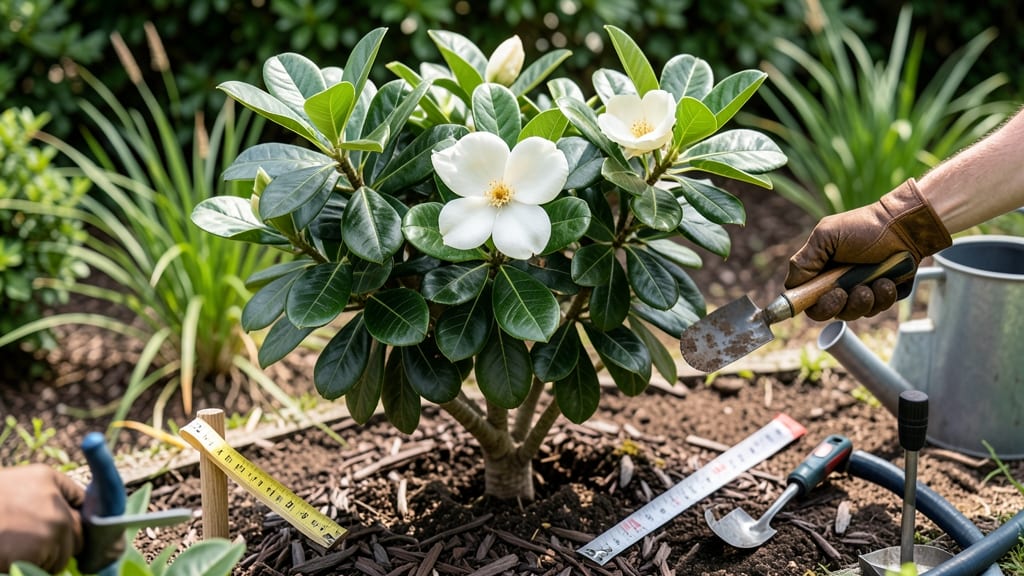
To plant gardenias the right distance apart, space them 4 to 6 feet away from each other to promote airflow, reduce fungal risks, and accommodate their mature root systems while maintaining optimal soil acidity (pH 5.0–6.0).
Gardenias thrive when given room to breathe, both above and below ground.
Their roots spread laterally, often reaching 3–4 feet wide for standard varieties, which explains why cramped spacing leads to stunted growth and fewer blooms. 🌿 I’ve seen firsthand how plants spaced too closely compete for nutrients, resulting in weaker stems and reduced flowering—especially in humid climates where fungal diseases like powdery mildew thrive.
The 4–6 foot rule isn’t arbitrary; it’s based on decades of observations showing that this spacing maximizes both air circulation and root expansion, two critical factors for healthy gardenias.
For container gardening, reduce spacing to 2–3 feet between plants, but ensure each pot has at least 12–18 inches of depth to prevent root binding. In hedges, stagger plants in a staggered pattern to create a natural, dense barrier while maintaining airflow.
The key is balancing proximity with airflow—too close, and you risk disease; too far, and you waste space. Always test your soil’s pH before planting, as gardenias demand acidic conditions to unlock their full potential.
💡 In This Article
- Gardenia Root Spread and Mature Size Factors
- Optimal Gardenia Planting Layout for Different Garden Types
Gardenia root spread and mature size factors
Gardenias develop expansive root systems that spread laterally rather than growing deep, which is why proper spacing is critical. Standard varieties like Gardenia jasminoides can reach 3–4 feet wide at maturity, with roots extending even farther in ideal conditions.
This lateral growth pattern means roots compete aggressively for nutrients and water when planted too closely, leading to weaker stems and fewer blooms. The 4–6 foot spacing accounts for this natural expansion while preventing root overlap, which can suffocate plants and create breeding grounds for fungal diseases like root rot.
Mature gardenias also develop heights of 3–5 feet, depending on the variety, with some dwarf cultivars like 'Radicans' staying under 2 feet. The key is matching spacing to the plant's mature dimensions—crowding stunts growth, while excessive spacing wastes garden space.
For example, a standard gardenia planted 5 feet apart in a sunny border will thrive, while the same plant in a 3-foot spacing may struggle to reach its full potential.
The root system's width is often twice the height of the plant, which explains why gardeners must plan ahead for these tropical beauties.
Spacing directly impacts blooming frequency—plants with ample room produce 2–3 times more flowers than crowded ones. This happens because proper airflow reduces humidity around the foliage, preventing fungal spores from taking hold.
In humid climates (like zones 8–11), where gardenias excel, 6 feet of spacing is ideal to create a microclimate that keeps leaves dry. I’ve noticed that gardenias in tight clusters often develop yellowing leaves and fewer blooms due to poor air circulation, a clear sign they need more space.
Soil pH plays a hidden but crucial role in how roots expand. Gardenias demand acidic soil (pH 5.0–6.0) to unlock nutrient uptake, and compacted or alkaline soils restrict root growth. When roots can’t spread freely, the plant becomes stressed, leading to smaller blooms or even leaf drop.
Amending the soil with peat moss or pine bark before planting ensures roots have room to explore while maintaining the ideal pH, which is just as important as spacing for long-term health.
Dwarf varieties like 'Kleim's Hardy' or 'Veitchii' are exceptions to the rule—they can thrive in 3–4 foot spacing because their roots stay more contained. However, even these compact types benefit from slightly wider spacing in high-humidity areas.
The trade-off? More room means fewer plants per square foot, but the payoff is healthier, longer-lived gardenias with abundant blooms. Think of it as an investment in future floral displays rather than a short-term space-saving hack.
One pro tip: If you’re planting gardenias in a hedge, stagger them in a brick-like pattern with 5–6 feet between rows to maximize airflow while creating a dense, fragrant barrier.
This layout mimics natural forest understory conditions, where gardenias originally evolved to thrive. The result? A lush, disease-resistant hedge that blooms prolifically year after year. 🌸