
Light Requirements
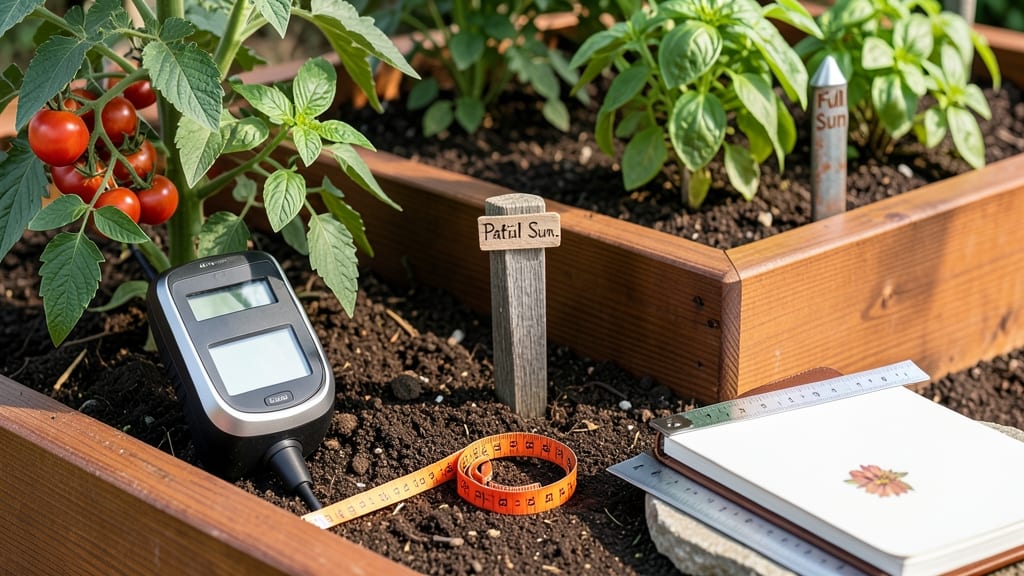
How much sun does a veggie garden need? The answer is 6 to 8+ hours of sunlight daily 🥬 to produce healthy, abundant crops—though some leafy greens and root vegetables can handle less.
Struggling to decide where to plant your tomatoes or lettuce? Sunlight is the single most critical factor in determining which vegetables thrive—and which wither—in your garden.
Too little light means stunted growth, bitter flavors, or no harvest at all, while too much can scorch delicate leaves. The key is matching your plants to the sunlight your space actually gets, whether that’s a sunny backyard, a balcony, or even a shady corner.
Below, I break down the exact sunlight ranges for common vegetables, how to measure your garden’s light, and simple adjustments to maximize your harvest—no guesswork required.

Daily sunlight requirements for common vegetables: full sun vs partial shade
Sunlight isn’t just light—it’s the lifeblood of your vegetable garden. Too little, and your plants languish; too much, and they scorch. Most vegetables fall into three categories: full sun lovers (6+ hours/day), partial shade tolerators (3-6 hours/day), or low-light survivors (3 hours/day or less).
Understanding these ranges helps you map your garden for success, even in tight spaces or shady spots.
For example, tomatoes and peppers crave 8+ hours of direct sun to produce sweet, abundant fruit, while lettuce and spinach happily grow in 4-6 hours of morning sun. Even herbs like parsley thrive in 3-5 hours, making them perfect for partial shade gardens.
Let’s break down the exact needs so you can place every plant where it belongs.
Pro Tip: Use a sunlight tracker for a week to map your garden’s light patterns. Most areas get more sun than you think—especially in summer—so don’t assume shade is permanent. A simple stake test (marking shadows every hour) reveals hidden sun pockets.
| Vegetable Type | Sunlight Range (Hours/Day) | Growth Impact of Too Little/Much Sun | Best Garden Placement Tips |
|---|---|---|---|
| Tomatoes | 8+ hours | Leggy growth, poor fruit set, sunburnt leaves | South-facing bed; use trellises for vertical growth |
| Peppers | 6-8 hours | Stunted, bitter fruit; blossom-end rot | Afternoon shade in hot climates; mulch to retain moisture |
| Lettuce | 4-6 hours | Bolting (premature flowering), bitter taste | Dappled shade in summer; east-facing bed |
| Spinach | 3-5 hours | Yellowing leaves, slow growth | North side of fence or under tall plants |
| Cucumbers | 6-8 hours | Powdery mildew, poor vining | Trellis for airflow; avoid afternoon sun in heatwaves |
| Basil | 6+ hours | Bitter flavor, leggy stems | Container near patio for morning sun |
| Carrots | 5-7 hours | Forked roots, slow maturation | Loose soil; avoid deep shade |
| Green Beans | 6-8 hours | Stunted pods, weak vines | Trellis for support; rotate crops annually |
Notice how leafy greens like spinach and herbs like parsley thrive in partial shade, while fruiting plants like tomatoes and peppers demand full sun. This isn’t just theory—it’s why your neighbor’s tomatoes explode with fruit while yours stay small.
The difference? Sunlight consistency. Even 6 hours of sun isn’t enough for tomatoes if it’s all in the morning; they need even distribution throughout the day
How to adjust your garden layout for optimal sunlight exposure
Even the most experienced gardeners struggle with sunlight distribution—especially when your yard has partial shade or uneven sunlight. The key is strategic planning to ensure every plant gets its ideal light exposure.
Start by mapping your garden’s sunlight patterns throughout the day, using a simple sunlight tracker or even a phone app. This helps you identify microclimates where sunlight varies by just a few feet.
Once you’ve mapped your space, group sun-loving plants together in the brightest spots and shade-tolerant varieties in areas with less light. For example, place tomatoes and peppers where they’ll get 6-8+ hours of sun, while lettuce and spinach can thrive in 3-5 hours.
This zoning approach maximizes your garden’s productivity without overcrowding.
🌱 5 Ways to Increase Sunlight in Shaded Areas
- 🌞 Prune overhanging branches—even small trims can let in 2+ extra hours of sunlight.
- 🪴 Use reflective surfaces like white gravel or mirrors to bounce light onto shaded spots.
- ⏰ Rotate crops seasonally—move sun-lovers to sunnier spots as shadows shift with tree growth or seasonal changes.
- 🌿 Choose dwarf or bush varieties of sun-loving plants (e.g., bush beans instead of pole beans) to fit into tighter spaces.
- 📏 Raise beds or use containers—elevating plants just 6 inches can reduce shade from nearby structures.
For small gardens, companion planting is a game-changer. Pair sun-hungry crops like cucumbers with shade-tolerant herbs such as basil or cilantro. The cucumbers provide dappled shade for the herbs during peak afternoon sun, while the herbs benefit from the cucumbers’ deep roots that don’t compete for light.
Another winning combo? Plant radishes near tomatoes—the radishes mature quickly, allowing you to harvest them before the tomatoes need full sun.
If your garden has permanent shade issues, focus on shade-tolerant vegetables like kale, Swiss chard, or bush beans. These crops can thrive with 3-4 hours of sunlight and even handle filtered light from nearby trees.
For extra productivity, consider vertical gardening—trellises or cages let vining plants like pole beans or peas climb toward the light, making the most of limited space.
Don’t forget to monitor sunlight changes throughout the growing season. Shadows cast by trees or buildings can shift as the sun’s angle changes, especially in spring and fall. Use a sunlight calculator or mark your garden with stakes to track how light moves across your space.
Adjust your planting plan as needed—this small effort can double your harvest by ensuring every plant gets the right amount of light.
With these adjustments, you’ll create a balanced, high-yield garden that works with your space’s natural light—no matter how tricky it seems. Happy growing! 🌿