Watering
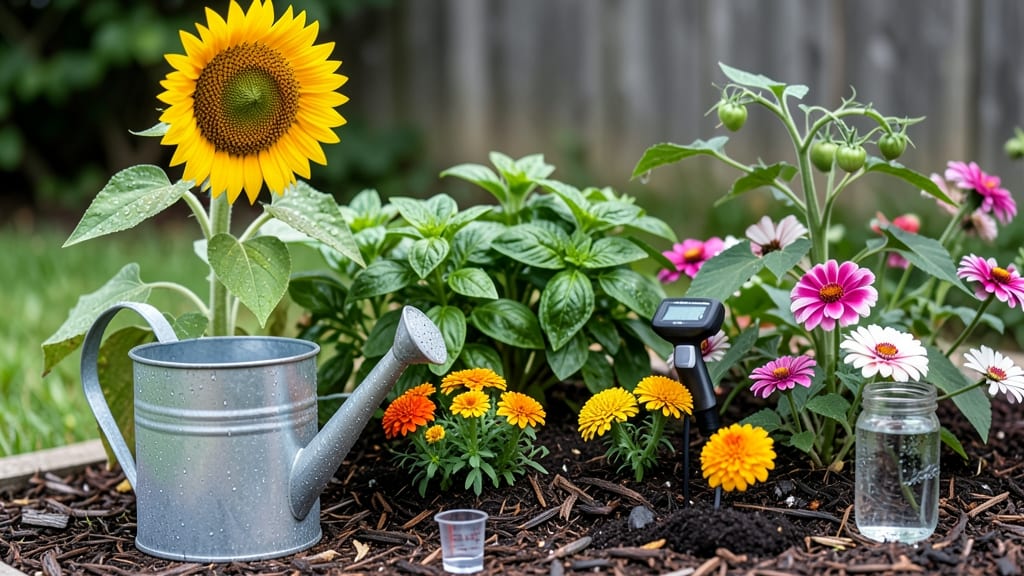
A garden needs about 1 inch of water per week—but that’s just the starting point, not a one-size-fits-all rule.
Overwatering or underwatering your garden can kill plants faster than pests or diseases—yet most gardeners guess their watering needs instead of using science-backed formulas. Discover the exact water requirements for your plants to grow lush, healthy, and resilient.
Soil type, plant roots, and seasonal heat all change how much water your garden truly needs.
Sandy soil drains fast, while clay holds moisture longer, and a tomato plant’s thirst isn’t the same as a lavender bush’s. I’ll break down the key factors so you can water like a pro, not a guesser.
From the 1-inch-per-week rule to adjusting for drought or rain, you’ll learn how to keep your garden thriving without wasting a drop. Let’s dive into the science that turns guesswork into growth.
Science-backed water requirements by plant type: deep dive into root zones
Every plant has a unique root zone that dictates how much water it needs—deep taproots for trees versus shallow fibrous roots for annual flowers. Understanding these differences prevents both overwatering and underwatering, two silent killers of garden health.
The 1-inch-per-week rule is a great starting point, but your garden’s soil type, microclimate, and plant maturity demand adjustments.
For example, vegetables like tomatoes need consistent moisture in their top 6 inches of soil, while drought-tolerant succulents thrive with water reaching only their deepest roots every 2-3 weeks. Even herbs like basil wilt dramatically if their shallow roots dry out, yet lavender will rot if overwatered.
Let’s break down these science-backed requirements by plant type to help you water like a pro.
| Plant Type | Root Depth | Water Needs (per week) | Seasonal Adjustments | Signs of Stress |
|---|---|---|---|---|
| Vegetables (e.g., Tomatoes, Peppers) | 6-12 inches | 1-1.5 inches | Increase by 50% in summer | Wilting, yellowing leaves |
| Flowers (e.g., Petunias, Marigolds) | 3-6 inches | 0.75-1 inch | Reduce in fall | Drooping, crispy edges |
| Shrubs (e.g., Hydrangeas, Boxwoods) | 12-24 inches | 1-1.5 inches | Deep water every 10-14 days | Leaf scorch, stunted growth |
| Trees (e.g., Maples, Oaks) | 3-6 feet | 2-3 inches (deep soak) | Water 2x/month in drought | Leaf yellowing, dry soil cracks |
| Drought-Tolerant (e.g., Succulents, Lavender) | 6-12 inches (deep) | 0.25-0.5 inch (every 2-3 weeks) | Skip winter watering | Soft, mushy stems |
Your soil type plays a critical role in how often you should water. Sandy soil drains quickly, requiring more frequent light waterings, while clay soil holds moisture longer, demanding deeper but less frequent watering.
For instance, a tomato plant in sandy soil might need watering every 2-3 days, whereas the same plant in clay soil could go 5-7 days between waterings. Always check the top 2 inches of soil before watering—if it’s dry, it’s time.
Seasonal adjustments are non-negotiable. During summer heatwaves, increase watering by 30-50% to compensate for higher evaporation rates. In spring and fall, reduce frequency by 20-30% as temperatures drop.
Even winter watering is essential for evergreens and young plants, but cut back to bi-weekly unless you’re in a frost-free zone. Mulching with 2-4 inches of organic matter (like straw or wood chips) can reduce water needs by up to 30% by slowing evaporation.
Young plants and seedlings have the highest water demands relative to their size. Their shallow root systems can’t reach deep moisture, so keep their soil evenly moist (not soggy) for the first 4-6 weeks.
Mature plants, on the other hand, develop deeper roots and can handle longer dry spells. For example, a 1-year-old rose bush might need watering 2-3 times per week in summer, while a 5-year
How to calculate your garden’s exact water needs using the soil moisture check
Stop guessing how much water your garden needs! The soil moisture check is the most reliable method to determine when and how much to water. Unlike rigid schedules, this approach adjusts to your climate, soil type, and plant maturity, ensuring optimal hydration without waste.
I’ll walk you through three proven techniques—from the simplest finger test to advanced tools like tensiometers—so you can tailor watering to your garden’s unique needs.
Why does soil moisture matter? Plants absorb water through their roots, but overwatering suffocates roots by cutting off oxygen, while underwatering stresses plants, making them vulnerable to pests and disease. The key is balancing moisture so the root zone stays consistently damp but not soggy.
For most gardens, this means maintaining 1-2 inches of moisture in the top 6-12 inches of soil, depending on plant type. Let’s dive into how to measure it accurately.
- 1 Choose your method: Pick the finger test for simplicity, a moisture meter for precision, or a tensiometer for advanced monitoring.
- 2 Test at the right depth: Insert your finger or tool 2-3 inches deep for shallow-rooted plants (like herbs) or 6-12 inches deep for deeper-rooted plants (like tomatoes or shrubs).
-
3
Assess moisture levels:
- Dry: Soil crumbles easily; water immediately.
- Moist: Soil sticks slightly but isn’t wet; wait 1-2 days.
- Wet: Soil is damp or waterlogged; hold off watering.
- 4 Adjust for soil type: Sandy soil drains fast—water more frequently but less deeply. Clay soil holds moisture longer—water deeply but less often.
- 5 Water deeply: Once you determine the need, water to a depth of 6-12 inches to encourage deep root growth. Use a soaker hose or drip irrigation for efficiency.
For sandy soil, which drains like a sieve, you’ll need to check moisture every 1-2 days in hot weather, while clay soil can go 5-7 days between waterings because it retains moisture like a sponge.
Pro tip: Mulch your garden beds with 2-4 inches of organic mulch (like wood chips or straw) to slow evaporation and keep roots cool. This can reduce your watering needs by up to 30%.
If your plants show signs of overwatering—yellowing leaves, mold on soil, or roots that smell rotten—cut back immediately and let the soil dry out. For underwatering, look for wilting leaves that don’t perk up after watering, crispy edges, or soil pulling away from pot walls.
Adjust your schedule based on these visual cues, and always water in the early morning to minimize evaporation and fungal risks.
Advanced gardeners swear by tensiometers, which measure soil suction (or how hard plants are working to pull up water). These tools give you a precise reading in centibars—aim for 20-50 centibars for most plants.
While they’re an investment ($20-$50), they’re a game-changer for large gardens or high-value crops like tomatoes or berries. Pair this with a rain gauge to track natural precipitation, and you’ll have a foolproof system for water efficiency.
Remember, every garden is unique. Start with the finger test to build your intuition, then refine with tools as needed. Within a few weeks, you’ll develop a watering rhythm that keeps your plants thriving without a drop of waste. Happy gardening! 🌱