
Plants
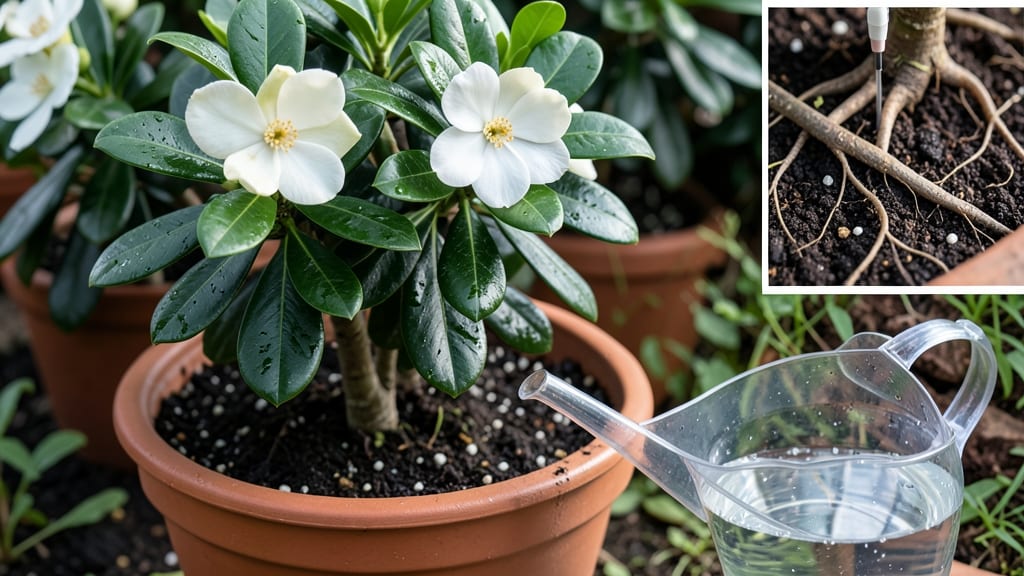
A gardenia plant needs consistent moisture—about 1 to 2 gallons of water every 2 to 3 days in summer—but the real trick is balancing it just right to avoid soggy roots or wilting.
Picture this: your gardenia 🌸 is drooping by afternoon, but you’re not sure if it’s thirsty or drowning. Too little water and those glossy leaves turn crispy; too much and you’ll smell rot before you see it.
The solution? A weekly schedule that changes with the seasons and your gardenia’s environment.
From the heat of summer to the quiet of winter, your gardenia’s water needs shift dramatically. In spring and summer, it’s all about deep, frequent watering—think of it as a long drink, not a quick sip.
But as temperatures drop, you’ll ease up, letting the soil dry out a bit more between waterings.
In this guide, I’ll break down the exact seasonal watering schedule, how to tell if you’re over- or under-doing it, and pro tips to keep your gardenia blooming like a pro—no guesswork required.
Gardenias’ water requirements by season: a detailed weekly schedule
Mastering your gardenia plant's water needs is the key to those fragrant, creamy-white blooms you adore. These tropical beauties thrive on consistent moisture but despise soggy roots—balancing act included. The right watering schedule changes with each season, so let’s dive into the weekly breakdown that’ll keep your gardenia happy year-round.
Your gardenia’s watering routine should adapt to temperature shifts, humidity levels, and whether it’s planted in-ground or in a container garden. For example, summer heat demands daily checks, while winter’s chill slows water needs dramatically.
Let’s start with the essentials: how much and how often to water based on the season.
🌸 Seasonal Summary Table
| Season | In-Ground Watering | Container Watering | Depth per Watering | Key Notes |
|---|---|---|---|---|
| Spring | Every 3-4 days | Every 2-3 days | 1-1.5 gallons | Boost watering as buds form |
| Summer | Every 2-3 days (daily in heatwaves) | Daily (morning) | 1.5-2 gallons | Mulch to retain moisture |
| Fall | Weekly | Every 5-6 days | 1 gallon | Reduce as temps drop |
| Winter | Bi-weekly | Every 10-14 days | 0.5-1 gallon | Dormant phase—less is more |
In spring, your gardenia wakes up from dormancy and needs a gentle increase in water as new growth appears. Aim for deep watering every 3-4 days for in-ground plants, while container gardenias may need daily checks.
The goal is to keep the top 2-3 inches of soil consistently moist but never waterlogged.
Summer is the most critical season—heat stress can wilt your gardenia in hours. Water early in the morning to reduce evaporation and fungal risks. In-ground plants need 1.5-2 gallons per watering, while container plants may require daily watering during heatwaves.
Always check soil moisture by sticking your finger 2 inches deep—if it’s dry, water thoroughly.
As fall arrives, your gardenia’s water needs taper off. Reduce frequency to weekly watering for in-ground plants and every 5-6 days for containers. This transition helps prepare the plant for winter dormancy. Cut back on fertilizing too—focus on hydration without overdoing it.
Winter is all about minimal watering. Your gardenia enters dormancy, so water bi-weekly for in-ground plants and every 10-14 days for containers. The key is to avoid soggy soil, which can rot roots.
If you’re in a cold climate, mulch around the base to insulate roots and retain whatever moisture remains.
Container gardenias always need more frequent watering than in-ground plants because pots dry out faster. Monitor soil moisture daily in summer—if the top inch feels dry, it’s time to water.
For in-ground plants, deep watering (12-18 inches down) encourages strong root growth. Use a soaker hose or drip irrigation to deliver water slowly and evenly.
Pro tip: Mulch heavily (2-3 inches) around your gardenia to lock in moisture and regulate soil temperature. Organic mulch like pine bark or shredded leaves also adds acidity, which gardenias love. Avoid synthetic mulches—they don’t break down and can disrupt soil health.
Watch for signs of overwatering (yellow leaves, mold) or underwatering (wilting, crispy edges). Adjust your schedule based on your gardenia’s response. With this seasonal guide, your gardenia will reward you with glossy leaves and fragrant blooms all year.
Signs your gardenia is overwatered or underwatered (and how to fix it)
Your gardenia thrives on balance—too much water drowns its roots, while too little causes wilting and stunted growth. Learning to read your plant's signals is the key to keeping it lush and blooming. Yellowing leaves or mushy stems often mean overwatering, while crispy edges or drooping foliage scream dehydration.
Let’s decode these clues so you can adjust your watering routine with confidence.
First, check the soil moisture by sticking your finger about 1-2 inches deep. If it feels damp, hold off on watering—gardenia roots need air too. For container plants, lift the pot: if it’s heavy with moisture, it’s overwatered. Mold or fungus on soil or leaves is another red flag.
These signs mean your gardenia is suffocating, not hydrating.
Gardenia plants need consistent moisture but hate soggy roots. How much water does a gardenia plant need? Aim for 1-2 gallons per watering in summer, letting the top 1-2 inches of soil dry between sessions. In winter, reduce to bi-weekly watering—overwatering in cold months accelerates root rot.
💡 Pro Tip: Use a moisture meter or the "finger test" to avoid guesswork. If soil feels like a damp sponge, skip watering.
If your gardenia shows underwatering signs, like crispy leaf edges or drooping stems, it’s time to hydrate. Water deeply until it drains from the bottom of the pot or flows from the soil.
For in-ground plants, water slowly at the base to encourage deep root growth. Morning watering is best—it gives leaves time to dry, reducing fungal risks like powdery mildew.
For overwatered gardenias, act fast. Stop watering immediately and let the soil dry out. If the roots smell rotten or look mushy, trim away the damaged parts with sterilized pruners and repot in fresh, well-draining soil.
Add a layer of perlite or sand to improve drainage. If mold appears, treat with a fungicide and ensure the pot has drainage holes.
Adjust your watering schedule based on the season. In summer heat, gardenias may need watering every 2-3 days, while winter dormancy reduces needs to once every 2 weeks.
Always consider your climate and pot size: containers dry out faster than in-ground plants. Mulch around the base to retain moisture and regulate soil temperature.
With these fixes, your gardenia will bounce back in 2-4 weeks, regaining its glossy leaves and fragrant blooms. Keep an eye on its signals—your plant will thank you with vibrant flowers all season long! 🌸