
Fertilization
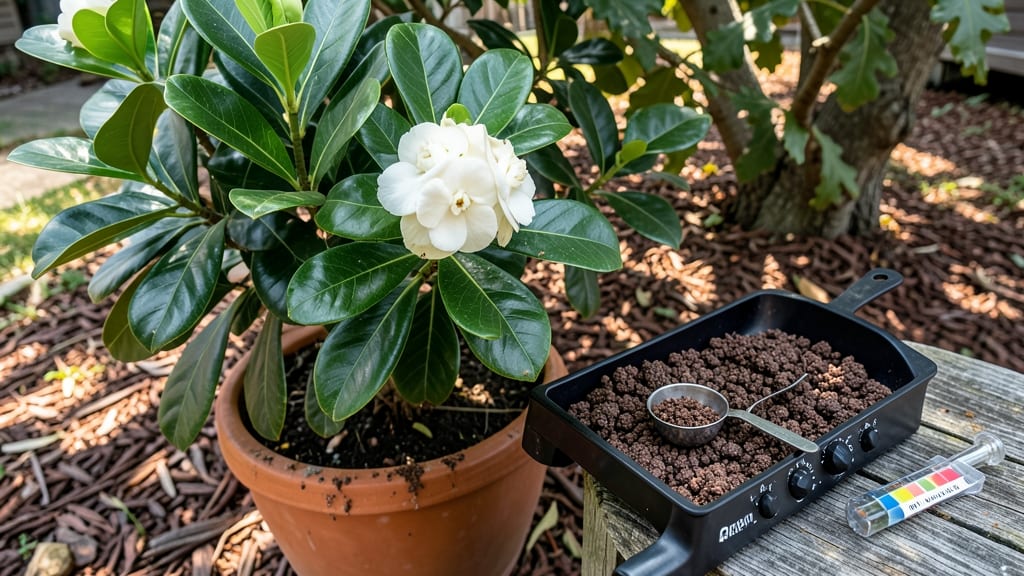
To fertilize gardenias properly, you’ll want to feed them every 4-6 weeks during their active growing season—spring through early summer—when they’re hungry for nutrients to fuel those fragrant blooms.
Struggling to keep your gardenia blooms vibrant and healthy? The secret often lies in a precise fertilization schedule—too little starves the plant, while too much can harm its delicate roots.
Here’s the deal: gardenias 🌸 thrive when fed just enough to keep their roots happy but not so much that they burn. In Zone 6, where most gardeners grow them, timing matters just as much as what you use.
Below, I’ll walk you through the exact schedule—when to feed, what to use, and how to tell if you’re overdoing it. No guesswork, just science-backed tips for lush, long-lasting blooms.

Optimal gardenia fertilization frequency by season: a science-backed schedule
Gardenia plants thrive when fed with precision, especially since their blooming cycles align closely with seasonal changes. Understanding when and how often to fertilize can transform your gardenia from a struggling shrub to a fragrant, blooming powerhouse.
Unlike many plants, gardenias need adjusted feeding throughout the year—more during active growth and less during dormancy.
The key to vibrant gardenia blooms lies in matching your fertilization schedule to the plant's natural growth rhythm. In spring, focus on kickstarting growth after winter dormancy, while summer demands consistent feeding to support heavy blooming.
Fall requires a gentle touch, and winter should be a complete break. Let's break down the science-backed approach for each season.
| Season | Fertilization Frequency | Recommended Fertilizer Type | Key Growth Focus |
|---|---|---|---|
| Spring (March-May) | Every 4 weeks | Balanced 10-10-10 or organic compost tea | New foliage and root development |
| Summer (June-August) | Every 4-6 weeks | High-phosphorus 12-4-8 or slow-release granules | Bloom production and foliage health |
| Fall (September-November) | Every 8 weeks (light dose) | Low-nitrogen organic fertilizer | Root strengthening before dormancy |
| Winter (December-February) | None | N/A | Dormancy and natural nutrient storage |
Spring is the perfect time to revitalize your gardenia after winter's dormancy. Start fertilizing in early spring when you notice new growth emerging. Use a balanced fertilizer like 10-10-10 to provide equal parts nitrogen, phosphorus, and potassium.
This encourages strong root development and lush foliage. For organic gardeners, compost tea or worm castings work wonders while improving soil structure.
During summer's peak blooming season, switch to a phosphorus-rich fertilizer like 12-4-8 to support flower production. Apply this every 4-6 weeks throughout June, July, and August. Remember to water thoroughly after fertilizing to prevent root burn.
Potted gardenias may need slightly more frequent feeding—every 3-4 weeks—since nutrients leach out faster in containers.
As temperatures cool in fall, reduce fertilization to every 8 weeks with a light dose. This helps the plant prepare for dormancy without encouraging late-season growth that could be damaged by frost.
Choose a low-nitrogen fertilizer to avoid tender new growth. Organic options like fish emulsion diluted to half-strength work perfectly during this transitional period.
Winter is the only time gardenias don't need fertilizer at all. During dormancy (December-February), the plant conserves energy and relies on stored nutrients. Fertilizing now can actually burn roots and encourage weak growth that won't survive cold snaps.
Instead, focus on protecting your gardenia with a thick layer of mulch around the base.
For container gardenias, adjust your schedule slightly: feed twice as often as in-ground plants since potting soil loses nutrients faster. Always water containers thoroughly after fertilizing to prevent salt buildup. And remember—consistency is key. Missed feedings can cause nutrient deficiencies that show up as yellowing leaves or poor blooming.
Pro tip: Always apply fertilizer in early morning when temperatures are cool. This gives roots time to absorb nutrients before the heat of day. Pair your feeding schedule with regular pruning after blooms fade to maintain shape and encourage next year's flowers.
By following this seasonal schedule, you'll give your gardenia the perfect balance of nutrients year-round. The result? Healthier foliage, more blooms, and plants that thrive through every season. Happy gardening!
Signs your gardenia needs fertilizer (and when to stop feeding)
Your gardenia’s leaves turning yellow or developing brown tips are classic signs it’s hungry for nutrients. These visual cues often appear when the plant isn’t receiving enough nitrogen, phosphorus, or potassium to support its leafy growth and fragrant blooms.
I’ve noticed this most commonly in my gardenias after winter dormancy, when the soil nutrients have been depleted from months of no feeding.
Another red flag is stunted growth or fewer blooms than usual. If your gardenia looks like it’s struggling to reach its mature height of 3-6 feet or produces sparse flowers, it’s likely craving a nutrient boost.
Even healthy gardenias may show these signs if you’ve skipped feeding during the active growing season (spring and summer).
🌿
⚠️ How Often to Fertilize Gardenias
Spring: Feed every 4-6 weeks starting after last frost (April). Use a balanced fertilizer (10-10-10 or 12-4-8) to encourage new growth.
Summer: Continue feeding every 4-6 weeks to maintain blooms. Reduce to every 6-8 weeks if you notice leaf burn or overgrowth.
Fall/Winter: Stop fertilizing entirely. Gardenias enter dormancy and don’t need nutrients during this time.
Over-fertilizing is just as harmful as under-fertilizing. If your gardenia’s leaves develop crispy brown edges or the soil around the roots looks white and crusty, you’ve likely overdone it.
This salt buildup from excess fertilizer can burn the roots and stunt growth. I once made this mistake by doubling the recommended dose—my gardenia’s leaves turned brittle within weeks!
To check if your gardenia truly needs fertilizer, perform a simple soil test using a home kit (available at garden centers). Gardenias thrive in acidic soil (pH 5.0-6.0).
If your soil pH is too high or nutrients are low, it’s time to amend it with organic matter like compost or a slow-release fertilizer. For potted gardenias, I recommend repotting every 2-3 years to refresh the soil.
Pay attention to the growth rate and bloom frequency after fertilizing. A well-fed gardenia should show new leaves every 2-3 weeks in spring and summer, along with 3-4 blooms per season.
If you’re not seeing these signs within 4-6 weeks of feeding, adjust your approach—either increase the frequency slightly or switch to a more potent fertilizer.
Remember, gardenias are light feeders compared to other shrubs. The key is consistency during the growing season and complete rest in winter. By tuning into these visual and growth cues, you’ll keep your gardenia thriving without overdoing it. 🌸