
Watering
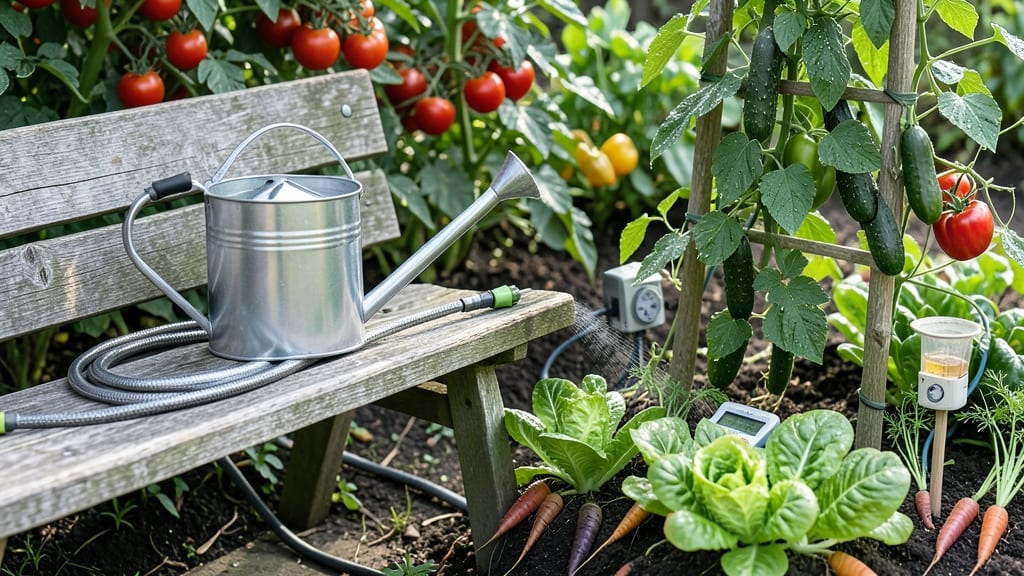
Watering your vegetable garden the right way means knowing how often to water each type of plant 🥬—because one size doesn’t fit all, and guessing can kill your harvest.
Picture this: you’ve just planted your spring veg garden in Zone 6a, only to watch your lettuce bolt or your tomatoes split from too much (or too little) water.
The truth? Most gardeners overcomplicate it—when really, the answer comes down to three simple factors: plant type, soil, and weather.
Leafy greens like spinach need frequent, shallow drinks, while root crops such as carrots prefer deep, infrequent watering. Then there’s the soil: sandy soil drains fast, while clay holds moisture for days. Throw in a heatwave, and suddenly your schedule’s out the window.
Below, I break down the exact watering schedule for 20 common veggies, how to read your soil (without a fancy meter), and when to adjust for drought, rain, or containers. No more guesswork—just science-backed results.
Science-backed watering frequency for common vegetable plants
Watering your vegetable garden isn’t a one-size-fits-all task—each plant has unique needs based on its type, growth stage, and environmental conditions. Leafy greens like lettuce and spinach thrive with frequent, shallow watering, while root crops such as carrots and potatoes prefer deep, infrequent soaks.
Meanwhile, fruiting plants like tomatoes and peppers demand consistent moisture to develop flavorful yields. Without the right schedule, you risk stunted growth, blossom-end rot, or even plant death. Let’s dive into the science-backed watering intervals that will keep your garden lush and productive.
Understanding the soil moisture triggers is just as critical as the frequency itself. Most vegetables need about 1 to 2 inches of water per week, but this varies based on soil type, temperature, and humidity.
For example, sandy soil drains quickly, requiring more frequent watering, while clay soil retains moisture longer. Seasonal adjustments are also key—summer heat may demand daily watering, whereas cooler spring or fall days might only need every 2 to 3 days.
By tuning into these cues, you’ll avoid both overwatering (which causes root rot) and underwatering (which leads to wilting and stress).
For leafy greens, shallow watering keeps the topsoil moist but prevents root rot—a common issue in dense plantings.
Aim to water in the early morning to allow foliage to dry quickly, reducing the risk of fungal diseases like downy mildew. Root crops, on the other hand, need deep watering to encourage downward growth.
If the soil around carrots or potatoes stays too wet, it can lead to forked or misshapen roots. Always let the top 2 inches of soil dry out before watering again to strike the right balance.
Fruiting plants like tomatoes and peppers are particularly sensitive to inconsistent watering. Fluctuations in moisture can cause blossom-end rot, a telltale sign of calcium deficiency triggered by uneven hydration. To prevent this, maintain a consistent watering schedule and use mulch to lock in moisture. For herbs, moderation is key—too much water can dilute their flavors, while too little causes them to bolt prematurely. A light but frequent watering schedule works best, especially in containers where soil dries out faster.
Seasonal changes demand flexibility in your watering routine. During summer’s peak heat, most vegetables will need watering every 1 to 2 days, while cooler spring or fall days may only require every 3 to 4 days.
Always check the soil moisture by sticking your finger 1 to 2 inches deep—if it feels dry, it’s time to water. Rainy seasons? Cut back to avoid over-saturation, which can drown roots and invite pests. By adjusting your approach based on the season, you’ll keep your garden thriving year-round.
One of the biggest mistakes gardeners make is watering based on a rigid schedule rather than the plant’s actual needs. Instead of setting a timer, focus on soil moisture and plant signals.
Drooping leaves or crispy edges are clear signs your veggies are thirsty, while yellowing leaves or mushrooms sprouting in the soil indicate overwatering. Pay attention to these cues, and you’ll develop an intuitive sense of when to reach for the hose—or skip a watering session entirely.
Mulching is a game-changer for efficient water
How to tell when your veg garden needs water (without guessing)
Watering your vegetable garden can feel like walking a tightrope—too much and you drown roots, too little and plants wilt. The key is learning your plants' hidden signals instead of relying on a rigid schedule.
I’ve spent years perfecting this, and trust me, your garden will thank you when you stop guessing and start observing.
Most gardeners make the mistake of watering on a fixed schedule, but soil moisture fluctuates based on weather, plant type, and even the season. Instead, focus on three key indicators: soil texture, plant appearance, and environmental clues.
These will tell you exactly when to reach for your watering can.
- 1 Finger Test: Stick your finger 1-2 inches into the soil. If it feels dry, it's time to water. Clay soil stays moist longer; sandy soil dries out faster.
- 2 Plant Wilting: Morning wilting often means the plant needs water, but afternoon wilting could signal heat stress. Check the soil first—if it's dry, water deeply.
- 3 Leaf Signals: Crispy edges on leaves (like lettuce or spinach) mean underwatering. Yellowing leaves could indicate overwatering or poor drainage. Always check the roots!
- 4 Moisture Meter: For precision, use a digital moisture meter ($15-$25). Insert the probe 2-3 inches deep—readings below 40% moisture mean it’s time to water.
- 5 Weather Watch: After 3+ days without rain, most veggies need a deep watering. In high heat (90°F+)1-2 days to prevent stress.
Pro tip: Water in the early morning (6-9 AM) to reduce evaporation and fungal diseases like powdery mildew. If you’re using mulch, it’ll help retain moisture, so you’ll water less frequently—but still check those soil clues!
Remember, deep watering (1-2 inches per week) encourages roots to grow downward, making plants more drought-resistant. Shallow watering leads to weak, shallow roots that can’t support your veggies. Test this by gently pulling a plant—if the soil clumps easily around the roots, you’re doing it right.
Start paying attention to these signals, and you’ll never over- or underwater again. Your tomatoes will ripen faster, your lettuce will stay crisp, and your carrots will grow straight and sweet—all because you’re giving your garden exactly what it needs, when it needs it. Happy growing! 🌱