
Tools
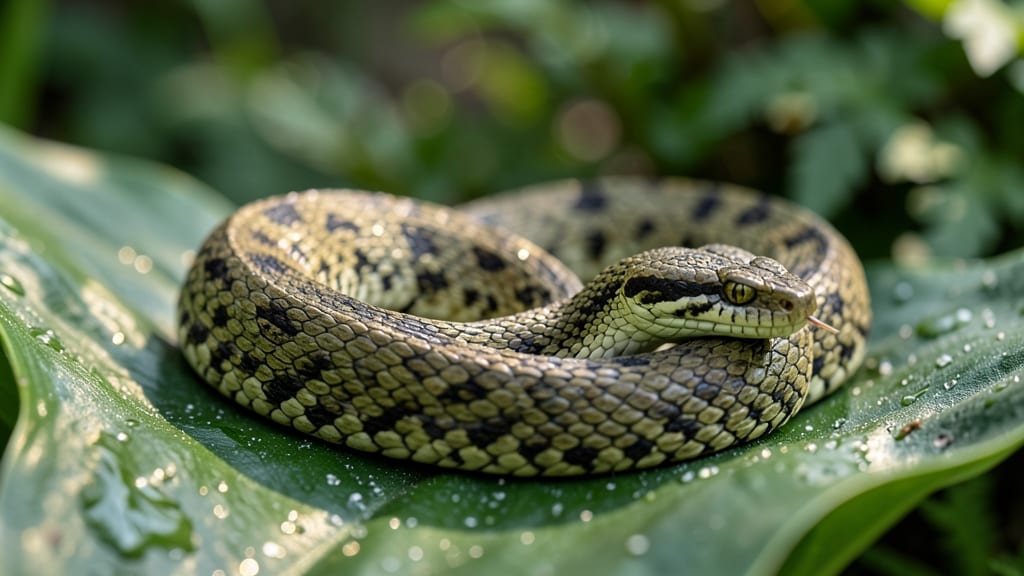
When capturing images of garden snakes, look for slender, non-venomous reptiles with smooth scales in earthy tones like brown, green, or gray, along with distinctive head shapes. Their natural camouflage makes them frequent subjects in garden wildlife photography.
Garden snake photography often highlights their adaptive coloration, which helps them disappear into grassy or wooded backyards. 🐍 These reptiles typically showcase smooth, glossy scales and elongated bodies, making them stand out in macro shots while blending seamlessly in wide-angle habitat scenes.
The key to great images lies in capturing their unique head shapes—often triangular or slightly flattened—which distinguish them from other serpent species. Whether you're documenting a local ecosystem or simply enjoying nature photography, these visual traits create compelling compositions that showcase both the beauty and ecological role of garden snakes.
For photographers, focusing on their behavioral patterns—like sunbathing on rocks or exploring leaf litter—adds dynamic elements to your images. The contrast between their vibrant scales and natural surroundings creates striking visuals that highlight why these snakes are such popular subjects in wildlife photography.
💡 In This Article
- Identifying Garden Snake Species Through Visual Traits
- Best Ways to Photograph Garden Snakes in Natural Settings
Identifying garden snake species through visual traits
Garden snakes exhibit a fascinating array of visual traits that help identify them in the wild. The eastern garter snake, for example, features three yellow or white stripes running down its body, often with a smooth, glossy scale texture that reflects light beautifully in photographs.
These stripes serve as camouflage in dappled sunlight, breaking up their slender bodies against grassy backyards. In contrast, rat snakes showcase a more uniform pattern of dark blotches or crossbands on a lighter background, allowing them to blend into leaf litter or tree bark.
The head shape is another critical identifier—most garden snakes have a slightly flattened, triangular head, which distinguishes them from venomous species like copperheads that have a more pronounced, heart-shaped head.
The scale patterns also vary: garter snakes have keeled (ridged) scales, while rat snakes often display smooth, overlapping scales that catch light differently in macro shots.
These visual differences aren't just for show; they reflect evolutionary adaptations for survival, such as thermoregulation (darker scales absorb more heat) or predator avoidance (camouflage patterns).
Coloration plays a crucial role too. Milk snakes, for example, mimic the coloration of venomous coral snakes with red, black, and white bands—but their bands are arranged differently (red touching yellow, not red touching black).
This mimicry is a survival strategy called Batesian mimicry, where harmless species evolve to resemble dangerous ones. In garden photography, capturing these color contrasts against natural backdrops—like mossy logs or sunlit foliage—creates striking images that highlight both their beauty and ecological role.
Behavioral traits also influence how these snakes appear in images. Rat snakes, for instance, are often seen coiled on branches or rocks, basking in sunlight, while garter snakes might be spotted slithering through wet grass or near water sources.
These habits provide photographers with predictable opportunities to capture dynamic shots. For example, a garter snake’s undulating swim or a rat snake’s tree-climbing posture can create compelling action sequences in wildlife photography.
One often-overlooked detail is the eye shape and pupil type. Garden snakes typically have round pupils (unlike the vertical slits of venomous species), which can be a subtle but telling feature in close-up images.
This trait, combined with their smooth scales and slender bodies, helps distinguish them from other reptiles like lizards or even non-native species that might invade gardens. Understanding these visual cues allows photographers to quickly identify species and document their presence in local ecosystems.
For gardeners and wildlife enthusiasts, recognizing these traits isn’t just about aesthetics—it’s about conservation. Many garden snakes play vital roles as pest controllers, feeding on rodents, insects, and even other snakes.
By capturing their unique features in images, you’re not only creating art but also contributing to ecological awareness. 🌿 Whether you’re photographing a garter snake’s vivid stripes or a rat snake’s intricate blotches, each image tells a story about the hidden world thriving in your backyard.