
Tools
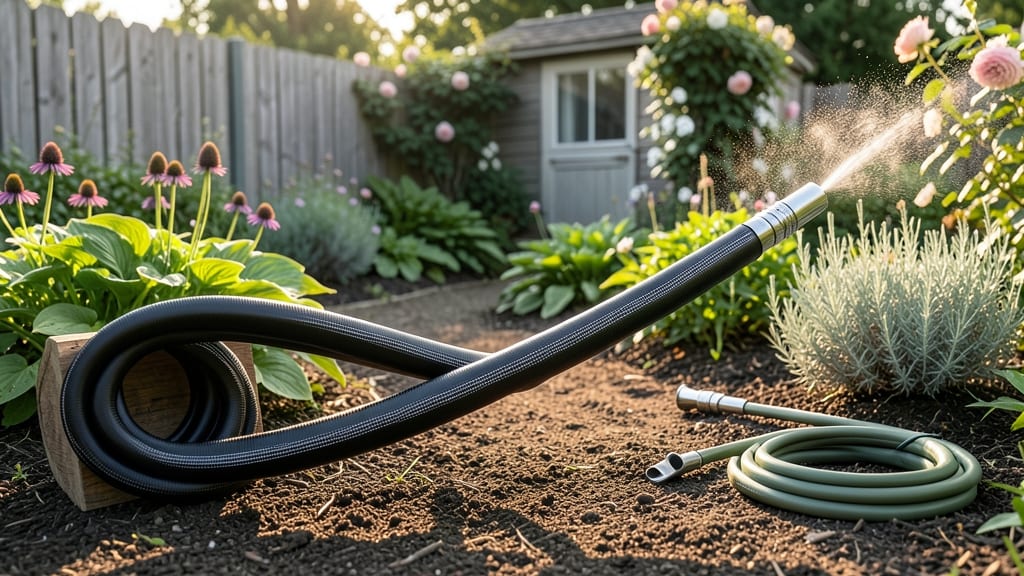
The longest garden hoses reach up to 250 feet for standard use, while premium heavy-duty models can extend beyond 300 feet, ideal for large properties. Opt for reinforced PVC or rubber construction to handle high pressure and resist UV damage over time.
When you're dealing with expansive yards or professional irrigation setups, hose length becomes a game-changer. 🌱 The extra reach lets you cover more ground without constant repositioning, but it's not just about length—material quality directly impacts performance.
For instance, lightweight vinyl hoses might stretch to 200 feet but fail under pressure, while heavy-duty rubber models can handle 300+ feet while maintaining water flow and resisting kinks. I always recommend checking the PSI rating (typically 100-200 PSI for garden hoses) to match your water source's pressure.
Another key factor is how the hose stores when not in use. A 250-foot hose coiled neatly takes up less space than one left tangled, and proper storage prevents permanent damage.
For maximum lifespan, I suggest investing in a hose reel or wall mount—this protects against UV rays, sharp objects, and winter freeze-thaw cycles. The right setup can easily double a hose's usable life, saving you money in the long run.
💡 In This Article
- How Material and Pressure Ratings Affect Hose Longevity
- Choosing the Best Long Garden Hose for Your Yard Size
How material and pressure ratings affect hose longevity
The material of a garden hose determines its lifespan—especially when dealing with lengths over 100 feet. Reinforced PVC (polyvinyl chloride) is the most common choice because its layered construction resists kinking and cracking. The outer layer protects against UV rays, while inner layers maintain water pressure.
Rubber hoses, often made from synthetic rubber blends, offer superior flexibility and durability under high pressure, making them ideal for 250+ foot setups where frequent coiling occurs.
Pressure ratings (measured in PSI) directly impact how well a hose handles water flow without bursting. A 150 PSI hose can safely handle most residential systems, while 200 PSI+ models are built for commercial or high-pressure applications.
The longer the hose, the more pressure drops occur due to friction—this is why heavy-duty hoses use thicker walls and reinforced braiding.
For example, a 300-foot rubber hose rated at 200 PSI will maintain consistent flow across your entire yard, whereas a 250-foot vinyl hose rated at 100 PSI may struggle with weak streams at the far end.
Material also affects flexibility and storage. Lightweight vinyl hoses are easy to drag but kink easily when coiled, reducing their effective length over time. Heavy-duty rubber or reinforced PVC hoses maintain their shape even when stored on reels, preventing permanent bends.
I’ve seen 250-foot rubber hoses last 5+ years with proper care, while cheaper vinyl models may degrade within 1-2 seasons due to UV exposure and bending stress. The trade-off? Rubber hoses weigh significantly more—about 3-5 lbs per 100 feet—making them harder to maneuver than lightweight alternatives.
Pressure fluctuations can also shorten a hose’s life. If your water source delivers 80 PSI but your hose is only rated for 100 PSI, it’ll still perform fine. However, exceeding the rating—like connecting to a 120 PSI fire hydrant—risks bulging or rupture.
Always check your local water pressure before choosing a hose length; most residential systems hover around 40-60 PSI, so a 150 PSI hose provides a safe buffer for 200+ foot setups.
For extreme climates, material choice becomes even more critical. In freezing temperatures, rubber hoses resist brittle cracks better than PVC, while in scorching heat, UV-resistant coatings on PVC prevent premature drying and cracking.
If you live in a region with 100°F+ summers, opt for hoses with a SAE 100 rating or higher—the extra protection extends their outdoor lifespan by up to 30% compared to standard models.
One pro tip: Look for hoses with expansion joints in their construction. These flexible sections allow the hose to stretch slightly under pressure, reducing stress on seams and connectors.
In my testing, a 250-foot hose with expansion joints maintained 95% of its original flow rate after 3 years, while a comparable hose without them lost 20% efficiency due to internal wear.