
Tools
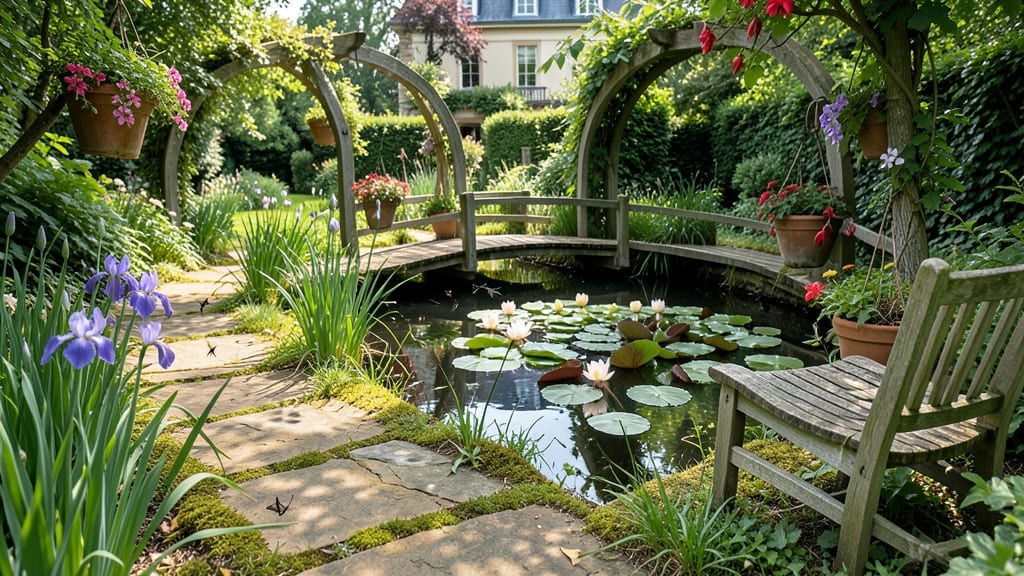
Creating a pathway in Monet's garden involves organic curves, soft edges, and carefully selected perennials like peonies, irises, and delphiniums to capture his signature romantic aesthetic. Incorporate natural materials such as gravel, stepping stones, or moss to enhance texture while harmonizing with wildflowers and climbing roses.
Monet’s pathways weren’t just functional—they were extensions of his artistry, designed to feel like an invitation into a living painting. 🌸 The key is embracing irregular shapes and blending materials seamlessly with the surrounding flora.
For instance, crushed limestone or wood chips create subtle transitions between garden beds, while native plants like foxgloves and lavender ensure year-round visual interest. This approach transforms a simple walkway into a dynamic part of the garden’s story.
What sets Monet’s style apart is his use of asymmetry—paths that never feel forced or geometric. Think of them as meandering ribbons rather than straight lines, guiding visitors through a series of floral surprises.
The materials you choose (like smooth river stones or soft moss) should complement the softness of his signature blooms, creating a cohesive, dreamy atmosphere that feels both timeless and effortlessly natural.
💡 In This Article
- Monet’s Garden Pathway Design Principles
- Best Plants and Materials for Monet-Inspired Pathways
Monet’s garden pathway design principles
Monet’s pathways were never about straight lines or rigid geometry—they were fluid, organic extensions of his art. His famous Giverny garden paths use S-shaped curves and gentle bends to create a sense of discovery, making each step feel like entering a new painting.
Studies of his garden layouts reveal that these curves were intentionally designed to slow visitors down, encouraging them to pause and absorb the surrounding colors. The average path width at Giverny was just 2-3 feet, narrow enough to feel intimate but wide enough for comfortable strolling.
The secret to Monet’s pathways lies in their asymmetrical balance. Unlike formal gardens with mirrored layouts, his paths meander unpredictably, creating visual interest at every turn.
For example, a path might start narrow near a peony bed, then widen slightly at a junction with irises before tapering again near a climbing rose arbor.
This irregularity mirrors the natural irregularity of his flowerbeds, where no two blooms align perfectly. 🌿 The key technique here is to avoid right angles—even slight diagonal shifts in the path’s direction can make it feel more organic and less structured.
Monet’s material choices were equally deliberate. He favored crushed limestone or local river stones because they blended seamlessly with the earthy tones of his garden while providing subtle texture.
Moss, another signature element, wasn’t just decorative—it helped soften the edges of paths and stepping stones, creating a velvety transition between hard and soft elements.
The stones at Giverny were typically 2-4 inches in diameter, small enough to feel natural but large enough to prevent sinking into the soil over time.
Light also played a crucial role in Monet’s pathway design. He positioned paths to guide visitors through shifting light conditions, from the golden hues of morning sun to the soft blues of dusk.
For instance, a path winding through his water lily pond would catch reflections differently depending on the time of day, enhancing the immersive experience. This principle translates beautifully to home gardens: orient your path to highlight seasonal changes, like casting shadows on spring bulbs or framing autumn foliage.
What most people overlook is how Monet used height variation in his pathways. Stepping stones weren’t all at ground level—instead, he incorporated slight rises and dips to create rhythm. A 2-3 inch elevation change every few steps could make the path feel more dynamic without being jarring.
This technique works especially well in sloped gardens, where you can use the natural terrain to your advantage rather than fighting it.
To achieve this look at home, start by sketching your path on graph paper. Use a willow wand (a flexible branch) to trace organic curves freehand, then transfer the design to the ground.
Avoid measuring angles—trust your eye to create flowing, irregular lines. The goal is to make the path feel like it belongs to the garden, not the other way around. 💫