
Landscaping
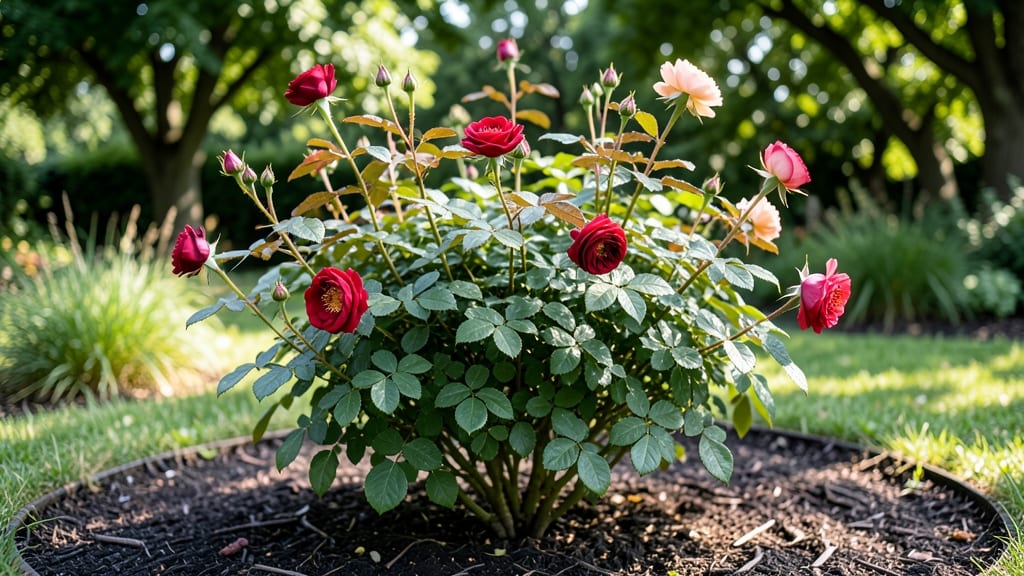
For rose bush garden ideas that thrive year-round with minimal effort, combine fragrant rose varieties with drought-tolerant perennials like lavender or ornamental grasses, and incorporate vertical supports like trellises to save space and reduce ground clutter. Prioritize hardy, seasonal bloomers and use mulch to conserve moisture.
Designing a low-maintenance rose garden starts with smart plant pairings that complement each other's needs. 🌸 For instance, pairing climbing roses with evergreen shrubs creates vertical interest while keeping the ground area tidy.
I've found that grouping roses by sunlight requirements—full sun for hybrid teas, partial shade for floribundas—prevents overcrowding and improves air circulation, which naturally reduces disease risks. The key is balancing showy blooms with ground covers like creeping thyme that suppress weeds and retain soil moisture.
Another pro tip is to layer plants by height: tall roses or trellises in the back, medium shrubs in the middle, and low-growing perennials in front. This creates depth while making maintenance easier—you can prune and weed from the edges inward.
For seasonal interest, I recommend adding spring bulbs like daffodils and fall foliage plants such as Japanese maples to bridge the gaps between rose blooming cycles. The result? A garden that looks vibrant from early spring through late autumn with almost no extra work.
💡 In This Article
- How to Design a Low-Maintenance Rose Garden Layout
- Best Companion Plants and Themes for Rose Bush Gardens
How to design a low-maintenance rose garden layout
Roses thrive when grouped by their specific sunlight and soil requirements—a principle rooted in plant physiology. Most roses need 6-8 hours of direct sunlight daily, but varieties like 'Double Delight' or 'Iceberg' tolerate partial shade better.
The science here is simple: too much shade reduces photosynthesis, while too much sun can stress roots in hot climates. 🌞 I've seen gardens where hybrid teas (full sun lovers) were planted next to floribundas (partial shade tolerant), leading to uneven growth and blooms. The fix?
Map your garden's sun exposure first, then assign roses to zones accordingly.
Soil type plays an equally critical role. Roses prefer well-draining, slightly acidic soil (pH 6.0-6.5), but amending heavy clay with organic matter like compost can transform it into ideal growing medium.
Mulching with 3-4 inches of wood chips or straw helps retain moisture, regulate soil temperature, and suppress weeds—saving 30-50% on watering over time. The mulch layer also breaks down slowly, enriching the soil with nutrients.
For example, 'Knock Out' roses, which are drought-resistant, benefit from this technique even more than traditional varieties.
Spacing is another game-changer for low-maintenance gardens. Most roses need 3-5 feet of space between bushes to ensure proper air circulation, which drastically reduces fungal diseases like black spot. Climbing roses on trellises should have 8-10 feet of vertical clearance to avoid overcrowding.
I've noticed that proper spacing also makes pruning easier—you can reach the center of the bush without trampling nearby plants. For a 3-foot diameter bush, plan for at least 5 feet between plants to prevent future congestion.
Pruning schedules vary by rose type but follow seasonal patterns tied to growth cycles. Hybrid teas bloom on new wood, so they need a late winter/early spring prune to remove dead wood and shape the bush.
In contrast, shrub roses like 'Dr. Huey' bloom on both old and new wood, requiring a two-step prune: light shaping in late winter and cleanup after flowering. This precision ensures roses focus energy on blooms rather than excessive foliage. 🌿 The result? Healthier plants with fewer pests and diseases.
Seasonal interest comes from layering plants that fill gaps when roses aren't blooming. For instance, pair spring-blooming roses like 'William Baffin' with daffodils or tulips for early color, then add coneflowers or black-eyed Susans for summer, and finish with ornamental grasses or hellebores for winter structure.
This "bloom calendar" approach ensures your garden stays visually engaging year-round while minimizing dead space.
Finally, consider the 3-foot rule for ground covers: plants like creeping thyme or ajuga should spread no wider than this to avoid competing with roses. Their shallow roots also help retain moisture near the rose's root zone.
Together, these principles create a garden that's not just beautiful but also resilient—requiring less water, fewer pesticides, and minimal pruning once established. 💫